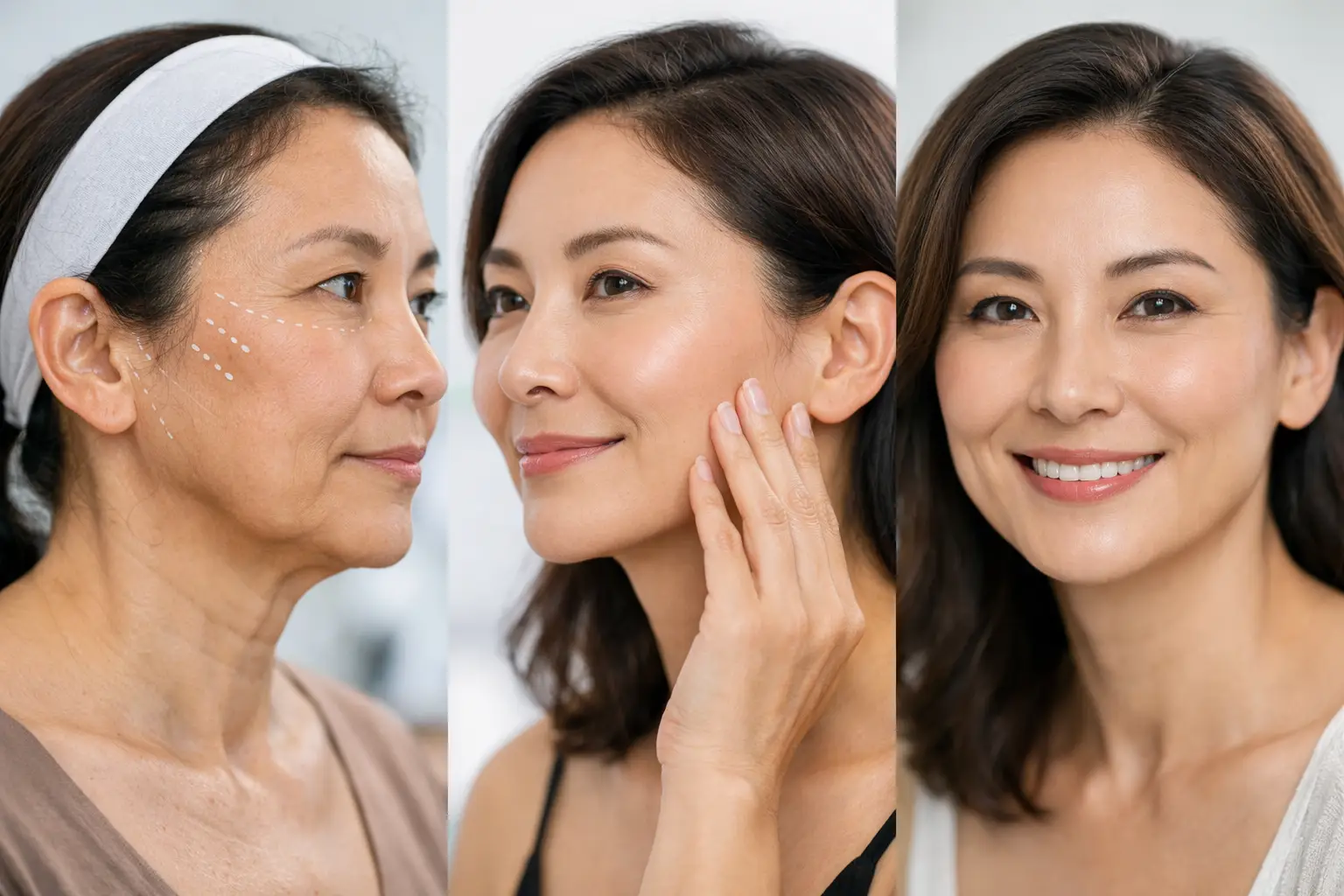
A softer jawline, early jowling, cheeks that no longer sit as high as they once did - these are often the concerns that bring clients in to ask about thread lift results. The appeal is easy to understand: visible facial support and a refreshed look without committing to traditional facelift surgery or a lengthy recovery. But the best results are not about looking pulled, tight, or noticeably “done.” They are about restoring subtle structure in a way that still looks like you.
A thread lift can be an excellent non-surgical option for the right candidate, particularly when treatment is planned around your facial anatomy, degree of skin laxity, and long-term goals. Knowing what changes to expect, and when to expect them, makes it easier to decide whether this treatment fits your vision.
What Results Can a Thread Lift Create?
A thread lift uses absorbable sutures placed beneath the skin to reposition and support areas affected by mild to moderate laxity. Depending on the treatment plan, threads may be used to create a more defined jawline, lift the midface, soften the appearance of jowls, improve cheek contour, or provide subtle elevation around the brows and neck.
The immediate difference is often a more supported facial shape. Clients may notice that their cheeks appear slightly elevated, the lower face looks more streamlined, or the transition from the jawline to the neck is cleaner. The goal is controlled, natural-looking repositioning, not a dramatic surgical-level change.
Threads also encourage collagen production as the body gradually absorbs them. That collagen response can improve the look and feel of the skin over time, adding an important skin-quality benefit beyond the initial lift. Results vary from person to person, but this gradual process is one reason a well-performed thread lift can continue to look better after the first few weeks.
Thread Lift Results Timeline: What to Expect
Right after treatment
Some lift is visible as soon as treatment is complete. This is the mechanical support created by the threads, and it gives clients an early sense of the improvement possible in the cheeks, jawline, or other treated area.
However, the first look is not the final look. Mild swelling, tenderness, tightness, bruising, or small areas of unevenness can occur after treatment. These are common parts of the healing process and can temporarily make results appear more pronounced or asymmetrical than they will be once the tissues settle.
The first two weeks
During the first several days, most clients can return to many regular activities, although strenuous exercise, aggressive facial massage, wide mouth movements, and dental work may need to be postponed based on provider instructions. Any bruising and swelling generally improve during this period.
The treated area begins to settle into a more natural position. You may still feel awareness of the threads when smiling, chewing, or touching the face, but this usually eases as healing progresses. Following aftercare directions matters. The threads need time to integrate with the tissue and provide stable support.
Four to twelve weeks
This is when many clients begin to appreciate the full aesthetic direction of their results. The early swelling has typically resolved, the facial contours look more relaxed, and collagen stimulation is underway.
A thread lift does not stop the aging process, but it can make the face look rested, firmer, and better defined. Results are often especially pleasing in photos because the improvement is structural rather than simply surface-level. You may look less tired without friends or coworkers being able to identify exactly what changed.
Several months and beyond
Collagen remodeling continues over the following months. Although the threads gradually dissolve, the collagen framework they help stimulate can contribute to ongoing support and improved skin texture.
How long results last depends on the type and number of threads used, your skin quality, facial movement, lifestyle, and the degree of laxity treated. Many clients enjoy results for about 12 to 18 months, while some may see benefits for a shorter or longer period. Maintenance treatments and complementary services can help support a consistently refreshed appearance.
What Makes Thread Lift Results Look Natural?
Natural results begin with appropriate expectations. A thread lift is designed for people who want a meaningful but subtle improvement without surgery. It is not intended to duplicate the correction of a surgical facelift for significant sagging, deep folds, or extensive loose skin.
The provider’s assessment is equally important. Facial proportions, skin thickness, fat distribution, bone structure, and the direction of tissue descent all affect thread placement. A personalized plan may focus on only one or two areas rather than trying to lift every concern at once. Strategic treatment often looks more refined than overcorrecting the face.
Age alone does not determine candidacy. A person in their 50s with good skin elasticity and early lower-face laxity may be an excellent candidate, while someone younger with more significant volume loss may benefit from a different approach. During a professional consultation, the right question is not simply, “Can threads lift this?” It is, “Will threads create the result I want in a way that looks natural?”
The Role of Combination Treatments
Threads address tissue support, but facial aging involves more than laxity. Volume loss, repetitive muscle movement, sun damage, uneven texture, and changes in skin hydration can all affect how refreshed the face appears. This is why a customized treatment plan may combine threads with other non-surgical services.
For example, carefully placed dermal filler may restore volume where it has been lost, while wrinkle-relaxing injections can soften expression lines that remain after lifting. Microneedling, laser-based skin rejuvenation, and medical-grade skincare may improve texture, tone, and collagen support. The right combination depends on your priorities, budget, and tolerance for downtime.
There is no advantage in adding treatments simply to add treatments. The most effective plan is one that addresses the actual cause of your concern and is paced appropriately for your skin and schedule.
Factors That Can Affect Your Results
Thread lift outcomes are highly individualized. Skin with good elasticity generally responds better than skin with advanced laxity. Weight fluctuations can also change facial contours after treatment, especially when the cheeks and jawline are involved.
Smoking or nicotine use may interfere with healing and collagen production, so your provider may advise stopping before and after treatment. Sun exposure, poor skincare habits, and major changes in overall health can also influence how long results appear to last.
Experience matters, too. Thread lifts should be performed by qualified medical professionals who understand facial anatomy, safety protocols, and appropriate patient selection. At Elite Laser Center, treatment planning centers on a thorough consultation, realistic goals, and a comfortable experience under medical supervision.
When a Thread Lift May Not Be the Best Choice
A thread lift is not right for every concern. If there is substantial excess skin, significant jowling, or pronounced neck laxity, surgery may provide a more predictable and durable result. Threads may also be inappropriate for certain medical conditions, active skin infections, pregnancy, or people unable to follow required aftercare.
This is not a failure of the treatment. It is the value of an honest consultation. The best aesthetic recommendations are based on what will serve you well, not on forcing one procedure to solve every issue.
A thread lift can be a powerful choice when you want to look more rested, defined, and confident without putting your life on hold. Choose a medically supervised provider who will evaluate your face carefully, explain the realistic range of results, and create a plan that respects the way you want to look - like yourself, only refreshed.