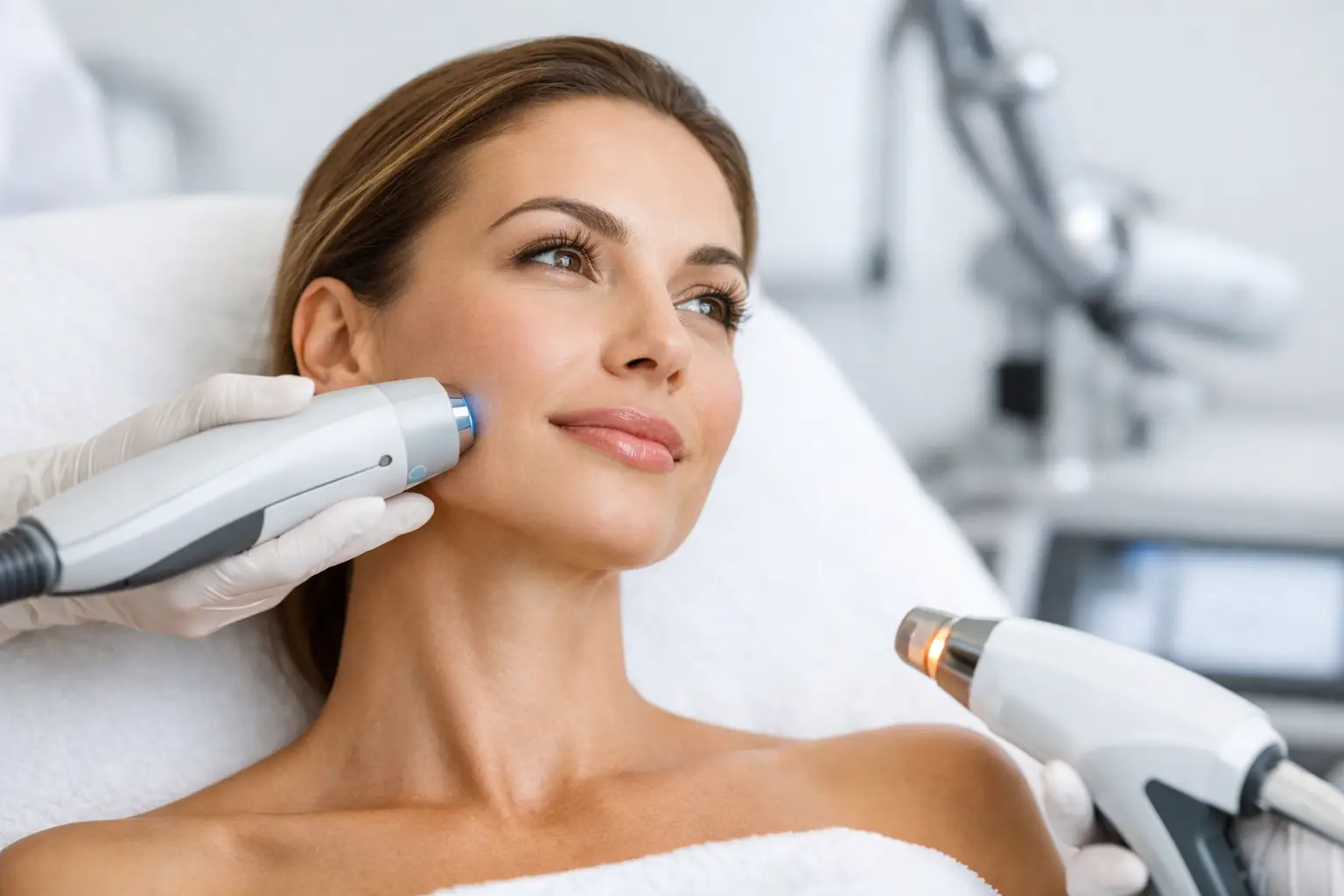
Loose skin usually shows up before people expect it. One day your jawline looks a little softer, the skin around your cheeks feels less springy, or your neck starts reflecting every late night and birthday at once. That is why skin tightening without surgery has become such a popular option - it gives people a way to address mild to moderate laxity without the scars, anesthesia, and recovery that come with a surgical lift.
For many adults, the goal is not to look dramatically different. It is to look more rested, firmer, and more like themselves. Non-surgical treatments can absolutely help with that, but results depend on the device, the area being treated, the condition of the skin, and how much laxity is present before you start.
How skin tightening without surgery actually works
Most non-surgical tightening treatments work by delivering controlled heat into deeper layers of the skin. That heat stimulates collagen remodeling and, in some cases, elastin production. Collagen is the structural support system that helps skin stay firm. As collagen declines with age, weight changes, sun exposure, and genetics, skin starts to loosen.
The key point is that these treatments do not remove extra skin. They encourage the skin to become firmer over time. That makes them best for early to moderate sagging rather than severe laxity. If someone has a lot of excess skin under the chin or along the lower face, surgery may still produce the strongest result.
That does not mean non-surgical options are minor. In the right candidate, they can create visible improvement with far less downtime. For busy professionals, parents, and anyone who does not want a long recovery, that trade-off is often worth it.
The most common treatments for skin tightening without surgery
Radiofrequency is one of the most established options. It heats the deeper dermal layers while protecting the surface of the skin. Patients often choose it for the face, neck, abdomen, arms, or areas where the skin has started to look crepey. Depending on the device and settings, treatments can feel warm to intense, but they are generally well tolerated. Results usually build gradually over several weeks to months.
Ultrasound-based tightening targets deeper tissue support layers. This can be a good fit for lifting and firming around the brow, jawline, chin, and neck. Ultrasound is often chosen when a patient wants more structural tightening without surgery. It can be very effective, but it is not the right fit for everyone, especially if comfort is a major concern or if the skin needs more surface rejuvenation as well.
Microneedling with radiofrequency combines two approaches. Tiny needles create controlled micro-injuries while radiofrequency energy is delivered below the skin. This is especially useful when laxity comes with texture issues, acne scars, enlarged pores, or fine lines. It can improve firmness and overall skin quality at the same time, which is why many med spa patients ask about it.
PDO threads sit in a slightly different category. Rather than using energy alone, they place dissolvable threads under the skin to create a subtle lift and stimulate collagen. This can work well for the mid-face, jawline, and neck in patients who want more immediate support. Threads are still non-surgical, but they are more technique-dependent than device-based treatments, so provider experience matters a great deal.
Laser resurfacing can also contribute to tighter-looking skin, especially when texture, sun damage, and fine lines are part of the problem. It is not always the first choice if laxity is the main concern, but it can be an excellent add-on or part of a broader rejuvenation plan.
What kind of results can you realistically expect?
This is where honest consultation matters. Non-surgical tightening can improve firmness, definition, and skin quality. It can soften early jowling, make the neck look smoother, and help the lower face appear more refined. What it usually will not do is replicate a surgical facelift.
The best results tend to happen when treatment starts before laxity becomes advanced. Someone in their 30s, 40s, or early 50s with mild to moderate sagging often responds better than someone with significant excess skin and a lot of tissue heaviness. That is not a hard rule, but it is a useful guideline.
Timing matters too. Some treatments produce a modest early improvement, but collagen remodeling takes time. Many patients see the full effect over two to six months. If you want to look better for a major event next month, your provider may recommend a different strategy or combine treatments for quicker visible payoff.
Who is a good candidate?
The ideal candidate usually has mild to moderate skin laxity, realistic expectations, and a preference for minimal downtime. Good skin health also helps. If you are dealing with sun damage, dehydration, loss of volume, or uneven texture, tightening alone may not give you the result you picture in your head.
That is why a personalized plan matters. Sometimes the issue is not just loose skin. Volume loss in the cheeks can make the lower face sag more. Poor skin texture can exaggerate aging even when laxity is mild. In those cases, combining tightening with injectables, microneedling, facials, or laser treatments often creates a more balanced outcome.
Patients with very thin skin, significant medical conditions, active skin infections, or unrealistic expectations may need a different approach. The safest and most effective path starts with a medical evaluation, not a guess.
Choosing the right treatment depends on the area
Facial skin tightening is not the same as body skin tightening. The jawline and neck often need precision and lift, while the abdomen or upper arms may need broader collagen stimulation across a larger area. A device that works beautifully around the chin may not be the best value for post-weight-loss laxity on the body.
Comfort level also plays a role. Some people want the strongest available treatment they can tolerate. Others want lower downtime, gentler sessions, or a series of treatments that fit around work and family obligations. Neither approach is wrong. The right plan is the one that matches your skin, schedule, and goals.
In a medically supervised setting, providers can also account for skin tone, sensitivity, and safety considerations. That is especially important with energy-based treatments. Technology matters, but so does the person using it.
Why provider experience matters so much
Skin tightening is not a one-size-fits-all service. Energy settings, treatment depth, number of sessions, and combination planning all affect the outcome. A rushed treatment or an overly aggressive one can leave patients disappointed.
Experienced aesthetic providers look at the full picture. They assess how the skin moves, where support has been lost, whether the issue is laxity or volume depletion, and how much improvement is realistic without surgery. They also explain when non-surgical treatment is a strong option and when it may not be enough.
That kind of guidance protects both your safety and your investment. In a trusted med spa environment, the conversation should feel clear, not pushy. You should know what the treatment is designed to do, what it cannot do, and how long results are expected to last.
What to ask at your consultation
Ask which technology is being recommended and why. Ask how many sessions are likely needed, when results should appear, and what downtime to expect. It is also smart to ask whether your concern is truly skin laxity or if another issue is contributing to the look you want to change.
Photos can help, but your provider should also set expectations in plain language. If your goal is a sharper jawline, a smoother neck, or firmer skin after weight loss, the plan should connect directly to that outcome. At Elite Laser Center, that kind of customization is central to getting real, visible results rather than generic treatment.
Price matters, but value matters more. The cheapest option is not always the most effective, especially if it takes repeated sessions to reach a result another treatment could achieve more efficiently.
Is non-surgical tightening worth it?
For the right patient, yes. It can be an excellent way to firm the skin, refresh the face or body, and stay ahead of aging without surgery. The biggest mistake is expecting one treatment to fix every concern. The best outcomes usually come from a smart plan, realistic expectations, and treatment that fits your skin rather than a trend.
If your skin has started to feel less firm, that does not mean surgery is your only option. It means it is time for an expert assessment and a treatment plan built around what will actually move the needle. A confident, natural-looking result usually starts there.