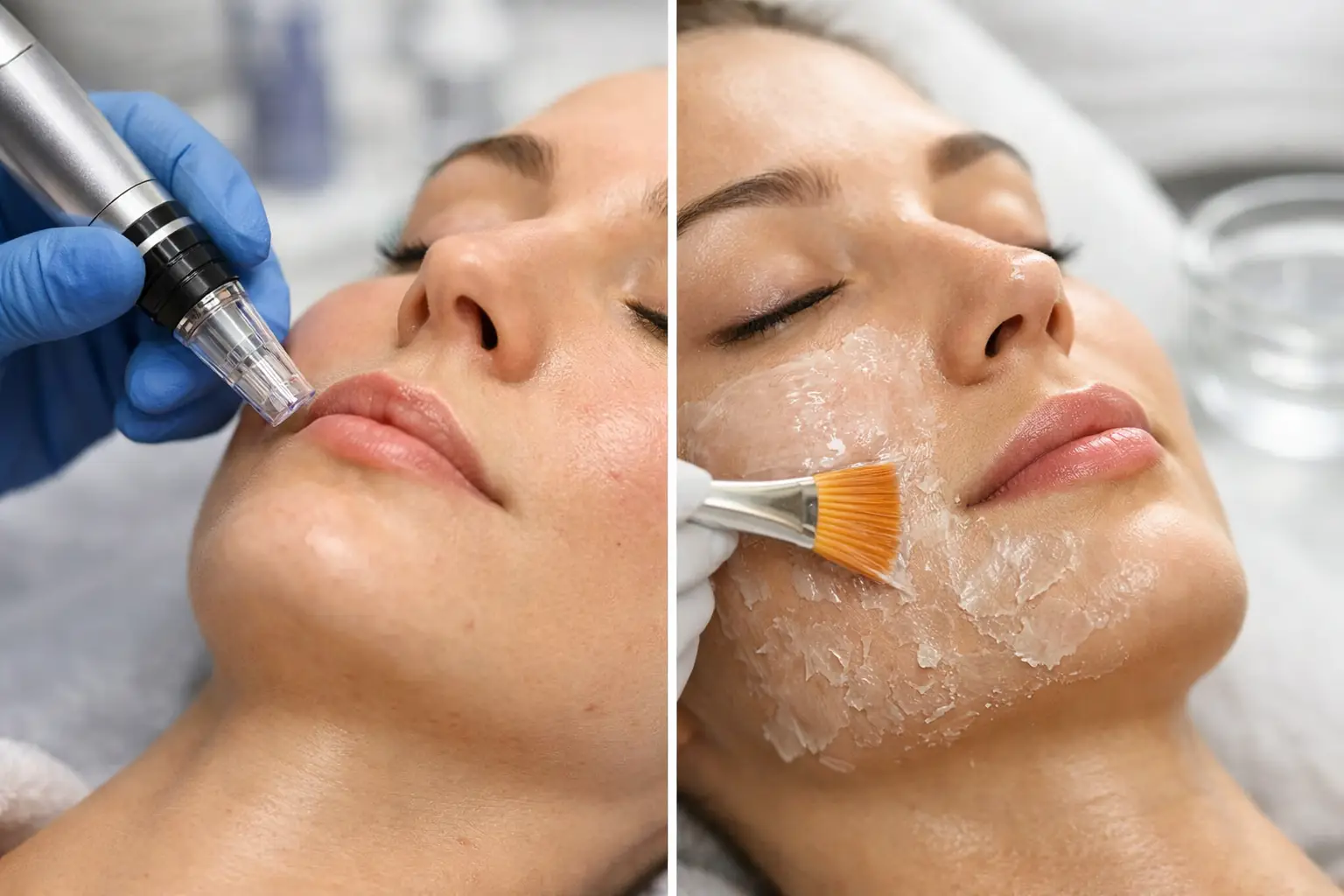
One treatment uses controlled micro-injuries to stimulate collagen. The other uses carefully selected acids to remove damaged outer layers of skin. When clients ask about microneedling vs chemical peel, they are usually asking a more practical question: which one will give me better skin without creating more downtime than I can handle?
The honest answer is that both can deliver real, visible results. The better choice depends on what you want to improve, how sensitive your skin is, your skin tone, and how quickly you need to get back to work, events, or everyday life. If your goal is smoother texture, softer acne scars, fewer fine lines, or stronger long-term collagen support, microneedling often stands out. If your biggest concerns are dullness, pigment irregularities, sun damage, or breakouts, a chemical peel may be the smarter first step.
Microneedling vs chemical peel: the core difference
Microneedling creates tiny, controlled channels in the skin using a professional device. That process triggers the skin’s natural repair response and encourages collagen and elastin production. It is less about removing skin from the surface and more about rebuilding from within.
A chemical peel works differently. A customized peeling solution is applied to exfoliate the skin at a controlled depth. Depending on the peel, that can range from a light refresh to a more intensive resurfacing treatment. Instead of stimulating repair through micro-injury alone, it accelerates cell turnover by loosening and shedding damaged skin cells.
That difference matters because each treatment targets skin concerns in its own way. Microneedling is often favored for texture and structural issues. Chemical peels are often chosen for tone and surface-level discoloration.
When microneedling is usually the better choice
If your skin looks tired, crepey, rough, or marked by acne scars, microneedling tends to be a strong option. It is especially useful when the issue is not just color on the surface, but a change in the skin’s texture itself.
Fine lines around the mouth, early loss of firmness, enlarged pores, and shallow acne scarring are common reasons people choose microneedling. Because it encourages collagen production over time, the skin can continue improving after the appointment. That makes it appealing for clients who want results that build gradually and naturally.
Microneedling can also be a smart choice for patients who want rejuvenation with relatively manageable downtime. Most people experience redness for a day or two, sometimes a bit longer depending on treatment depth and skin sensitivity. The skin can feel tight, warm, and slightly rough as it heals, but many clients are back to normal routines quickly.
Another important point is versatility. Under medical supervision, microneedling can often be adjusted to suit different treatment areas and different skin goals. For many patients, that level of customization is a major advantage.
When a chemical peel makes more sense
Chemical peels excel when the biggest issue is on the surface. If your skin looks dull, uneven, congested, or sun-damaged, a peel may produce a faster visible refresh.
Lighter peels can brighten the complexion, improve mild acne, and help smooth rough patches with minimal interruption to your week. Medium-depth options can do more, but they also come with more peeling and recovery. The right peel depends on your skin history, goals, and how much correction you actually need.
Chemical peels are often a strong fit for hyperpigmentation, post-breakout marks, and visible sun damage. They can also help patients dealing with oily or acne-prone skin because certain acids target congestion and excess oil effectively.
That said, not every peel is appropriate for every skin tone or skin condition. Stronger peels require careful screening, especially in patients prone to sensitivity or post-inflammatory pigmentation. This is one reason a medically guided treatment plan matters. The peel itself is only part of the equation. Proper selection is what helps deliver results safely.
Which treatment gives faster results?
If you want the skin to look brighter and smoother quickly, a chemical peel often wins the short-term comparison. Even a lighter peel can make the complexion appear fresher after the initial healing phase.
Microneedling usually plays a longer game. Some patients notice a glow within days, but the more meaningful changes often show up gradually as collagen remodeling develops. If your priority is long-term improvement in texture, firmness, and acne scar appearance, waiting a bit longer can be worth it.
This is where expectations matter. Faster is not always better, and slower is not always stronger. The right choice depends on whether you want a quick reset, deeper structural improvement, or both in a staged plan.
Downtime, comfort, and daily life
For busy adults, downtime is often the deciding factor. Neither treatment is surgery, but neither should be treated casually.
Microneedling typically causes redness similar to a moderate sunburn for 24 to 72 hours. Some people also notice minor swelling or dryness. Makeup is usually delayed immediately after treatment, and sun protection is essential.
With a chemical peel, downtime varies more widely. A very light peel may cause only mild flaking. A stronger peel can involve several days of visible peeling, tightness, and sensitivity. If you have a big event coming up, timing matters.
Comfort is also different. Microneedling can feel prickly or intense depending on the area and depth, but numbing cream is commonly used to improve the experience. Chemical peels often create a stinging or warm sensation during application, especially with stronger formulas, though the treatment itself is usually brief.
What about sensitive skin and darker skin tones?
This is where the conversation needs more nuance than most quick online comparisons provide.
Sensitive skin does not automatically rule out either treatment, but it does raise the importance of customization. Some patients with reactive skin tolerate microneedling better than certain acids. Others do better with a carefully chosen light peel than with needling. Skin history matters as much as skin type.
For deeper skin tones, safety should never be an afterthought. Both microneedling and chemical peels can be appropriate, but provider experience is critical. The wrong peel strength or poor aftercare can increase the risk of irritation and pigment changes. A skilled medical spa that treats all ethnic skin types and builds treatment plans carefully can make a major difference in both safety and results.
Can you combine microneedling and chemical peels?
Yes, but not usually on the same day and not in a one-size-fits-all way. In many cases, the best answer to microneedling vs chemical peel is not either-or forever. It is which one should come first, and how should they be sequenced.
A patient with acne scars and discoloration may benefit from both treatments over time. A chemical peel might help clear pigment and congestion first, while microneedling addresses textural changes later. Another patient may start with microneedling for collagen support, then add a peel for maintenance and brightness.
Combination planning works best when your provider looks at the whole picture instead of pushing a single treatment for every concern. That kind of strategy tends to produce better, more natural-looking outcomes.
How to choose the right treatment for your skin
Start with your top concern, not the trend. If your main frustration is acne scars, fine lines, enlarged pores, or skin laxity, microneedling is often the stronger fit. If your biggest issue is sun damage, breakouts, uneven tone, or a dull complexion, a chemical peel may be the faster path.
Then think about downtime realistically. If visible peeling would be a problem for your work or schedule, that may steer you toward microneedling or a lighter peel. If you want a brighter look before an event, a well-timed peel may make more sense than collagen-focused treatment.
Finally, consider the value of professional evaluation. Skin concerns often overlap. What looks like simple discoloration can include textural damage. What feels like rough texture may also involve dehydration, inflammation, or active acne. A consultation helps separate what you see in the mirror from what your skin actually needs.
At a medically supervised practice like Elite Laser Center, that kind of customization is the standard clients should expect. The right treatment is not the most aggressive one. It is the one that matches your skin, your goals, and your lifestyle well enough to produce results you can actually feel confident about.
If you are choosing between microneedling and a chemical peel, think beyond the treatment name. The better question is which option moves your skin closer to smooth, clear, healthy-looking results with a plan that makes sense for real life.