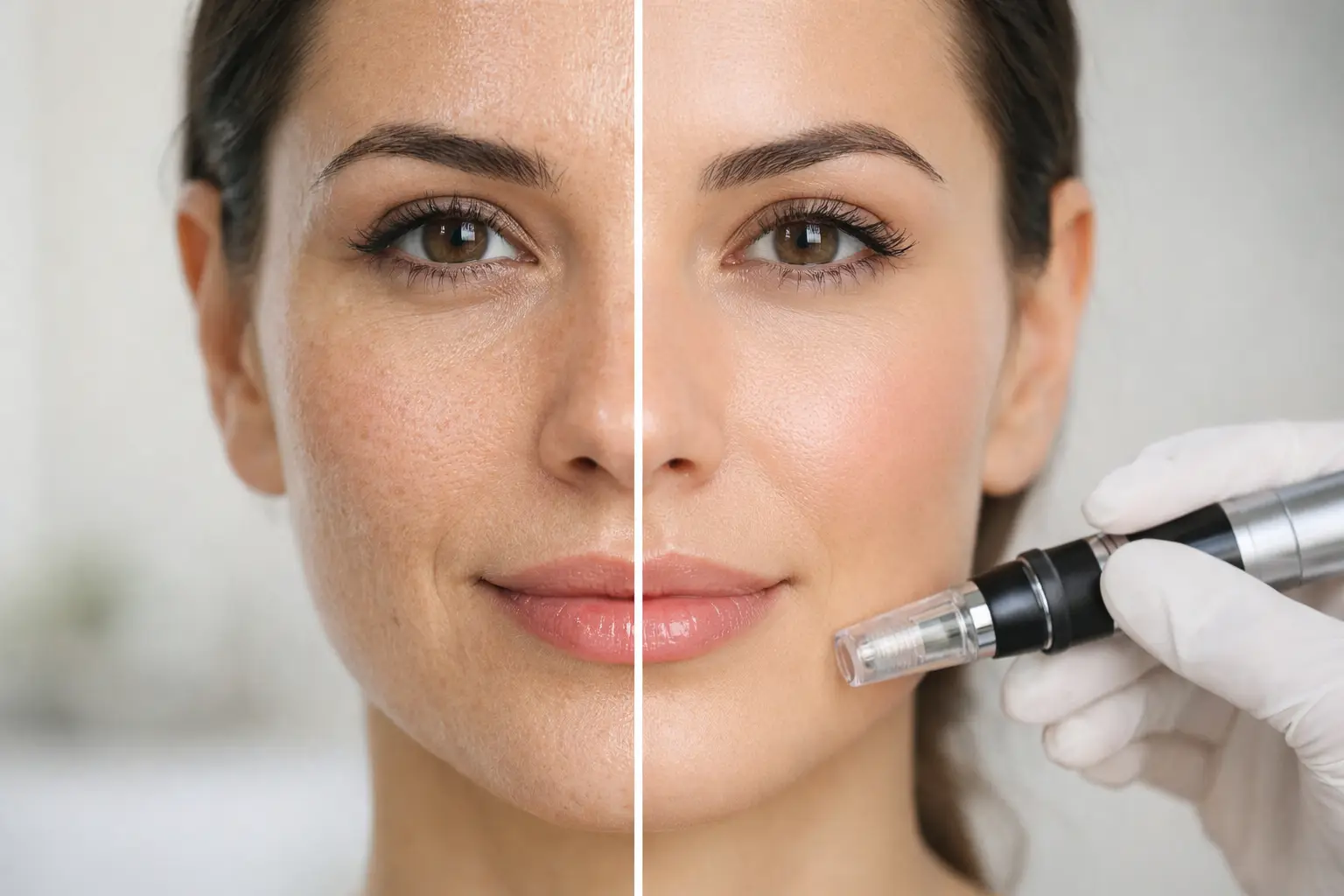
A close-up mirror can make uneven texture feel impossible to ignore. Makeup may settle into shallow acne scars, pores can look more visible in certain lighting, and skin may feel rough even when it is otherwise clear. A microneedling texture improvement example helps put the treatment into perspective: the goal is not to create filtered-looking skin overnight. It is to encourage healthier collagen remodeling so skin gradually looks smoother, more even, and more refined.
For Long Island clients who want a non-surgical option with limited downtime, microneedling can be a powerful part of a personalized skin rejuvenation plan. Results are real, but they are gradual, and the right treatment approach depends on the type of texture concern being treated.
What microneedling can improve
Microneedling uses a professional device with very fine, sterile needles to create controlled microchannels in the skin. This process triggers the body's natural repair response, including new collagen and elastin production. Collagen is one of the structural proteins that helps skin look smooth, supported, and resilient.
As the skin rebuilds, microneedling may improve the appearance of enlarged pores, roughness, fine lines, mild crepiness, and certain depressed acne scars. It can also help create a more even-looking surface when skin has lost some of its firmness over time.
The key word is appearance. Microneedling does not erase every scar, shrink pores permanently, or change skin overnight. Deep ice-pick scars, raised scars, active inflammatory acne, and significant skin laxity often need a different treatment or a combination plan. A professional consultation helps identify whether microneedling is the right first step.
A microneedling texture improvement example over time
Consider a typical client in her late 30s with old acne scarring along the cheeks, visible pores around the nose, and a makeup texture she describes as bumpy. Her acne is no longer active, but years of breakouts left behind shallow rolling scars and uneven skin texture.
After an in-person skin assessment, she begins a series of three professional microneedling treatments, generally spaced about four to six weeks apart. Her provider selects a treatment depth based on the areas being treated, her skin condition, and her tolerance. The cheeks may require a different approach than the more delicate skin around the mouth or forehead.
Immediately after the first session, her skin appears pink to red, similar to a mild sunburn. She may feel warmth and tightness for the rest of the day. During the next few days, dryness and light flaking are possible. This early phase is healing, not the final result.
By about two to four weeks after the first treatment, she may notice that her skin feels softer and her makeup applies more evenly. Her acne scars are still present, but the sharp contrast between the scars and surrounding skin may start to look less noticeable.
After the second treatment, improvements may become easier to see in natural light. The cheeks can look smoother overall, pores may appear less prominent, and shallow scars may begin to blend more naturally into the skin. Friends may notice that she looks refreshed without being able to identify a specific procedure.
Several weeks after the third treatment, collagen remodeling continues. In this microneedling texture improvement example, the best outcome is not perfectly poreless skin. It is a visible improvement in skin quality: fewer rough patches, softer-looking shallow scars, and a more even reflection of light across the cheeks. Many clients choose maintenance treatments to support their results as skin continues to age and respond to environmental stress.
Why a series often delivers better results
One treatment can give skin a healthy glow, especially when dehydration and mild surface roughness are part of the concern. Structural texture changes, however, take time. Collagen production is a biological process, and deeper acne scars or longstanding uneven texture rarely respond fully to one session.
A treatment series gives the skin repeated, controlled opportunities to rebuild. The number of sessions depends on the concern. Someone focused on fine lines and dullness may need fewer treatments than someone working to soften multiple areas of acne scarring. Your provider should explain the recommended schedule, expected progress, and realistic limits before treatment begins.
It also matters what happens between appointments. Sun exposure, picking at skin, using irritating products too soon, or skipping daily SPF can work against your investment. Consistent skincare and careful aftercare help protect the new, healthier-looking skin you are building.
What affects texture results
No two sets of before-and-after results should look identical. Age, genetics, scar type, skin thickness, sun damage, lifestyle habits, and skincare routine all influence the response. Even the same person may see more improvement in one area of the face than another.
Skin color and sensitivity also deserve thoughtful planning. Microneedling can be appropriate for many skin types when performed correctly, but treatment settings, skin preparation, and aftercare should be tailored to reduce unnecessary irritation and the risk of post-inflammatory discoloration. This is one reason professional treatment is different from using an at-home roller.
At-home devices cannot provide the same level of precision, sterility, or treatment customization as a medical spa setting. More aggressive does not mean better. Improper technique can irritate the skin, spread bacteria, or worsen discoloration and scarring. For meaningful texture concerns, medical supervision and an experienced provider matter.
The appointment and recovery experience
A professional microneedling appointment begins with a review of your skin goals, health history, medications, and current skincare routine. Your provider may ask you to pause certain active products before treatment. Retinoids, exfoliating acids, and other potentially irritating ingredients are commonly addressed during pre-treatment planning.
A topical numbing cream is typically used to keep the procedure comfortable. The treatment itself is relatively quick, although the full appointment includes cleansing, numbing, the procedure, and post-treatment guidance. Most clients return to normal daily activities quickly, but they should expect visible redness for a short period and plan social events accordingly.
For the first day or two, gentle skincare is the priority. Avoid heat, heavy workouts, direct sun, harsh exfoliation, and makeup until your provider says it is appropriate. Use mild products, keep the skin hydrated, and wear sunscreen diligently once instructed. If you experience unusual swelling, blistering, prolonged discomfort, or any concerning reaction, contact your treatment provider promptly.
When microneedling may not be the best first choice
Microneedling is not a one-size-fits-all answer for texture. Active acne should usually be brought under control first. Clients who are prone to keloid scarring, have an active skin infection, are healing from a recent procedure, or have certain medical conditions may need to postpone treatment or choose another option.
Deep scars may respond best to a customized plan that combines microneedling with other medically appropriate treatments. Some concerns require more targeted scar procedures, while others benefit from treatments that address pigment, redness, or laxity alongside texture. The right recommendation should be based on your skin, not a preset menu.
Choose a plan built around your skin
At Elite Laser Center, the focus is on safe, visible, non-surgical results tailored to your goals. A consultation allows a trained provider to assess whether your uneven texture is caused by acne scarring, enlarged pores, sun damage, fine lines, or a combination of factors. From there, you can discuss the treatment timeline, downtime, cost, and whether microneedling alone is likely to deliver the improvement you want.
Smoother-looking skin is usually built in stages, not achieved in a single appointment. If texture has been affecting how confident you feel without makeup or in close-up photos, a personalized evaluation can give you a clear, realistic path forward.