Laser Hair Removal Versus Electrolysis: Which Is Right for You?
A few stray chin hairs may call for a different approach than shaving your legs every other day. That is the real question behind laser hair removal versus electrolysis: which treatment matches your hair, skin, schedule and goals?
Both require multiple appointments, but they work differently. Laser treats many follicles across an area, while electrolysis addresses individual follicles. Understanding that difference can help you choose a practical plan and avoid paying for a treatment that is poorly suited to your hair.
Laser Hair Removal Versus Electrolysis: The Core Difference
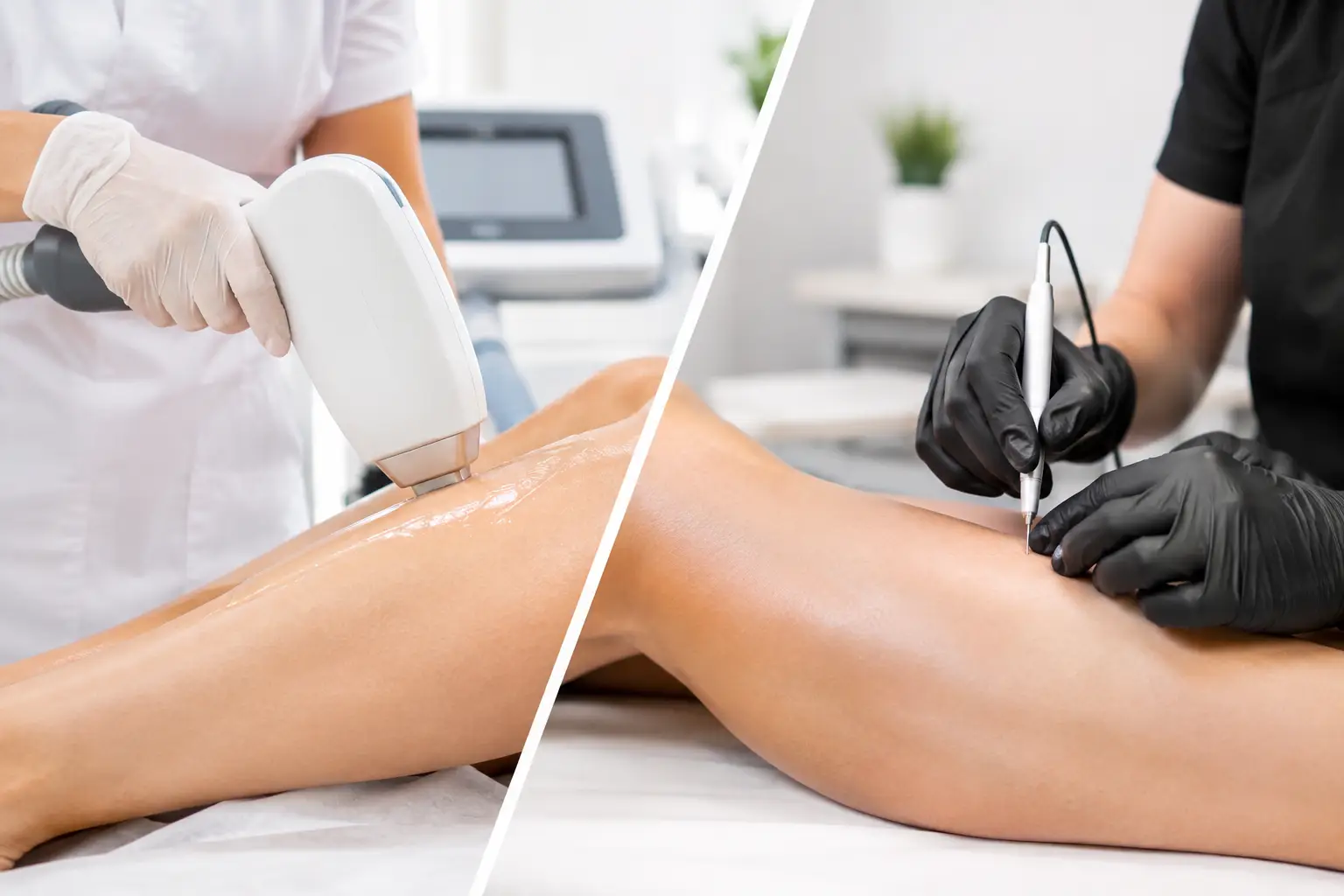
Laser hair removal uses light energy absorbed by pigment, called melanin, in the hair. The resulting heat damages structures responsible for hair growth. Because it can treat multiple follicles with each pulse, laser is efficient for areas such as the legs, back, chest, arms, bikini area and underarms.
Electrolysis treats one follicle at a time. An electrologist inserts a fine probe into the follicle opening and delivers electrical energy to destroy the hair-growth structures. The treated hair is then removed. Because the process does not depend on hair pigment, it can address colors that laser cannot effectively target.
The main distinction is long-term hair reduction with laser versus permanent removal of successfully treated hairs with electrolysis. Neither should be sold as a one-appointment solution.
Laser and Electrolysis at a Glance
| Consideration | Laser Hair Removal | Electrolysis |
|---|---|---|
| How it works | Light targets pigment in the hair. | A fine probe delivers electrical energy to individual follicles. |
| Hair color | Generally most effective on dark, coarse hair. | Can treat all hair colors, including white and gray. |
| Treatment speed | Treats multiple follicles across an area. | Treats follicles individually. |
| Common fit | Larger areas of suitable pigmented hair. | Isolated hairs, light-colored hairs and detailed clearing. |
| Results | Lasting reduction; maintenance may be needed. | Permanent removal when follicles are successfully destroyed. |
| Typical pricing approach | By treatment area, session or package. | Often by appointment length. |
Which Treatment Is Faster?
For larger areas containing suitable dark hair, laser generally has the advantage. Treating multiple follicles at once makes it more practical for dense hair on the legs, back or chest.
Electrolysis takes more treatment time because each follicle is addressed separately. That can be manageable for a few chin hairs but represents a greater time commitment across a large, densely covered area.
Both methods need repeated appointments because hairs are not all visible or in the same growth stage at once. Your schedule should reflect the body area, growth pattern and response rather than a universal interval.
Permanent Hair Reduction Versus Permanent Hair Removal
What Permanent Hair Reduction Means
Laser hair removal is commonly described as permanent hair reduction. This means a lasting reduction in the number of hairs that regrow, not a guarantee that every hair will disappear forever.
After a treatment series, regrowth may be less dense and finer. Some clients need maintenance, especially in hormonally influenced areas such as the chin.
What Permanent Hair Removal Means
Electrolysis can permanently remove hair by destroying its growth structures. However, clearing an area still requires a series, and a follicle may need further treatment if it was not fully destroyed.
Hormonal changes can also make previously inconspicuous hairs more noticeable. Neither treatment corrects an underlying hormonal condition. Sudden or rapidly increasing facial or body hair deserves medical evaluation, particularly when accompanied by other symptoms.
Hair Color and Skin Tone Matter
Hair That Usually Responds Best to Laser
Dark, coarse hair generally gives laser a stronger target. White, gray, blond and red hair usually lack the appropriate pigment for an effective laser response. Very fine facial hair may also be a poor target, even when it appears somewhat dark.
Darker skin tones can be treated with appropriate laser technology and settings, but device selection and provider experience are especially important. Skin color alone does not establish candidacy. Recent tanning, hair thickness, medications and treatment history also matter.
At Elite Laser Center & Med Spa, we use Lumenis LightSheer and Alma Soprano laser systems. A consultation helps determine whether our available technology is appropriate for your skin and hair. A test spot may be recommended.
When Electrolysis May Be More Suitable
Electrolysis does not rely on pigment, making it an option for light-colored hairs and a range of skin tones. Technique still matters: treatment is not risk-free simply because it does not use a laser.
For a small number of white, gray or other light-colored hairs, electrolysis may be more practical than repeatedly treating hair that is unlikely to respond to laser.
Which Is Better for Facial Hair?
Facial hair requires an individual assessment. Coarse, dark growth across a larger area may respond to laser, while scattered white or gray hairs may be better suited to electrolysis.
A small facial area does not automatically favor one method. The number, thickness and color of the hairs matter more than the area's size alone.
For mixed hair colors, some people use laser to reduce suitable dark hairs and then consult an electrologist about remaining light-colored hairs. The providers should coordinate timing and preparation rather than overlapping treatments without a plan.
Comfort, Recovery and Risks
Laser Hair Removal
Laser can feel like brief heat or snapping sensations. Cooling features can improve comfort, but treatment should not be described as painless. Temporary redness and swelling around the follicles are common. Burns, blisters, pigment changes and scarring are possible.
Electrolysis
Electrolysis may produce brief stinging or heat sensations at each follicle. Temporary redness, swelling or small crusts can occur. Poor technique or aftercare can contribute to infection, discoloration or scarring.
For either treatment, tell your provider about medications, pregnancy, recent sun exposure, cold sores, skin conditions and healing problems. Follow the specific aftercare instructions and contact the provider if you develop blistering, increasing pain or other concerning symptoms.
Preparation Is Different for Each Method
Before Laser Hair Removal
Avoid waxing, tweezing and other methods that pull hairs from their follicles for the period your provider recommends. Shaving is generally preferred, with timing directed by the clinic. Discuss tanning, self-tanner and potentially irritating skincare products before treatment.
Before Electrolysis
Your electrologist usually needs enough visible hair to identify and remove it. Ask how long to leave the hair and when to stop shaving. Do not assume laser preparation instructions apply to electrolysis.
For either method, ask before using depilatory creams or numbing products. Do not change prescribed medications without guidance from the prescribing clinician.
Cost: Compare the Complete Plan
A short electrolysis appointment may be economical for a handful of hairs. Treating dense hair across a large area, however, can require many hours.
Laser packages can make costs easier to plan for suitable larger areas. Compare the total treatment commitment, follow-up terms and likely suitability rather than the price of one appointment.
Elite's Three-Year Laser Hair Removal Package
Elite's three-year Elite Package includes:
- Nine initial laser hair removal treatments.
- Up to nine additional follow-up treatments when needed, at no additional charge.
- Up to 18 treatments total within the three-year package period.
The package provides time for an initial series and appropriate follow-up. It does not guarantee complete removal, make unsuitable hair responsive to laser or mean every client needs all 18 treatments. Treatment timing is individualized.
Ask our team about current pricing, eligibility and package terms.
Frequently Asked Questions
Does electrolysis work on gray hair?
Yes. Electrolysis does not depend on hair pigment, so gray and white hairs can be treated.
Can laser remove every hair permanently?
Complete, permanent removal of every hair should not be promised. Laser can provide lasting reduction, and maintenance may be needed.
Is electrolysis only for the face?
No. It can treat facial and body hair, but addressing individual follicles makes larger areas more time-intensive.
Can I have laser after electrolysis?
Possibly, if the remaining hair is suitable for laser. Tell both providers about previous treatments so they can assess your skin and coordinate timing.
Discuss Laser Hair Removal in Stony Brook, NY
Elite Laser Center & Med Spa offers laser hair removal for women and men in Stony Brook and surrounding Suffolk County communities, including Setauket, Port Jefferson, Lake Grove, Centereach and Smithtown.
We can assess whether your hair is suitable for laser and explain our treatment and package options. If your main concern is light-colored or isolated hair, an electrolysis consultation with a qualified electrologist may be the more appropriate next step.
Request a consultation to discuss your skin, hair and goals.
Sources
- American Academy of Dermatology: Laser hair removal FAQs
- American Academy of Dermatology: Ways to remove unwanted hair
- Oregon Health & Science University: Electrolysis FAQs
Produced with AI assistance and reviewed for accuracy against the sources listed. This article is for general educational purposes and is not professional medical advice, a diagnosis or a treatment plan. Individual results vary. Consult a qualified healthcare professional and follow your treating provider's instructions.