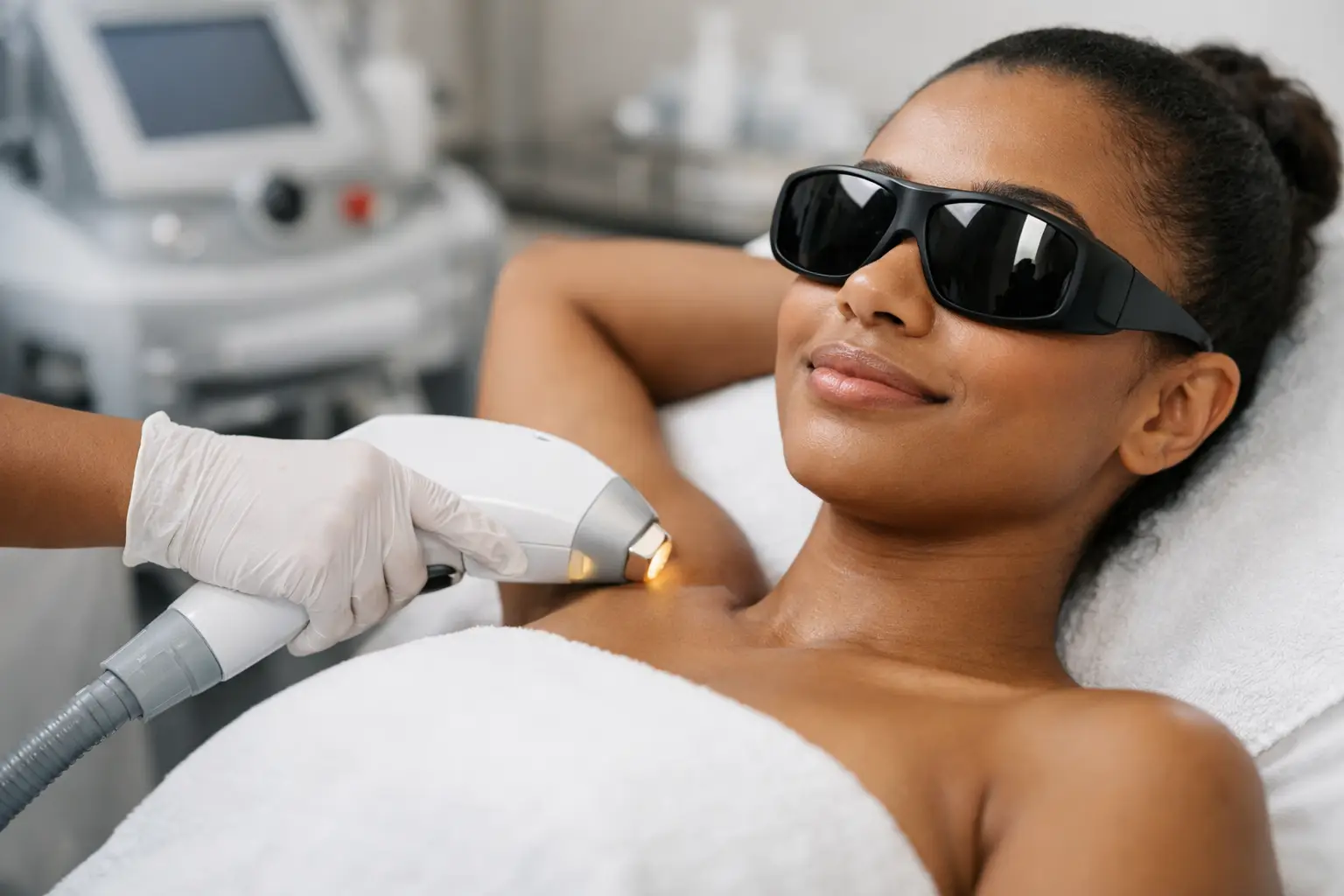
Unwanted hair should not require choosing between smooth skin and protecting your complexion. Laser hair removal for ethnic skin can be highly effective, but the right technology, settings, and provider experience make all the difference. For deeper skin tones especially, a one-size-fits-all treatment approach can increase the risk of burns, discoloration, or poor results.
At a medically supervised laser center, treatment should begin with your skin, your hair, and your goals - not a preset protocol. That is how clients can pursue lasting hair reduction with greater confidence and comfort.
Why Skin Tone Changes Laser Hair Removal Treatment
Laser hair removal works by directing light energy toward pigment in the hair follicle. The energy converts to heat, helping damage the follicle so it produces less hair over time. The challenge is that melanin, the pigment that gives skin its color, also absorbs laser energy.
With lighter skin and dark hair, there is a wider contrast between the hair and surrounding skin. With brown, olive, deep, or richly pigmented skin, the laser must distinguish the follicle from the skin more carefully. If a device or setting is not appropriate, the surrounding skin may absorb too much energy.
That does not mean people with darker complexions are poor candidates. It means treatment must be customized. “Ethnic skin” is a broad term, and no two clients should be treated as though they have the same skin response simply because they share a racial or ethnic background. Skin tone, recent sun exposure, hair thickness, hair color, hormones, and the treatment area all matter.
The Best Laser Options for Ethnic Skin
For many clients with medium to deep skin tones, an Nd:YAG laser is often a strong option. Its longer wavelength reaches the hair follicle while placing less energy in the skin’s surface pigment than some other laser types. This can make it particularly useful for darker skin when operated by a trained professional using appropriate settings.
Diode lasers can also be effective across a broad range of skin tones. Whether a diode treatment is suitable depends on the exact device, its cooling capabilities, and the provider’s ability to adjust the treatment parameters based on your skin’s response.
The best device is not always the newest-sounding machine or the one a friend used. It is the FDA-cleared technology that is appropriate for your individual skin and hair profile, delivered by an experienced nurse or qualified laser professional. Cooling is also a major part of the treatment. It helps protect the skin’s surface and improves comfort while allowing the provider to treat hair follicles effectively.
Why IPL Is Not the Same as Laser
Intense pulsed light, often called IPL, is sometimes marketed alongside laser hair removal. IPL uses broad-spectrum light rather than one focused laser wavelength. It may work for certain candidates, but it generally offers less precision for deeper skin tones and can be more dependent on careful candidate selection.
If you have ethnic skin, do not assume every “light-based” hair removal treatment is interchangeable. Ask exactly which technology will be used and why it is being recommended for your complexion.
What a Safe Consultation Should Include
A professional consultation is more than a quick look at the treatment area. It should establish whether laser hair removal is right for you and how your treatment plan will be tailored.
Your provider should discuss your natural skin tone, current tan or sun exposure, previous reactions to lasers or waxing, medical history, medications, and skincare products. Retinoids, certain antibiotics, and products that irritate or sensitize the skin may affect treatment timing. Active breakouts, rashes, open skin, or infections in the area may mean waiting until the skin has recovered.
Hair characteristics matter, too. Dark, coarse hair usually responds best because it contains more pigment for the laser to target. Fine hair can respond, but it may require more sessions and may not be the right area to treat in every case. Very blond, gray, white, or red hair has limited pigment and typically does not respond well to traditional laser hair removal.
A test spot is especially valuable for clients concerned about hyperpigmentation or sensitivity. It allows the provider to observe how your skin responds before moving forward with a full treatment. The safest choice is not necessarily the lowest setting. It is a setting that balances effective follicle heating with skin protection.
Preparing for Laser Hair Removal on Deeper Skin Tones
Preparation helps reduce avoidable risks and supports more consistent results. Avoid tanning, tanning beds, and prolonged sun exposure before your appointment. A fresh tan changes the amount of pigment in the skin and may require your treatment to be postponed or adjusted.
Shave the treatment area as instructed, usually the day before or shortly before your visit. Shaving leaves the hair follicle in place for the laser to target. Avoid waxing, tweezing, threading, or epilating for several weeks beforehand because these methods remove the root that the laser needs to treat.
Keep the skin clean on treatment day. Skip heavy lotions, oils, deodorant on underarms if instructed, and fragranced products that could irritate the area. If you are prone to cold sores and are treating around the mouth, tell your provider before your appointment. A preventive medication may be appropriate in some cases.
What Treatment Feels Like and What Happens Next
Most clients describe laser hair removal as a quick snap of heat against the skin, similar to a rubber band flick. Modern cooling features can make a meaningful difference, particularly on sensitive areas such as the bikini line, underarms, upper lip, and face.
Mild redness and follicular swelling around the treated hairs are common after a session. These reactions often fade within hours to a couple of days. Your provider may recommend cool compresses, gentle moisturizer, and strict sun protection. Avoid hot showers, saunas, strenuous exercise, exfoliation, and fragranced products for the period recommended after treatment.
For ethnic skin, post-treatment care is not an afterthought. Excess heat, friction, picking, or sun exposure can contribute to irritation and uneven pigmentation. Contact your provider promptly if you develop blistering, significant swelling, increasing pain, or pigment changes.
How Many Sessions Will You Need?
Hair grows in cycles, and laser treatment works best when hair is in the active growth phase. Because not every follicle is active at the same time, a series of appointments is necessary. Many areas are treated about every four to eight weeks, although facial hair and body hair may follow different schedules.
Most clients need multiple sessions to achieve substantial long-term hair reduction. The exact number depends on the area, hair density, hair thickness, hormones, and how consistently treatments are scheduled. Maintenance visits can be helpful over time, particularly for hormonally influenced areas such as the chin, jawline, abdomen, and bikini area.
Be cautious of anyone promising permanent removal of every hair after one treatment. A stronger promise is a personalized plan, realistic expectations, and a provider who monitors your results and adjusts safely as needed.
Choosing a Provider for Laser Hair Removal Ethnic Skin
Experience with diverse complexions should be a non-negotiable part of your decision. Ask whether the practice regularly treats your skin tone, which laser will be used, whether a test spot is recommended, and who will perform or supervise the procedure.
At Elite Laser Center, clients receive customized treatment planning with advanced technology and medical oversight. The goal is visible hair reduction without compromising the health or appearance of your skin. For Long Island clients, that means care that is convenient, professional, and focused on results that fit real life.
Price matters, but a low introductory offer is not a substitute for appropriate equipment and skilled treatment. Packages, guarantees, and financing can make a quality treatment plan more manageable. Still, the best value comes from choosing a provider equipped to treat your skin safely from the first session.
A Better Standard for Smooth Skin
Laser hair removal should feel like a confident investment in yourself, not a gamble with your complexion. Schedule a personalized consultation, ask direct questions about the technology and protocol, and choose a team that understands how to treat your skin with the care it deserves.