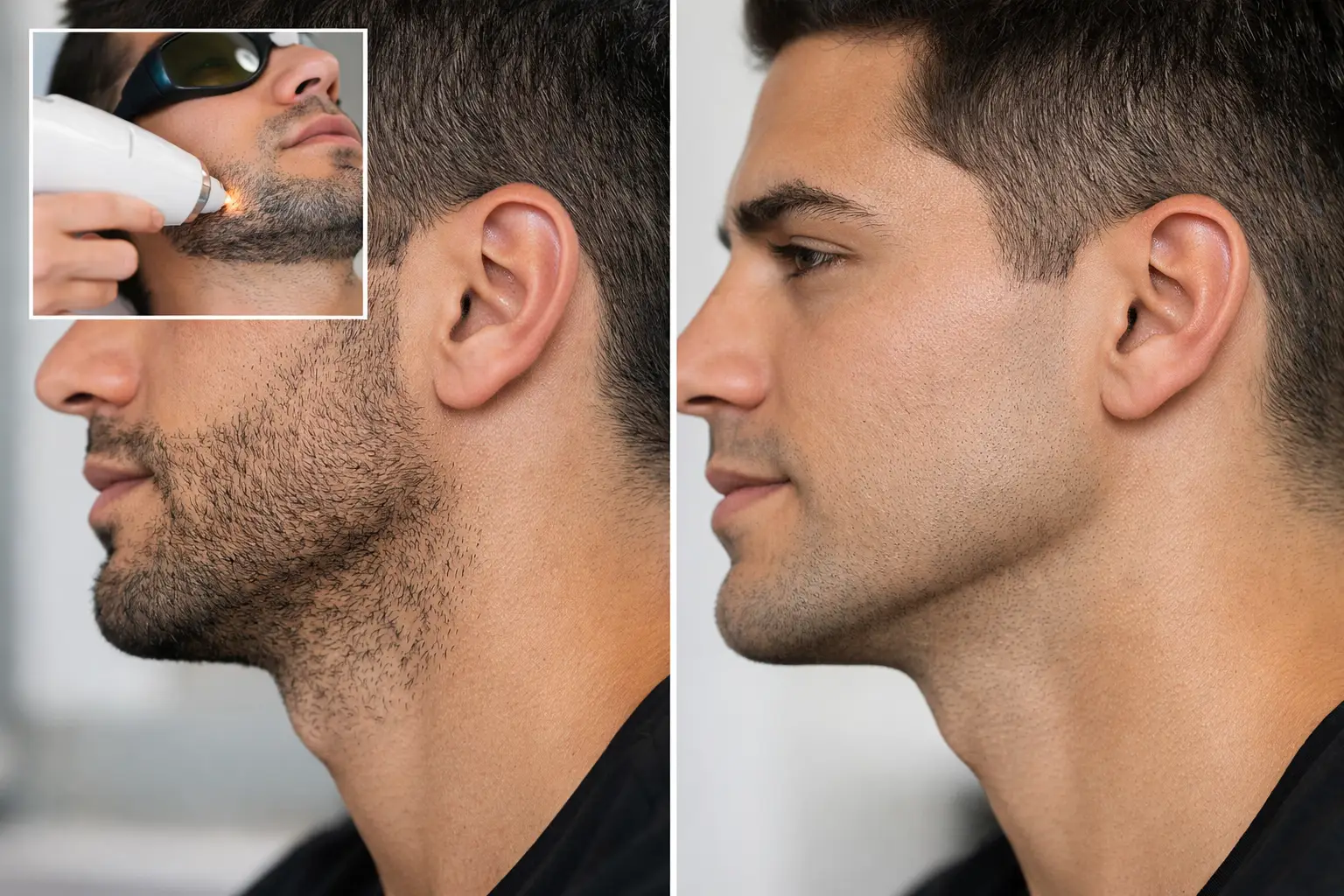
A strong beard can make the jaw look sharper. Stray growth high on the cheeks or low on the neck can do the opposite, especially when shaving causes razor bumps, shadow, or a line that seems to disappear by the next day. A laser hair removal beardline example helps show what the treatment is designed to change: not necessarily removing a beard, but creating a cleaner boundary around it.
For men and women with facial hair concerns, beardline laser hair removal can be a practical way to reduce the daily maintenance around a preferred beard shape. The goal is customized. Some clients want crisp cheek lines, others want a smoother neck, and some want to remove scattered hairs that grow outside their natural facial-hair pattern.
What a Laser Hair Removal Beardline Example Looks Like
Picture a client who likes the density of his beard along the jaw and chin but has uneven hair creeping up toward the cheekbones. He shaves the upper edges every morning, yet dark stubble returns by dinner. During consultation, the provider maps a conservative cheek line that follows his natural beard growth rather than making an unnaturally straight or overly high cut.
The treatment area is the hair above that planned line. The fuller beard below it remains untouched. After a series of sessions, the intended result is less visible growth in the treated zone, fewer hairs to shave, and a cleaner edge that lasts longer between grooming appointments.
A second common beardline example focuses on the neck. The client keeps hair on the chin and jaw but wants to reduce the dense growth below the neckline that causes irritation after shaving. Laser treatment targets the lower neck area while preserving a natural transition beneath the jaw. The result can be a more defined profile without asking the client to reach for a razor every day.
These examples matter because laser hair removal is not a one-size-fits-all beard service. The line must be planned before treatment starts. Once hair reduction becomes significant, changing your mind about the shape may not be simple.
How Beardline Laser Hair Removal Works
Laser hair removal directs controlled light energy into pigment in the hair follicle. The heat damages follicles during their active growth stage, reducing their ability to produce hair over time. Because facial hair does not grow in the same phase all at once, repeated sessions are needed to treat the right hairs at the right time.
Beard hair is often coarse and dark, which can respond very well to laser treatment when there is enough contrast between the hair and skin. But response varies by hair color, skin tone, hormonal influences, treatment settings, and the consistency of the treatment schedule. Gray, white, blond, and red hairs contain less pigment and may not respond as predictably.
At Elite Laser Center, treatment planning begins with the client’s actual facial-hair pattern, skin type, and long-term grooming preference. FDA-cleared laser technology and medical supervision help make precise beardline work appropriate for a broad range of ethnic skin types. The safest setting is not always the highest setting. It is the setting selected for effective reduction while respecting the skin.
What Happens Before, During, and After Treatment
Before treatment, the beardline should be discussed in detail. Bring photos of beard styles you like, but also be realistic about the pattern you naturally grow. A skilled provider can help identify a line that enhances your features and will still look good if your style changes slightly over the years.
The area is typically shaved or trimmed as instructed before the appointment. Avoid waxing, tweezing, threading, or plucking in the weeks leading up to treatment because the laser needs the follicle present beneath the skin. Recent sun exposure, tanning products, and certain medications can affect candidacy or timing, so disclose them during your consultation.
During the session, protective eyewear is worn. You may feel a quick warm snap as the laser pulses across the planned area. Facial treatments are usually efficient because beardline zones are relatively small, although the exact appointment time depends on whether the cheeks, neck, or larger beard areas are included.
Temporary redness and mild swelling around follicles are common immediately afterward. Many clients compare it to a light sunburn. Cool compresses, gentle skincare, sun protection, and avoiding heat-heavy workouts or hot showers for the period recommended by your provider can help the skin settle comfortably.
You may notice treated hairs appear to grow before shedding. This is normal. Do not pluck them. Between visits, shaving is generally the preferred hair-removal method if needed.
How Many Sessions Does a Beardline Need?
Most clients need a series of treatments, spaced several weeks apart, because lasers work best on hair in active growth. Facial hair is also influenced by hormones, so some people may need occasional maintenance visits after completing their initial package.
The number of sessions depends on the treatment area and the result you want. Someone reducing a few isolated cheek hairs may see a different path than someone treating a dense neck beard. A client seeking complete facial-hair removal also has a very different plan from someone preserving a carefully shaped goatee.
The right expectation is long-term hair reduction, not a promise that every single hair will never return. Some remaining hairs may become finer, lighter, slower-growing, or sparse enough that grooming becomes much easier. Elite Laser Center offers a 3-year guarantee on laser hair removal packages, giving qualified clients meaningful support as their results develop over time.
Choosing the Right Beardline Shape
The most natural beardline usually follows your facial structure instead of fighting it. A good cheek line can make the beard look intentional without creating a thin, artificial strip. For the neck, many clients prefer a line that sits above the Adam’s apple and follows the underside of the jaw with a soft, balanced curve.
Be conservative if you are unsure. It is easier to treat a little more hair later than to wish you had kept hair that has already been significantly reduced. This is especially true for younger clients whose beard density may continue developing over time.
Your provider should mark and confirm the treatment boundary before the first pulse. Speak up if the line looks too high, too low, too sharp, or uneven. A precise plan is part of achieving a result that feels like you, only more polished.
Who Is a Good Candidate?
Beardline laser hair removal is a strong option for people who are tired of daily shaving, recurring ingrown hairs, or inconsistent cheek and neck cleanup. It can be particularly helpful for those prone to pseudofolliculitis barbae, commonly called razor bumps, since reducing the need for close shaving may reduce a major trigger.
It depends, however, on your hair color, skin condition, medical history, and goals. Active irritation, open skin, a recent tan, certain photosensitizing medications, or a tendency toward pigment changes may require postponing treatment or adjusting the plan. Pregnancy, recent isotretinoin use, and a history of skin conditions should always be discussed honestly with the treatment provider.
Medical oversight and an in-person consultation are valuable because facial skin deserves precision. The beardline is always visible. Proper technology, experienced treatment technique, and carefully selected settings make a real difference in both comfort and outcome.
Is It Worth It for Beard Maintenance?
For the right client, the biggest benefit is not simply less hair. It is time back in the morning, fewer irritated bumps, and confidence that the beard still looks groomed late in the day. If you regularly pay for barber cleanups or spend time correcting uneven stubble, the convenience can be substantial.
There is a trade-off. Laser hair removal is a commitment to a shape. Trends change, and personal style changes too. That is why a thoughtful, natural-looking design is more valuable than chasing an extreme line from a social media photo.
A beardline should frame your face, not become another daily task. A personalized consultation can show you exactly where laser hair removal may create the clean, low-maintenance definition you want while preserving the beard you like.