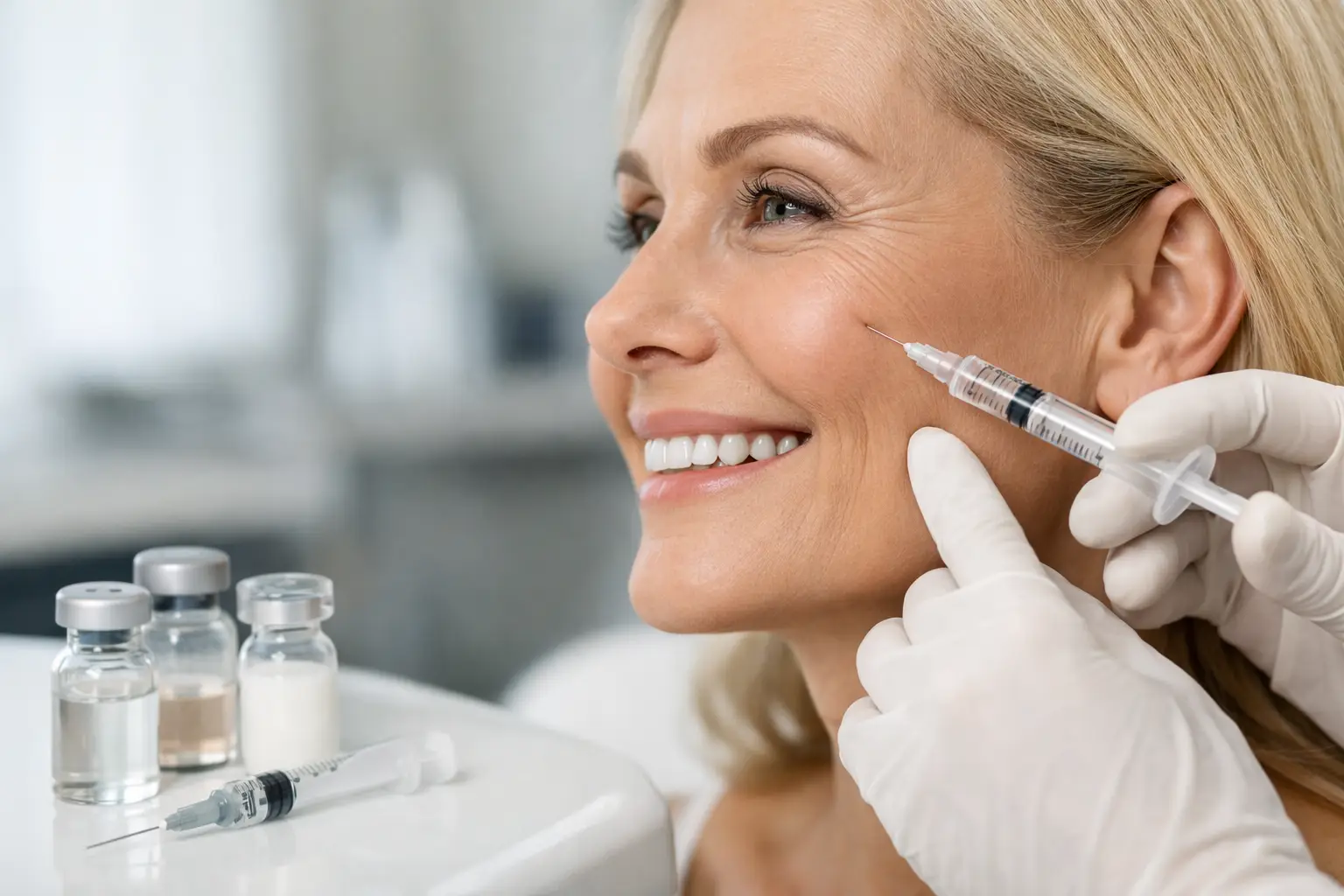
Smile lines can make the face look tired or less refreshed even when you feel energized and well-rested. The right injectables for smile lines can soften these deeper folds without surgery, helping restore a smoother, more balanced look while preserving the expressions that make your face your own.
Often called nasolabial folds, smile lines run from the sides of the nose toward the corners of the mouth. They are a completely normal part of facial movement, but they can become more noticeable as collagen, facial volume, and skin elasticity change over time. For many Long Island clients, carefully placed injectable treatment offers a practical way to address this concern with little to no social downtime.
What Causes Smile Lines to Become More Noticeable?
Smile lines are not caused by one issue alone. Repeated facial movement plays a role, but aging-related volume loss is often the bigger factor. As the cheeks gradually lose support, the skin can settle downward, making the folds around the mouth appear deeper.
Sun exposure, genetics, smoking, weight changes, and natural collagen loss can also contribute. This is why a treatment plan should look at the entire midface rather than simply filling the line itself. A skilled injector considers where structure has been lost and how to create support that looks natural from every angle.
Which Injectables for Smile Lines Are Most Effective?
For most patients, dermal filler is the preferred injectable treatment for smile lines. Hyaluronic acid fillers are commonly used because they add soft, flexible volume beneath the skin. Hyaluronic acid occurs naturally in the body and attracts moisture, which can help create a smoother, more hydrated appearance in treated areas.
The ideal filler depends on the depth of the folds, skin quality, facial anatomy, and whether the cheeks need additional support. A softer filler may be appropriate for fine lines and superficial correction, while a more supportive product may be selected for deeper folds or volume restoration in the midface.
Filling the Fold Directly
When the nasolabial fold is clearly defined, strategic filler placement along the crease may soften its appearance. The goal is not to erase every natural movement line. Overfilling can create an unnatural or heavy look, particularly around the mouth.
A conservative approach often produces the most elegant result. Your provider can add volume gradually and reassess, rather than trying to create a dramatic change in one appointment.
Supporting the Cheeks First
In some cases, treating the cheeks can improve smile lines more effectively than placing all filler directly into the folds. Restoring cheek support may gently lift surrounding tissue and reduce the shadowing that makes nasolabial folds stand out.
This full-face approach is one reason a personalized consultation matters. Two people may both ask about smile lines but require very different treatment plans to achieve a naturally refreshed result.
What About Botox or Dysport?
Neuromodulators such as Botox and Dysport are excellent for dynamic wrinkles caused by muscle movement, including forehead lines, frown lines, and crow's feet. They are generally not the primary choice for traditional smile lines because the muscles around the mouth are essential for speaking, eating, and expression.
In select cases, an experienced injector may use neuromodulators near the mouth for a related concern, such as downturned corners or chin dimpling. However, dermal filler is usually the more direct solution for volume-related nasolabial folds.
What Results Can You Expect?
Most clients see an immediate improvement after filler treatment, although mild swelling can temporarily affect the final look. The area typically settles over the following days, revealing a softer transition from the nose to the mouth and a more rested facial appearance.
Results vary based on the product used, how much filler is placed, your metabolism, and the level of correction needed. Many hyaluronic acid fillers for smile lines can last roughly six to 18 months. Areas with frequent movement may metabolize filler sooner than less active areas of the face.
The best results are noticeable without looking obvious. Friends may comment that you look well-rested or refreshed rather than asking whether you had something done.
What Happens During a Smile Line Filler Appointment?
A quality injectable appointment begins with a facial assessment and a conversation about what you want to change. Your provider should review your medical history, previous injectable treatments, allergies, current medications, and expectations before recommending a product or treatment amount.
The skin is cleansed, and a topical numbing option may be used when appropriate. Many modern fillers also contain lidocaine to improve comfort during treatment. The injections themselves are usually brief, often taking 15 to 30 minutes depending on whether other areas are treated at the same visit.
You may have minor tenderness, swelling, redness, or bruising afterward. These effects are generally temporary. Most clients return to normal activities right away, although it is wise to avoid strenuous exercise, excessive heat, alcohol, and pressure on the treated area for the timeframe recommended by your provider.
Safety Matters Around the Mouth and Nose
Injectables are medical treatments, not one-size-fits-all beauty services. The face contains important blood vessels, and the area around the nose and smile lines requires detailed anatomical knowledge, precise technique, and proper medical oversight.
Choose a qualified, experienced provider who performs a thorough consultation, uses authentic products, and discusses potential risks honestly. While serious complications are uncommon, risks can include bruising, swelling, unevenness, infection, lumps, allergic reaction, and vascular complications. Prompt evaluation is essential if you experience unusual pain, blanching or discoloration of the skin, vision changes, or symptoms that concern you after treatment.
At Elite Laser Center, injectable treatments are approached with the same focus on safety, customization, and visible results that clients expect from a medically supervised aesthetic practice. A thoughtful plan matters more than chasing a certain number of syringes or copying someone else's treatment.
Are You a Good Candidate for Smile Line Injectables?
Adults who are bothered by mild to moderate smile lines, facial volume loss, or a tired-looking midface may be candidates for filler treatment. It can be a strong option for clients who want meaningful improvement without surgery or an extended recovery period.
That said, injectables are not right for everyone. Pregnancy, breastfeeding, active skin infection, certain autoimmune conditions, a history of severe allergies, or particular medications may affect eligibility. Very deep folds caused by significant skin laxity may also benefit from a combination plan involving skin tightening, collagen-stimulating treatments, or surgical consultation rather than filler alone.
A consultation is the place to discuss these details openly. The goal should be a plan that fits your anatomy, timeline, comfort level, and budget, not a treatment that promises to make every line disappear.
How to Keep Results Looking Natural
Maintenance is usually easier than waiting until all filler has dissolved and starting over. Depending on your treatment plan, a touch-up visit may help preserve a balanced result before the folds become prominent again.
Daily sunscreen, medical-grade skincare when recommended, hydration, and avoiding smoking can all support healthier-looking skin over time. Treatments such as microneedling, skin tightening, and collagen-focused services may also complement filler for patients concerned with texture and laxity as well as volume loss.
If smile lines are affecting how confident you feel in photos, meetings, or everyday conversations, the answer is not necessarily more filler. It is the right amount of the right injectable, placed with a clear understanding of your face. A personalized consultation can help you decide whether filler, cheek support, or a combination approach is the most effective next step.