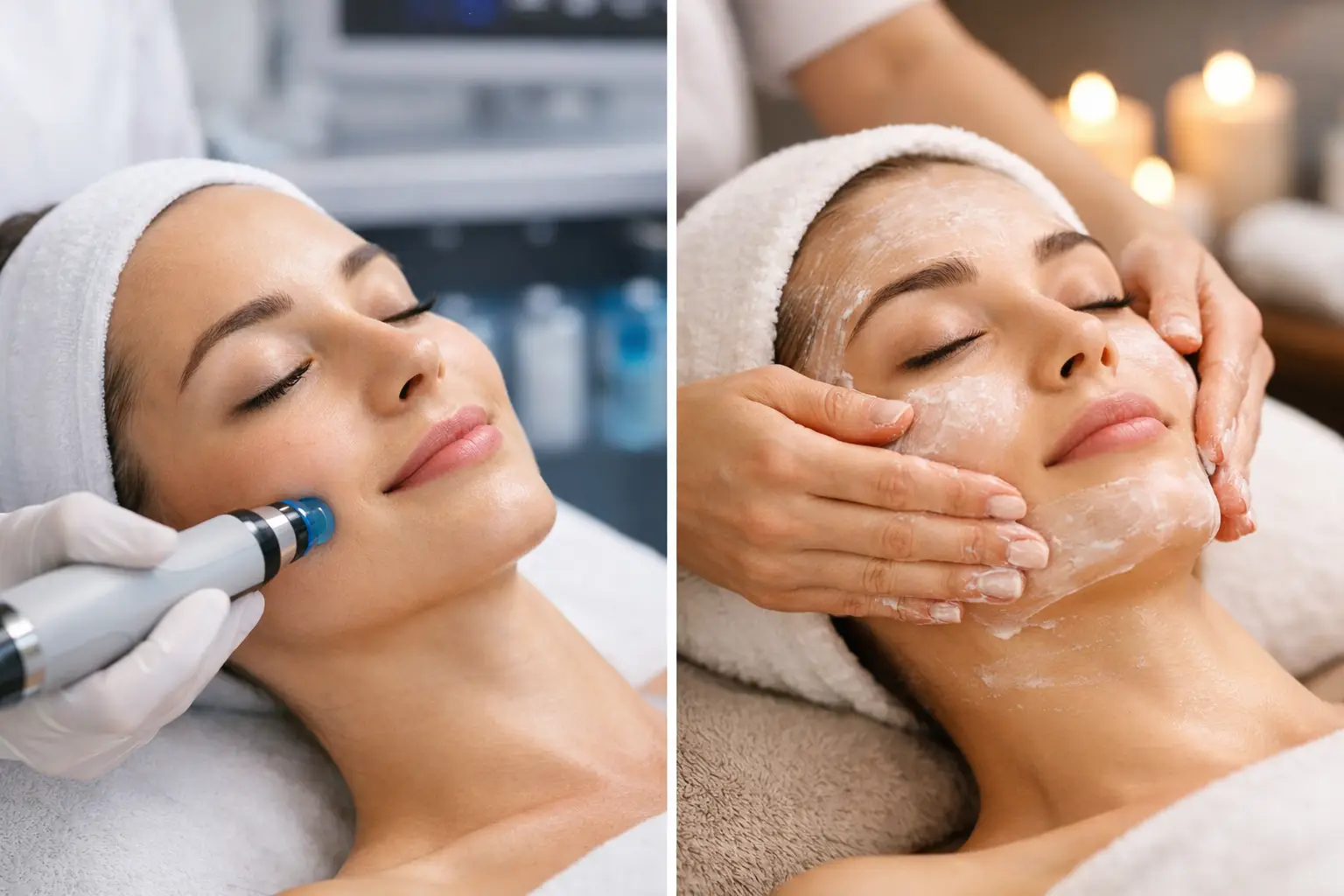
A dull, congested complexion before a wedding, vacation, or important meeting can make choosing a treatment feel urgent. When weighing a HydraFacial vs regular facial, the best choice is not always the most intensive option. It is the treatment that matches your skin concerns, schedule, sensitivity level, and the kind of results you want to see.
Both services can leave skin looking fresher and more polished. The difference is in how they work, how customized the experience can be, and whether your priority is relaxation, targeted exfoliation, congestion support, or a no-downtime glow.
HydraFacial vs Regular Facial: The Core Difference
A traditional facial is a broad category of professional skin treatments. It may include cleansing, steam, manual extractions, exfoliation, massage, masks, and finishing products selected for your skin type. The exact experience can vary significantly based on the provider, the products used, and whether the service is designed for acne-prone, dry, sensitive, mature, or combination skin.
A HydraFacial is a branded, device-assisted treatment that uses a controlled vortex-style delivery system to cleanse, exfoliate, extract debris, and infuse the skin with hydrating serums. Rather than relying primarily on manual extraction and product application, it follows a more standardized multi-step process with treatment options that can be adjusted to address concerns such as visible congestion, dehydration, uneven texture, and dullness.
Neither option is automatically better for every person. A regular facial offers flexibility and a classic spa-style experience. A HydraFacial is often chosen by clients who want a more consistent, technology-supported approach with visible radiance and little interruption to their routine.
What Happens During a Regular Facial?
A regular facial usually begins with an assessment of your skin and a thorough cleanse. From there, the provider may use a gentle scrub, enzyme treatment, chemical exfoliant, steam, manual extractions, facial massage, a treatment mask, and targeted serums or moisturizers. Some facials also include LED light therapy or specialized finishing treatments.
The biggest advantage is customization. Someone with reactive skin may benefit from calming hydration and minimal exfoliation, while someone dealing with clogged pores may need more time dedicated to careful extractions. A well-performed facial can be an effective part of a consistent skin-maintenance plan, especially when the treatment is selected after a professional skin evaluation.
The trade-off is that results can be less predictable from one facial to another if the techniques, products, and provider experience vary. Manual extractions may also cause temporary redness, particularly if the skin is inflamed or heavily congested.
What Happens During a HydraFacial?
A HydraFacial typically moves through several steps: cleansing and exfoliation, a gentle peel solution, device-assisted extraction, and hydration with selected serum infusions. The treatment is designed to remove surface buildup while supporting moisture levels, which is why many clients notice smoother-looking, brighter skin immediately afterward.
The extraction step is one of the most recognizable differences. Instead of the pressure used in manual extractions, the handpiece uses suction to help lift oil, debris, and impurities from pores. That can be appealing for clients who dislike traditional extraction techniques or want a treatment that feels more controlled.
HydraFacial treatments can also be tailored with boosters or add-ons depending on the provider's offerings and your skin goals. A professional consultation matters here. More active ingredients are not always better, especially for skin that is sensitive, compromised, or currently irritated.
Comparing Results, Downtime, and Comfort
For a quick glow before an event, both treatments can be excellent choices. HydraFacial is often favored for its immediate polished appearance, smoother makeup application, and minimal downtime. Many people return to normal activities the same day, although temporary pinkness can still occur.
Regular facials can also provide visible hydration and refinement, but the results depend on the type of facial performed. A gentle hydrating facial may have virtually no downtime. A treatment involving extensive extractions, stronger exfoliation, or resurfacing ingredients may leave the skin red or tender for a day or two.
Comfort is personal. Some clients enjoy the massage, warm towels, and slower pace of a traditional facial. Others prefer the clean, efficient feel of a device-based treatment. If discomfort from extractions has kept you from booking facials in the past, ask whether a HydraFacial or a customized low-extraction facial is a better fit.
When a HydraFacial May Be the Better Choice
A HydraFacial can be a strong option if your main concern is dullness, dehydration, mild congestion, or uneven-looking texture. It is also a practical choice before a special occasion when you want your skin to look refreshed without planning for significant recovery time.
Clients with busy Long Island schedules often appreciate that it is a straightforward appointment with a relatively predictable treatment flow. It can also work well as recurring maintenance when paired with a professional home skincare routine.
That said, a HydraFacial is not a replacement for every advanced skin treatment. Deep acne scarring, pronounced laxity, significant pigmentation concerns, and persistent inflammatory acne may require a more targeted plan, such as microneedling, laser-based skin rejuvenation, medical-grade skincare, or another provider-recommended service.
When a Regular Facial May Be the Better Choice
Choose a regular facial when you want a highly personalized service that can change with your skin from month to month. Seasonal dryness, sensitivity after travel, stress-related breakouts, or a need for extra relaxation can all influence the ideal treatment approach.
A traditional facial may also be preferable when your provider needs to spend more time addressing specific areas of congestion or wants to avoid device-assisted exfoliation because your skin is irritated. The value is in the assessment and professional judgment, not simply the number of steps in the service.
Safety and Skin Type Considerations
Both HydraFacial and regular facial treatments should begin with an honest review of your skin history. Tell your provider about allergies, rosacea, eczema, active breakouts, recent sun exposure, cold sores, prescription topical products, isotretinoin use, and any recent cosmetic procedures. These details affect what is safe to perform and which products should be avoided.
If you have active irritation, open lesions, a sunburn, or an infection, postponing treatment may be the right call. Clients using retinoids or exfoliating acids may need to pause certain products before an appointment, but follow the instructions given by your treatment provider and prescribing clinician rather than stopping medications on your own.
For all skin tones, thoughtful treatment selection matters. Overly aggressive exfoliation or poorly timed extractions can trigger inflammation and contribute to uneven pigmentation. A medically supervised aesthetic practice can help match the service intensity to your skin's current condition instead of taking a one-size-fits-all approach.
How Often Should You Book a Facial?
Many clients schedule a HydraFacial or regular facial every four to six weeks, which roughly follows the skin's natural renewal cycle. However, that schedule is not a rule. Someone preparing for an event may book a treatment several days in advance, while someone with sensitive skin may need longer between appointments.
Consistency usually delivers better results than occasional aggressive treatments. A realistic plan may include periodic professional facials, daily sunscreen, gentle cleansing, moisturizer, and active skincare selected for your concerns. The best facial supports your routine rather than trying to compensate for an inconsistent one.
Cost: What Are You Paying For?
Regular facial pricing varies based on treatment length, products, add-ons, and provider expertise. HydraFacial appointments may cost more because they use proprietary equipment, consumable tips, and targeted serum options. The higher price does not mean it is automatically the right investment, but it may be worthwhile if you value the treatment method and the results it delivers for your skin.
Ask what is included before you book. A clear consultation should cover the expected experience, likely short-term effects, recommended aftercare, and whether an upgrade or package genuinely supports your goals. Avoid choosing solely by the lowest advertised price when skin safety, hygiene standards, and provider training are part of the equation.
At Elite Laser Center, a personalized consultation can help determine whether a HydraFacial, customized facial, or a different skin rejuvenation treatment best matches your complexion and your timeline. The right appointment should leave you feeling confident in the plan, not pressured into a service your skin does not need.