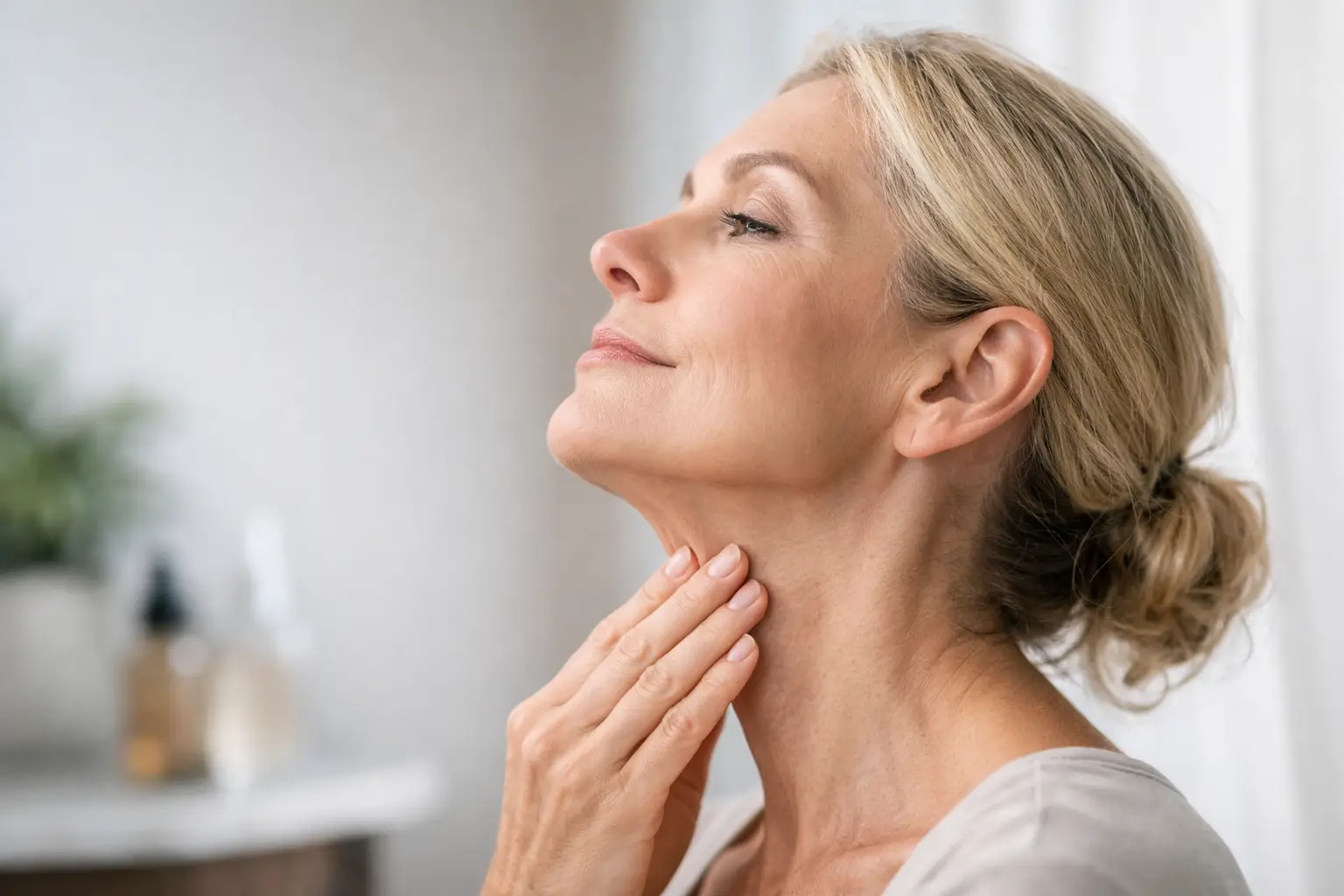
A soft jawline, crepey texture, or loose skin beneath the chin can become especially noticeable in profile photos, video calls, and bright bathroom lighting. If you are researching how to tighten loose neck skin, the right answer depends on what is causing the change: skin laxity, collagen loss, excess fat, weakened neck muscles, or a combination of all four.
The neck is one of the first areas to show aging, yet it is often overlooked in a skincare routine. Fortunately, many people can improve the look of mild to moderate neck laxity without surgery. The key is choosing a treatment plan that matches the amount of looseness, your skin quality, and the level of improvement you want to see.
Why Neck Skin Starts to Look Loose
Collagen and elastin are the structural proteins that keep skin resilient and supported. Starting in adulthood, the body gradually produces less of both. Sun exposure, weight changes, genetics, smoking, and natural facial movement can speed up that process.
The neck also has thinner skin than many other areas of the body. It has fewer oil glands, receives frequent sun exposure, and is constantly bending as we look down at phones and screens. Over time, this can contribute to fine lines, texture changes, and a less defined transition from the chin to the neck.
Not every concern called a “turkey neck” is actually loose skin. Some people have fullness under the chin, while others have prominent vertical neck bands or a jawline that has lost volume and support. A professional consultation helps identify the true concern before you invest in treatment.
How to Tighten Loose Neck Skin With Non-Surgical Treatments
Non-surgical skin tightening is not a one-size-fits-all service. The strongest treatment plan is based on whether your priority is collagen stimulation, improved texture, contouring, lifting, or all of the above.
Radiofrequency Skin Tightening
Radiofrequency treatments deliver controlled heat into deeper layers of the skin. That heat stimulates the body's collagen response, which can gradually improve firmness and texture over time. It is a popular option for people with early to moderate laxity who want visible improvement without surgical incisions or an extended recovery period.
Results develop gradually because collagen remodeling takes time. Some clients notice an early tightening effect, while the more meaningful improvement often appears over the following weeks and months. A series of treatments may be recommended depending on the technology used and the degree of skin laxity.
Microneedling for Crepey Texture and Fine Lines
When the neck looks thin, crepey, or lined, microneedling may be part of a customized rejuvenation plan. The treatment creates controlled microchannels in the skin to encourage collagen and elastin production. It can improve texture, fine lines, and overall skin quality, particularly when loose skin is not severe.
Microneedling is not designed to replace a surgical lift. It is most effective when the goal is healthier, smoother-looking skin with gradual improvement in firmness. Your provider may recommend combining it with other collagen-stimulating treatments for a more complete result.
PDO or MINT Threads for a More Supported Look
Threads may be an option when there is mild to moderate skin laxity and a desire for a more noticeable lifting effect. PDO and MINT threads are placed beneath the skin by a trained medical professional to provide support while also encouraging collagen production.
Thread treatment is technique-sensitive, which is why medical oversight matters. It may help improve the appearance of the jawline and upper neck in the right candidate, but it cannot remove a large amount of excess skin. A clear discussion about realistic results is essential before treatment.
Chin and Jawline Contouring
Sometimes the neck appears looser because fullness beneath the chin is blurring the jawline. If submental fat is part of the concern, a provider may discuss non-surgical contouring options as part of your plan. Reducing fullness can make the chin-to-neck angle look cleaner, but fat reduction alone does not tighten significantly lax skin.
For other clients, strategic injectable treatment around the chin or jawline can improve facial balance and create a more defined profile. This approach does not physically tighten neck skin, but it can make the area look more supported and proportionate.
When a Combination Plan Produces Better Results
The best non-surgical results often come from treating more than one cause of aging. For example, radiofrequency may address collagen loss, microneedling may improve surface texture, and threads may provide added support when appropriate.
A combination plan should never mean adding treatments simply to add treatments. Each service should have a clear purpose. At Elite Laser Center, a consultation can help determine whether a single treatment is enough or whether a staged plan will better match your goals, timeline, and budget.
It also helps to think about maintenance from the start. Collagen-stimulating treatments can create a meaningful improvement, but the skin will continue to age. Periodic maintenance sessions and a consistent at-home routine can help preserve your results.
What Results Can You Realistically Expect?
Non-surgical treatments can make the neck look firmer, smoother, and more defined. They can soften fine lines, improve crepey texture, and create a refreshed appearance with limited downtime. However, they do not deliver the same degree of correction as a surgical neck lift.
If you have substantial hanging skin, pronounced muscle banding, or a large amount of excess tissue after major weight loss, surgery may be the more predictable option. A reputable provider will be honest about that rather than promising a dramatic surgical result from a non-surgical procedure.
Your age matters less than your skin condition. Someone in their 60s with mild laxity and good skin quality may be an excellent candidate for collagen-building treatments. Someone younger with significant weight-related skin excess may need a different approach. The consultation, rather than a single photo or trend online, should guide the decision.
Support Your Neck Treatment at Home
Professional treatments work best when they are paired with everyday protection. Apply broad-spectrum sunscreen to the neck and chest every morning, not just to the face. Sun exposure is one of the biggest contributors to collagen breakdown and uneven texture in this area.
Use a moisturizer that supports the skin barrier, and consider provider-approved retinoid products if your skin can tolerate them. Retinoids can support collagen production over time, but the neck is sensitive, so start slowly and follow professional guidance. Avoid pulling or aggressively exfoliating the skin in an effort to make it tighter. Irritation can make texture and discoloration look worse.
Maintaining a stable weight, staying hydrated, and avoiding smoking also support skin quality. These habits will not remove loose skin on their own, but they can help protect the collagen you have and support your treatment investment.
Choose Safety, Experience, and a Personalized Plan
Neck treatments require careful technique because the area has delicate skin and important underlying anatomy. Choose a medical spa that provides a thorough assessment, explains the expected treatment course, and performs or supervises services with qualified medical professionals.
During your consultation, ask what concern is being treated, how many sessions may be needed, when you can expect to see changes, and what downtime is realistic. You should also disclose medications, prior cosmetic procedures, medical conditions, and any history of poor healing or keloid scarring.
A more defined, youthful-looking neck does not have to require surgery for every person. The most effective next step is a professional assessment that turns your concern into a clear, realistic plan for firmer-looking skin and renewed confidence.