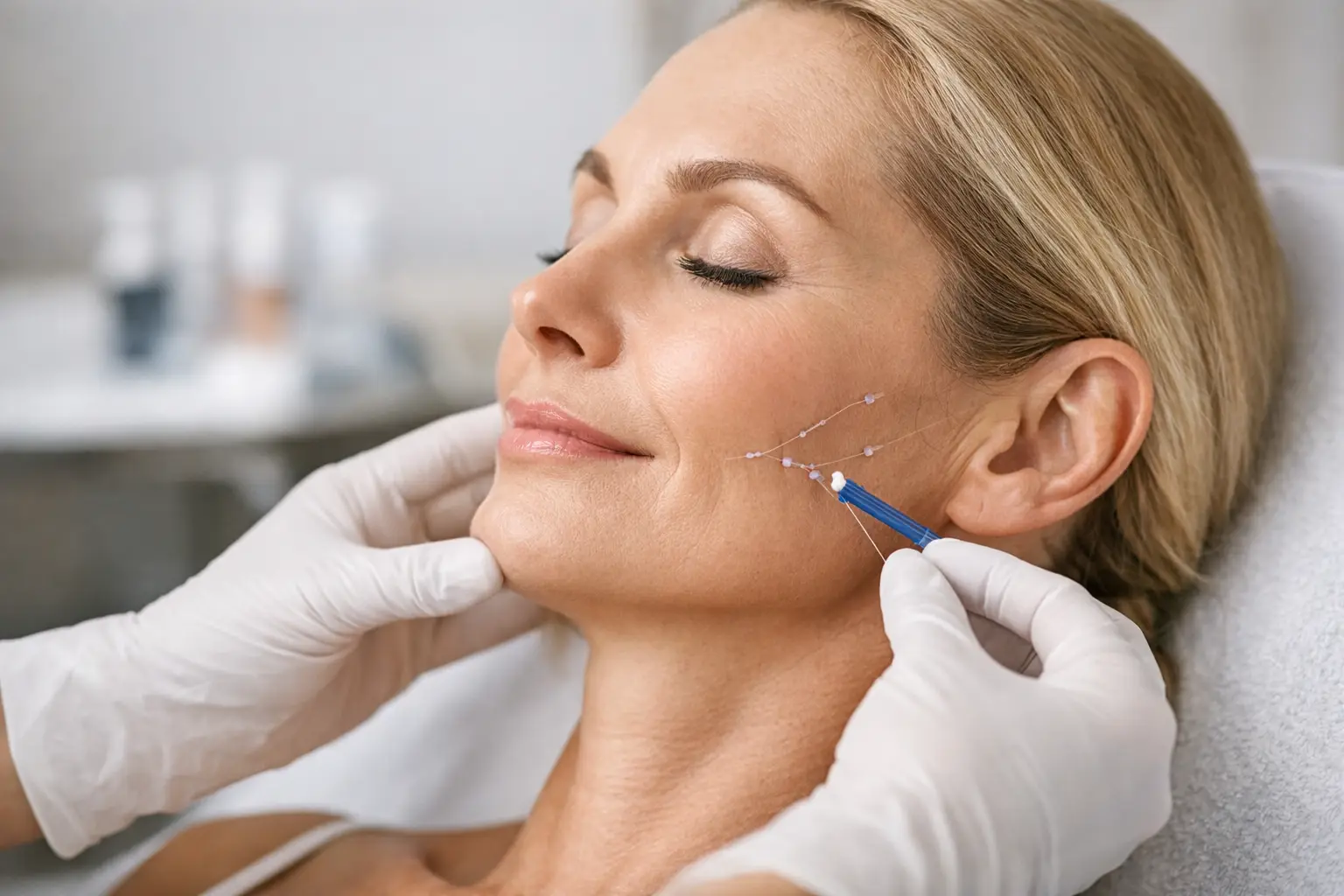
A fading jawline, early jowls, and cheeks that seem to sit lower than they used to can change the way your whole face looks. For many people, surgery feels like too big a commitment for this stage of aging. Understanding how PDO threads lift helps explain why this minimally invasive treatment can be a compelling option for restoring definition without the incisions and extended recovery of a facelift.
PDO thread lifting combines a subtle mechanical lift with the skin-building response your body creates around the threads. The result is not a dramatic overnight transformation that makes you look like someone else. When performed by a skilled medical provider, it is a customized treatment designed to help you look fresher, firmer, and naturally more refreshed.
How PDO Threads Lift the Face
PDO stands for polydioxanone, an absorbable suture material that has a long history of medical use. During a thread lift, a qualified provider places fine threads beneath the skin through very small entry points. Depending on the treatment area and the thread selected, the threads may be smooth, twisted, or fitted with tiny barbs called cog threads.
Cog threads are responsible for the immediate lifting effect. Their small barbs gently engage the soft tissue under the skin, allowing the provider to reposition tissue upward and outward along carefully planned vectors. This can improve the appearance of mild to moderate sagging in areas such as the cheeks, jawline, lower face, neck, and brows.
The lift is not created by pulling skin tightly. That would look unnatural and can place too much tension on the tissue. Instead, the provider supports and repositions the underlying tissue in a way that respects your facial anatomy. The best results are refined: a cleaner jawline, a more elevated cheek contour, or a softer transition from the face to the neck.
The Collagen Effect Continues After Treatment
The mechanical lift is only one part of the process. PDO threads gradually dissolve over time, often within several months. As they break down, the body responds by producing collagen around the thread pathways.
Collagen is a structural protein that contributes to skin firmness and resilience. This remodeling response can improve skin texture and quality after the threads themselves have dissolved. Many clients notice an early improvement from the repositioning of tissue, followed by a more gradual improvement as collagen develops.
That is why thread lift results can look better a few weeks after treatment than they do on day one. Some swelling is normal at first, and it takes time for the tissue to settle. Collagen production is gradual, so patience is part of getting the most natural-looking outcome.
What Different PDO Thread Types Do
Not every PDO thread is intended to lift. A personalized treatment plan may use more than one type of thread, depending on your concerns and skin quality.
Smooth PDO threads are often placed in a mesh-like pattern to support collagen stimulation and improve crepey, thin, or lax skin. They are especially useful in areas where the goal is skin quality rather than a significant physical lift.
Twist or screw threads add more volume than smooth threads. They can be used in select areas where mild support and collagen stimulation are needed.
Cog threads are generally chosen for lifting and contouring. They are commonly used to address the cheeks, jawline, jowls, and neck. MINT threads, a specialized type of PDO cog thread, may also be considered when stronger support is appropriate. The right option depends on your anatomy, degree of laxity, and goals - not on which thread sounds strongest.
What Happens During a PDO Thread Lift?
A thread lift appointment begins with an in-depth assessment of facial shape, skin thickness, volume loss, and skin laxity. A good provider does not treat every face with the same pattern. The placement plan should be tailored to the areas that need support while maintaining balance from one side of the face to the other.
Topical and local anesthetic are typically used to keep the procedure comfortable. The provider marks the planned insertion and lifting points, then places the threads beneath the skin using a fine needle or cannula. Once the threads are positioned, the tissue is gently elevated and the threads are trimmed.
Treatment time varies based on the areas being addressed, but many thread lift appointments are completed in about an hour. You can generally return home the same day. This is one reason PDO threads appeal to busy Long Island clients who want visible improvement without setting aside weeks for surgical recovery.
Results: What to Expect and How Long They Last
Most clients see an initial lifting effect right after treatment, although swelling can temporarily disguise the final contour. Over the following weeks, the face settles and collagen remodeling begins. Results often look most natural after this early healing period.
How long results last varies. Factors include the type and number of threads used, the area treated, your skin condition, facial movement, metabolism, and lifestyle habits. Many people enjoy visible improvement for roughly 12 to 18 months, while collagen-related benefits may continue to support skin quality beyond the point when the PDO material has dissolved.
A thread lift does not stop the aging process. It can, however, be an effective maintenance treatment for people who want to address laxity before it becomes advanced. Some clients choose periodic thread treatments, while others combine threads with skin tightening, microneedling, dermal fillers, or neuromodulator injections for a more complete facial rejuvenation plan.
Who Is a Good Candidate for PDO Threads?
PDO threads tend to work best for adults with mild to moderate skin laxity who want a noticeable but natural-looking improvement without surgery. People in their late 30s through 60s are often strong candidates, though candidacy is based on skin condition and facial structure rather than age alone.
You may be a good fit if you are bothered by early jowling, a less-defined jawline, mild cheek descent, loose neck skin, or brows that have begun to look heavy. Realistic expectations are essential. Threads can create meaningful refinement, but they cannot replicate the degree of correction achieved with a surgical facelift for significant loose skin or heavy tissue descent.
Thread lifts may not be right for everyone. Active skin infections, certain medical conditions, pregnancy, severe skin laxity, or expectations of dramatic surgical-level change may mean another approach is safer or more effective. A medically supervised consultation is the right place to discuss your health history and determine whether PDO or MINT threads fit your goals.
Downtime and Aftercare Matter
PDO thread lifting involves less downtime than surgery, but it is still a medical procedure. Mild swelling, tenderness, bruising, tightness, or temporary unevenness can occur. These effects usually improve over several days to a couple of weeks, depending on the individual and treatment area.
For the first several days, you may be asked to sleep on your back, avoid intense exercise, limit large mouth movements, and skip facial massage. Your provider will give instructions specific to your treatment. Following them protects the thread placement while the tissue begins to heal.
Choosing an experienced provider matters as much as the thread itself. Proper assessment, sterile technique, thoughtful placement, and a conservative approach all contribute to safety and a result that looks like you at your best. At Elite Laser Center, treatment planning is centered on your facial anatomy, comfort, and realistic aesthetic goals.
PDO Threads vs. Fillers and Surgery
PDO threads, fillers, and facelift surgery solve different problems. Fillers replace volume and can enhance cheeks, temples, lips, and folds, but they do not physically lift loose tissue in the way cog threads can. Threads provide support and repositioning, while fillers may be used strategically to restore structure when volume loss is also present.
A surgical facelift provides the most substantial and longest-lasting correction for advanced laxity. It also requires incisions, anesthesia, greater cost, and a longer recovery. PDO threads occupy a useful middle ground for people seeking a non-surgical option with a shorter recovery and a more modest, natural result.
The right treatment is the one that matches what your face actually needs. A personalized consultation can clarify whether PDO threads are the next step for your skin or whether another treatment will give you a better path to the confident, rested look you want.