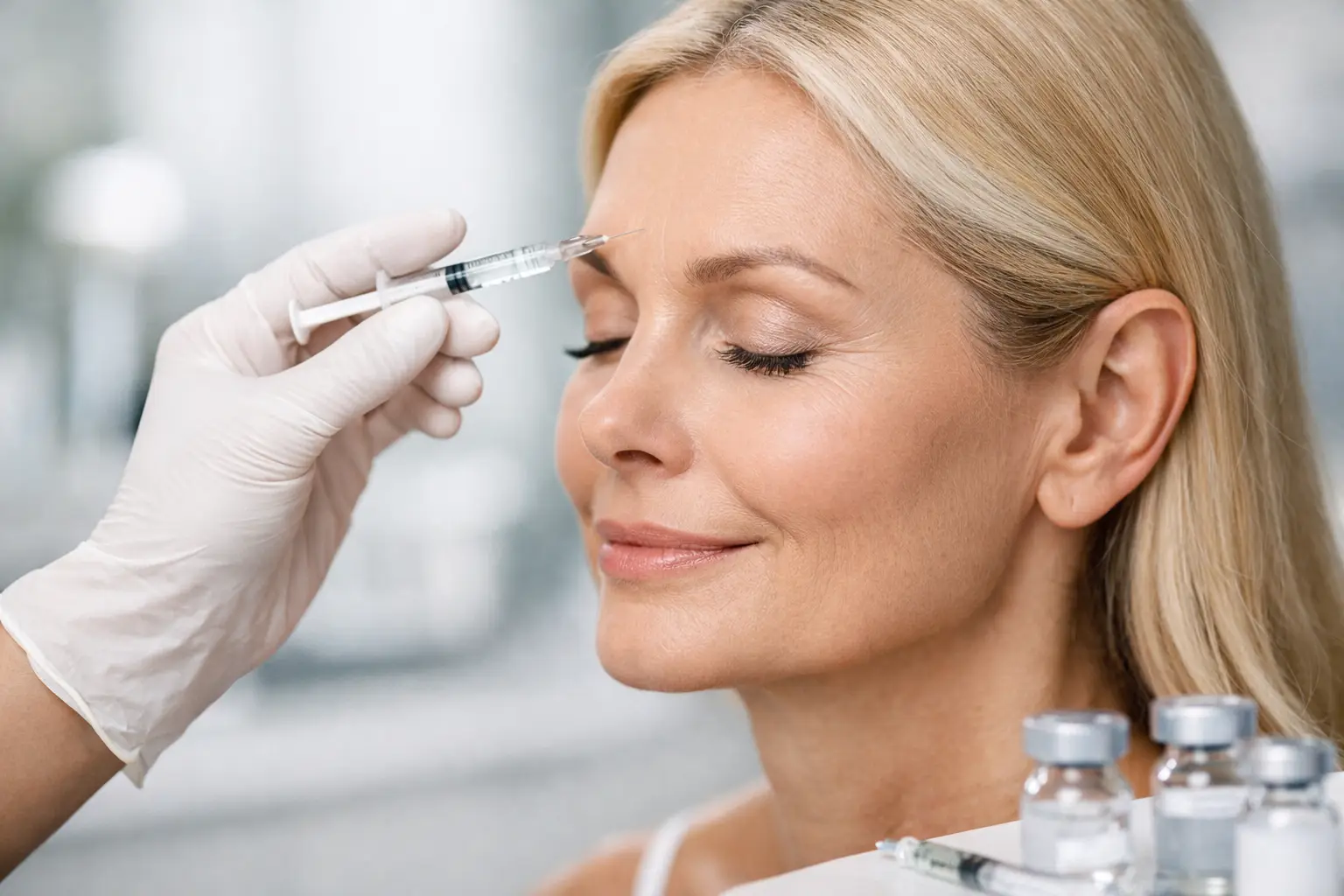
A forehead line that appears only when you raise your brows can eventually become visible even when your face is at rest. That shift is why so many clients ask how Botox smooths wrinkles and whether treatment can still look like them. The answer comes down to precise muscle relaxation, not a frozen expression. When placed thoughtfully by a qualified medical injector, Botox Cosmetic can soften repetitive facial movement while preserving the natural expressions that make your face your own.
How Botox Smooths Wrinkles: The Muscle-Skin Connection
Many of the wrinkles people notice first are dynamic wrinkles. These are the lines created by repeated facial movements such as squinting, frowning, smiling, or lifting the eyebrows. Over years of movement, the skin repeatedly folds in the same places. Collagen and elastin naturally decline with age, making it harder for the skin to bounce back completely after each expression.
Botox Cosmetic is a purified neuromodulator. It works by temporarily reducing communication between a targeted nerve and the muscle it activates. When that muscle contracts less forcefully, the skin above it is not pulled into the same deep folds as often. The result is a smoother, more rested appearance in the treated area.
Botox does not fill a wrinkle from underneath. Dermal fillers and biostimulatory treatments work differently, adding volume or supporting collagen in selected areas. Botox addresses the muscle movement that contributes to dynamic lines. That distinction matters because the right treatment depends on why the line is there in the first place.
For many people, Botox is especially effective for the horizontal forehead lines created by raising the brows, the vertical lines between the eyebrows often called frown lines, and crow's feet around the eyes. It may also be used in other facial areas when an experienced injector determines it is appropriate for the client's anatomy and goals.
What Happens During a Botox Appointment
A high-quality Botox appointment starts before the first injection. Your injector should assess your facial movement at rest and in motion, discuss the look you want, review your medical history, and identify whether Botox is the best match for your concerns. A strong treatment plan is never simply about using a standard number of units.
Facial anatomy varies widely. One person may have strong forehead movement and mild frown lines, while another may have deeply etched lines at rest, uneven brow position, or muscle patterns that need a more conservative approach. Dose, placement, and treatment area should all be customized.
The injections themselves are usually quick. A very fine needle is used to place small amounts of product into specific facial muscles. Most clients describe brief pinching or tiny stings rather than significant discomfort. There is typically no downtime, although mild redness, pinpoint swelling, or a small bruise can occur at an injection site.
For the rest of the day, your provider may recommend avoiding rubbing or massaging the treated areas, strenuous exercise for a period of time, and anything that puts unnecessary pressure on the face. Follow the aftercare instructions you are given, as recommendations can vary according to your treatment plan.
When Results Appear and How Long They Last
Botox results are not immediate. Most clients start to notice reduced movement within several days, with the full effect commonly visible around 10 to 14 days after treatment. This gradual change can be reassuring because the goal is usually a refreshed look, not an overnight transformation that draws attention for the wrong reason.
Results often last about three to four months, though there is no single timeline that applies to everyone. Metabolism, muscle strength, dose, treatment area, and how consistently you maintain appointments can all affect longevity. Some clients notice that regular treatments help them keep lines from becoming as deeply set because the skin is repeatedly getting a break from constant folding.
If a wrinkle is visible even when the face is completely relaxed, Botox may soften it but may not erase it fully after one appointment. Static lines have a skin-quality component as well as a muscle-movement component. Depending on the area and your goals, a provider may discuss complementary options such as medical-grade skincare, microneedling, laser skin rejuvenation, or carefully selected fillers. Combining treatments is not always necessary, but it can produce a more complete result when lines, texture, pigmentation, and volume loss are all part of the concern.
Natural Results Depend on Precision, Not Just Product
A common hesitation is the fear of looking frozen, overdone, or unable to move the brows. Those outcomes are not the goal of well-planned treatment. Natural-looking Botox means balancing visible softening with appropriate movement. For some clients, that means treating conservatively at the first appointment and reassessing once the result has developed.
The forehead is a good example of why experience matters. The muscles that create horizontal forehead lines also help lift the brows. If treatment is not tailored to the individual's brow position and muscle activity, the result may feel heavier than intended. Careful assessment helps an injector decide where to place product, how much to use, and whether every area should be treated at the same visit.
Your ideal result may be different from someone else's. Some clients want minimal movement for a very smooth appearance. Others want to retain more expression while reducing the depth of their lines. Both are reasonable goals when discussed clearly before treatment.
Who Is a Good Candidate for Botox?
Healthy adults bothered by expression lines are often good candidates for Botox Cosmetic. It can be a preventive choice for clients noticing early lines from repeated movement, as well as a corrective option for those who want to soften more established dynamic wrinkles without surgery or extended recovery.
A consultation is the right time to discuss pregnancy or breastfeeding, neuromuscular conditions, current medications, allergies, prior cosmetic treatments, and any infection or irritation in the planned treatment area. Botox is not right for every person or every concern. Honest medical screening protects both your safety and your result.
Choose a medical aesthetics provider who evaluates your facial anatomy, uses authentic products, explains realistic outcomes, and has the training to respond if questions arise. Pricing matters, but bargain shopping for injectables can create unnecessary risk. The quality of the assessment and injector technique matter as much as the product itself.
Getting the Best Out of Your Treatment
Botox works best as part of a realistic approach to skin aging. Daily sunscreen, a thoughtful skincare routine, hydration, and avoiding smoking help protect the skin that Botox is designed to keep from repeatedly creasing. These habits will not replace injectables, but they can support smoother, healthier-looking skin over time.
Plan your appointment with your calendar in mind. Although most people return to normal activities quickly, schedule treatment at least two weeks before a major event, wedding, or photo session. That gives the result time to settle and leaves room for a follow-up assessment if your provider recommends one.
At Elite Laser Center, Botox treatment is approached as a personalized, medically supervised aesthetic service, with attention to comfort, facial balance, and real, visible results. A careful consultation can help you decide whether Botox alone is the right next step or whether a broader skin rejuvenation plan better fits the way you want to look and feel.
The best Botox result should not announce itself when you walk into a room. It should let people notice that you look rested, confident, and like yourself.