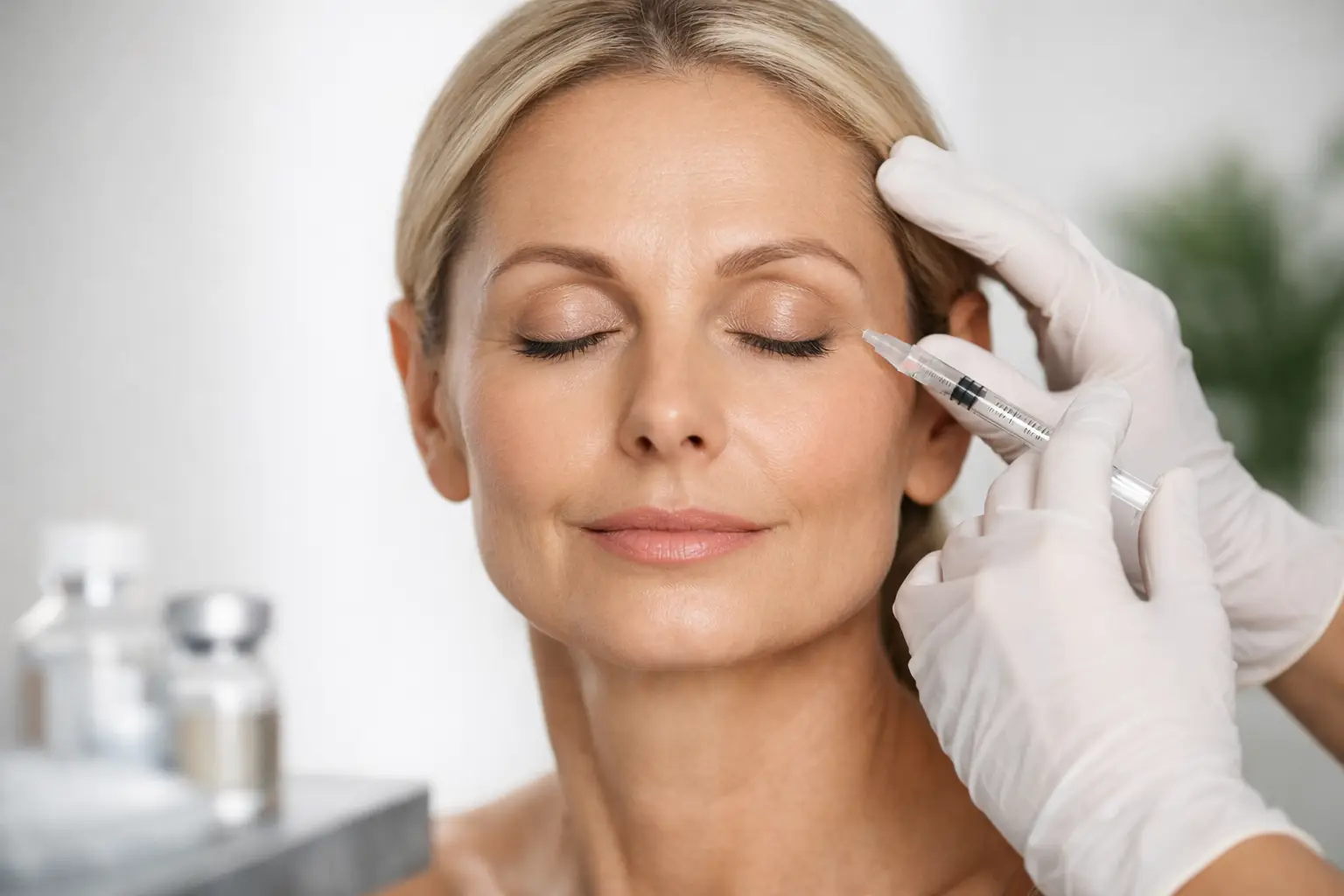
Most people do not walk into a med spa asking for a neuromodulator or a hyaluronic acid filler. They ask for something simpler: they want to look less tired, less angry, or less drawn without surgery. That is where a guide to injectable wrinkle treatments becomes useful. The right injectable can soften lines, restore balance, and refresh your appearance with little downtime, but the best option depends on what is causing the wrinkle in the first place.
Injectables are not one treatment. They are a category. Some relax the muscle movement that creates expression lines. Others replace lost volume or support the skin in areas that have started to flatten, fold, or crease. When patients understand that difference, they make better decisions and usually get better-looking results.
What injectable wrinkle treatments actually do
Wrinkles show up for different reasons. Repeated facial movement causes lines like crow's feet, forehead lines, and the vertical frown lines between the brows. Volume loss and changes in skin support create other concerns, including smile lines, marionette lines, thinning lips, hollow temples, and under-eye shadows. Sun exposure, collagen loss, genetics, and natural aging all play a role too.
That is why injectable wrinkle treatments are not one-size-fits-all. If a wrinkle appears mostly when you make an expression, a muscle-relaxing injectable is often the better fit. If the skin looks creased even at rest or the face has started to lose fullness, filler may be the more effective choice. In many cases, the most natural result comes from combining treatments rather than overdoing one.
A guide to injectable wrinkle treatments by category
Neuromodulators for dynamic lines
Neuromodulators include well-known products such as Botox, Dysport, Xeomin, and Jeuveau. These treatments temporarily relax targeted facial muscles so the skin does not crease as strongly with movement. They are commonly used for forehead lines, glabellar lines, and crow's feet.
This category works best on dynamic wrinkles, which are the lines that form from repeated expressions. If you notice that your forehead looks smooth at rest but folds when you raise your brows, that is a classic neuromodulator case. If the line is already etched in even when your face is relaxed, the treatment may still help, but it may not erase the line completely on its own.
Results usually begin to show within a few days, with full effect often visible around two weeks. Most patients enjoy results for about three to four months, although this varies by product, dose, treatment area, and individual metabolism.
Dermal fillers for static lines and volume loss
Dermal fillers are often made with hyaluronic acid, a substance the body naturally contains. They are used to soften folds, restore volume, enhance contours, and improve facial balance. Common treatment areas include nasolabial folds, marionette lines, cheeks, lips, jawline, and sometimes under the eyes.
Fillers do not freeze movement. They work by adding structure or fullness where support has been lost. That makes them a better option for static wrinkles, which are visible even when the face is not moving. Depending on the product and area treated, results can last from several months to well over a year.
The trade-off is that filler requires precision and restraint. More is not always better. Overfilling can make the face look puffy, stiff, or unnatural. A strong injector focuses on proportion, anatomy, and long-term planning rather than chasing every line in a single visit.
How to tell which treatment you may need
A simple way to think about it is this: if the wrinkle is caused by movement, muscle relaxation is often the answer. If the wrinkle is caused by deflation or folding, filler may help more. But real faces are more complicated than that.
Take smile lines as an example. In one patient, they are mostly related to cheek volume loss. In another, they are tied to skin quality and repetitive movement. In another, weight loss has changed the entire midface structure. Those patients may all describe the same concern, but they should not receive the same treatment plan.
That is why consultation matters. A medically supervised injector should evaluate not just the line itself, but the surrounding anatomy, skin quality, facial symmetry, and your overall goals. The best result is usually not about treating a wrinkle in isolation. It is about making the whole face look more rested and balanced.
What to expect at your appointment
A good consultation starts with your goals. Some patients want subtle maintenance. Others want a bigger refresh before an event, photos, or a life milestone. Your provider should ask about medical history, allergies, current medications, previous injectable treatments, and whether you have had issues such as bruising, swelling, or dissatisfaction in the past.
Your face should then be assessed at rest and in motion. For neuromodulators, muscle strength and movement patterns matter. For filler, the provider should look at support, symmetry, and how different areas affect one another. In experienced hands, this planning stage is what separates a polished result from an average one.
Treatment itself is usually quick. Many appointments take less than an hour. You may feel brief pinches or pressure, and some areas are more sensitive than others. Ice, topical numbing, or built-in lidocaine can improve comfort depending on the product being used.
Downtime, side effects, and safety
One reason injectables remain popular is that they fit into busy schedules. Most patients return to normal activity the same day. That said, minimal downtime does not mean no aftercare and no risk.
With neuromodulators, mild redness, swelling, tenderness, or a small bruise can happen. With filler, swelling and bruising are more common, and certain areas can stay puffy for several days. Occasionally, asymmetry or uneven settling may need a touch-up.
Safety comes down to proper product selection, technique, and medical oversight. Injectable treatments should be performed by a qualified medical professional or under appropriate supervision in a reputable practice. Facial anatomy is complex. Experience matters, especially in higher-risk areas such as the lips, nose, tear troughs, and temples.
If a price seems unusually low, that should raise questions. Patients are not just paying for product. They are paying for judgment, training, sterile technique, emergency preparedness, and a treatment plan designed around their face instead of a sales script.
Natural-looking results depend on strategy
The biggest concern many first-time patients have is looking frozen or overdone. The good news is that modern injectable treatment, when done well, does not have to look obvious. The goal is not to erase every line. It is to help you look like yourself on a good day.
That often means starting conservatively. A lighter first treatment can show you how your face responds and leave room to build gradually. It also means respecting facial movement. A completely immobile forehead or overly filled cheeks can draw attention for the wrong reasons.
For many patients, maintenance works better than waiting for a dramatic correction. Smaller, well-timed treatments tend to look smoother and more natural over time. They can also make future treatment planning easier.
Who is a good candidate
Adults with realistic expectations are often good candidates for injectables, especially if they want visible improvement without surgery or extended recovery. Preventive treatment may appeal to younger adults starting to notice early expression lines, while restorative treatment is more common for patients seeing established wrinkles and volume loss.
Not everyone is a candidate at every moment. Pregnancy, certain neuromuscular conditions, active skin infections near the treatment area, or specific allergies may affect timing or product choice. Some patients are better served by combining injectables with skin treatments such as microneedling, facials, or laser-based rejuvenation, especially when texture and laxity are part of the concern.
In a medically supervised setting like Elite Laser Center, that broader view is part of the value. The best recommendation is not always the most aggressive injectable plan. It is the one most likely to deliver safe, visible results that fit your features, budget, and schedule.
Questions worth asking before you book
Before moving forward, ask who will perform the treatment, how often they treat your area of concern, what product they recommend and why, and what kind of result is realistic for your face. Ask about follow-up, how touch-ups are handled, and what to expect in the first two weeks.
Those questions are not being difficult. They are part of choosing well. A confident provider should be able to explain their reasoning clearly, not just name a brand and quote a price.
The smartest way to approach injectables is not to ask what is trending. Ask what fits your anatomy, your goals, and your timeline. When the plan is customized and the injector is experienced, wrinkle treatment can be one of the most effective ways to refresh your appearance without putting your life on hold.