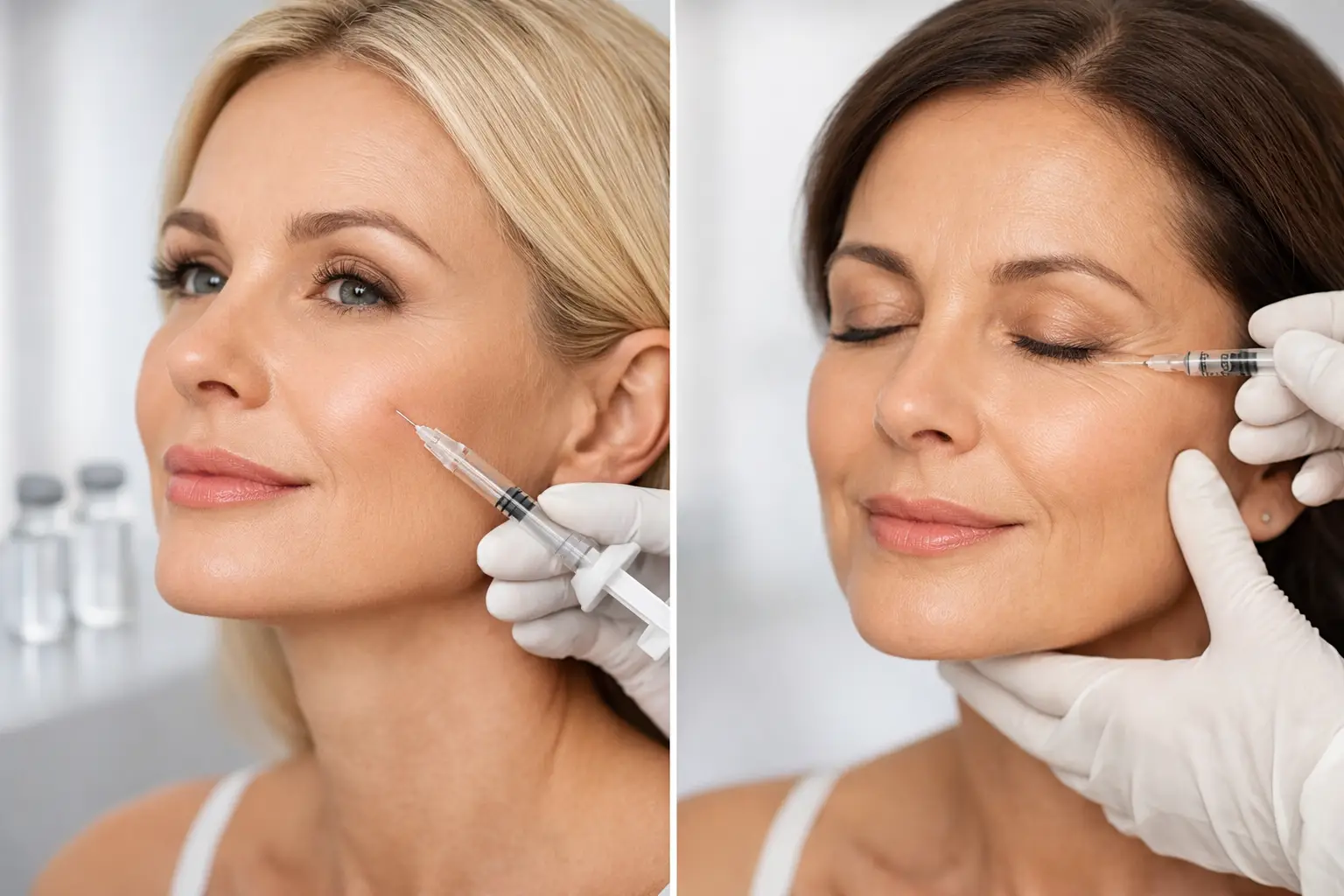
One treatment softens wrinkles by relaxing muscle movement. The other restores lost volume that makes the face look older, tired, or hollow. When people compare filler vs botox for wrinkles, they are often asking the right question in the wrong way, because these treatments do very different jobs.
That difference matters if you want visible improvement without wasting time or money on the wrong option. The best injectable plan is not about picking a winner. It is about matching the product to the kind of wrinkle you actually have.
Filler vs Botox for Wrinkles: The Core Difference
Botox works on dynamic wrinkles. These are the lines caused by repeated facial expressions like frowning, squinting, or raising your eyebrows. Think forehead lines, the vertical lines between the brows, and crow's feet. Botox relaxes the targeted muscles so those lines soften and the skin looks smoother.
Dermal filler works on static wrinkles and volume loss. These are the folds and creases that stay visible even when your face is at rest. Filler can also restore structure in areas that have thinned over time, such as the cheeks, under-eye area, temples, or around the mouth. By adding support under the skin, filler can soften deeper lines and bring back a more refreshed look.
So if your wrinkle appears mainly when you move your face, Botox is often the better fit. If the line is there all the time or is caused by sagging and volume loss, filler may be the better answer.
Where Botox Works Best
Botox is one of the most effective non-surgical treatments for upper-face expression lines. It is commonly used for horizontal forehead lines, the 11s between the eyebrows, and crow's feet around the eyes. In the right hands, it can also help with lip lines, chin dimpling, a downturned mouth, and neck banding.
The key is precision. Too little and you may not get the result you want. Too much, or poor placement, can create a heavy or unnatural look. That is why medical oversight and injector experience matter. A well-done Botox treatment should leave you looking rested, not frozen.
Results usually start to appear within a few days, with full effect around 10 to 14 days. For most patients, results last about three to four months. Some people metabolize it faster, especially if they are very active or have strong facial muscles.
Where Filler Works Best
Filler is better suited for wrinkles that need support rather than muscle relaxation. Nasolabial folds, marionette lines, cheek hollowness, jawline loss, and certain under-eye concerns are common examples. It can also enhance lips and improve facial balance.
Most fillers are made with hyaluronic acid, a substance naturally found in the body. These fillers attract water and create a smoother, fuller appearance. Depending on the product used and the area treated, results can last anywhere from six months to well over a year.
That said, filler is not a fix for every line. If a wrinkle is caused mostly by movement, filling it without addressing the muscle activity may lead to a result that looks overdone or does not last as well as expected. This is where a customized treatment plan makes all the difference.
Which Looks More Natural?
Patients often worry that injectables will be obvious. The truth is that natural results depend less on whether you choose Botox or filler and more on how thoughtfully the treatment is performed.
Botox looks natural when the dose is tailored to your muscle strength, facial anatomy, and goals. Some patients want a very smooth forehead. Others want to keep more movement. Both are possible when the treatment is customized.
Filler looks natural when it restores what has been lost rather than adding unnecessary volume. The best filler work does not announce itself. People just notice that you look fresher, less tired, or more balanced.
Overtreatment is usually the real problem, not the product itself. A conservative approach, especially for first-time patients, tends to give the best long-term outcome.
Filler vs Botox for Wrinkles Around Specific Areas
If you are trying to decide based on one problem area, here is where the distinction becomes more practical.
For forehead lines and crow's feet, Botox is typically the first choice because these wrinkles are driven by expression. For the lines around the nose and mouth, filler is often more effective because these folds are usually linked to volume loss and skin laxity.
Under the eyes, it depends. Some patients need filler to reduce hollowness. Others are better candidates for skin tightening, resurfacing, or simply a different approach. This area is delicate, and not everyone should be treated with filler there.
For lip lines, both may play a role. A small amount of Botox can reduce puckering that deepens the lines, while filler can support the area if volume loss is part of the issue. This is a good example of why the answer is sometimes not filler or Botox, but both.
Can You Combine Botox and Filler?
Yes, and many of the best outcomes come from combination treatment. Botox and filler are not competing treatments. They are often complementary.
A patient with forehead lines, frown lines, and deeper smile lines may benefit from Botox in the upper face and filler around the mouth or cheeks. Someone with a tired appearance might need cheek filler for lift and a touch of Botox to soften the expression lines that make them look stressed.
Combining treatments can also create better facial harmony. Instead of chasing one wrinkle at a time, an experienced injector looks at how all the features work together. That often leads to a more balanced and believable result.
What About Cost and Maintenance?
Cost depends on how much product is needed, what area is treated, and the expertise of the provider. Botox is usually priced by unit, while filler is commonly priced by syringe. One treatment is not automatically cheaper than the other. A small Botox session may cost less upfront, but it also needs maintenance more often. Filler may cost more per visit, but results usually last longer.
The better question is value. If Botox is the right treatment for your wrinkle pattern, filler will not be a good value just because it lasts longer. And if your concern is volume loss, repeated Botox will not deliver the result you are paying for.
This is why a consultation matters. The right plan should fit your goals, facial anatomy, budget, and tolerance for maintenance.
Safety, Side Effects, and What to Expect
Both Botox and filler are widely used and generally safe when performed by qualified medical professionals. Still, neither should be treated like a casual beauty purchase.
Botox side effects are usually mild and may include temporary redness, swelling, or bruising at the injection site. Less commonly, product migration can affect nearby muscles and create temporary eyelid or brow heaviness.
Filler can also cause swelling, tenderness, and bruising. The more serious risks are rare but real, especially if filler is injected improperly into or near a blood vessel. That is one reason it is worth choosing an experienced, medically supervised provider rather than shopping by price alone.
At a reputable med spa, your injector should review your medical history, examine your anatomy, explain realistic outcomes, and recommend only what makes sense for you. At Elite Laser Center, that personalized approach is a big part of how patients achieve safe, effective, non-surgical results with confidence.
How to Choose the Right Treatment
If your lines worsen when you smile, squint, or frown, start by asking whether muscle movement is the cause. If it is, Botox may be the right place to begin. If your face looks flatter, more hollow, or more folded even at rest, filler may be the better option.
Age alone does not decide it. A patient in their 30s may need filler for early volume loss, while someone in their 50s may still get excellent improvement from Botox alone in certain areas. Your anatomy, skin quality, lifestyle, and goals all matter.
The strongest treatment plans are individualized. They are built around what will look best on your face, not what is trending or what worked for someone else.
A good consultation should leave you with clarity, not pressure. If you are comparing filler vs botox for wrinkles, the next step is not guessing. It is getting an expert assessment that tells you what your wrinkles are actually made of and what will give you the most natural-looking result.