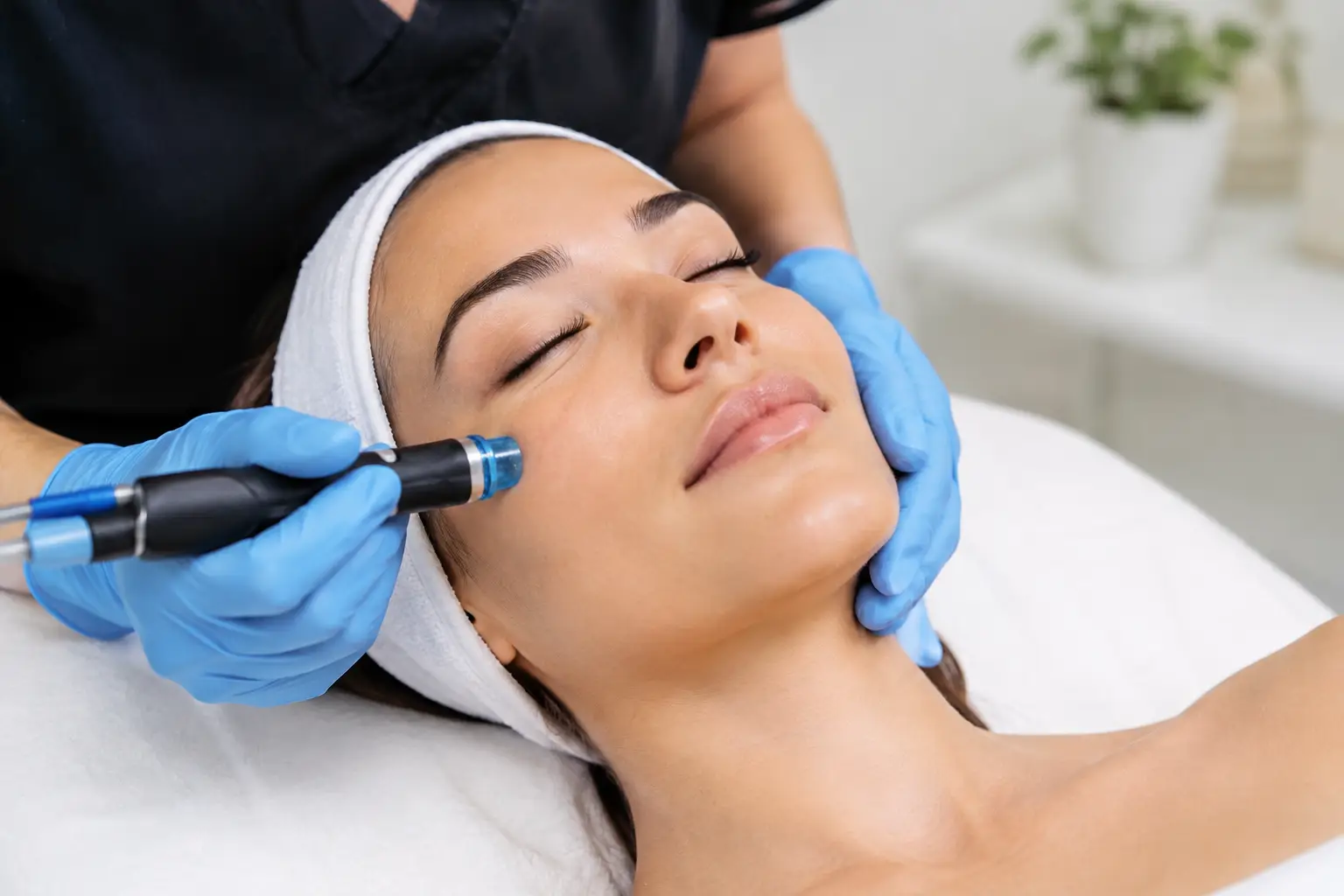
Does DiamondGlow Remove Blackheads? What to Expect
Blackheads around the nose, chin, or forehead can leave skin looking congested even when you cleanse regularly. DiamondGlow may help loosen and extract some superficial blackheads and improve the appearance of congestion. It does not guarantee complete removal, stop oil production, or permanently prevent clogged pores.
At Elite Laser Center & Med Spa in Stony Brook, a skin consultation can help determine whether a DiamondGlow facial fits your concerns or whether acne treatment, another facial, or a different home routine would be more useful.
How DiamondGlow May Help With Blackheads
DiamondGlow combines diamond-tip exfoliation, suction-assisted extraction, and the application of SkinMedica Pro-Infusion Serums. Exfoliation removes surface buildup, while suction helps clear loosened debris.
Based on that mechanism, some accessible plugs may be removed during treatment. That is different from establishing that every blackhead will clear or that a facial treats the underlying tendency to develop acne. The result depends on the type of congestion and your skin's suitability for treatment.
Ask your provider what improvement is realistic in your case. More suction or more aggressive exfoliation is not automatically a better approach.
Why blackheads are dark
A blackhead is an open comedone: a pore blocked by oil and dead skin cells, with material exposed at the surface. Its dark appearance is not a sign that your face is dirty. The American Academy of Dermatology explains that blackheads are a type of acne.
Trying to scrub the color away can irritate your skin without addressing the blockage. A treatment plan should focus on appropriate pore care rather than increasingly harsh cleansing.
Are the Dots on Your Nose Actually Blackheads?
Not every visible dot is a clogged pore. Sebaceous filaments are normal structures that help move oil to the skin's surface. They can be mistaken for blackheads, especially around the nose.
Cleveland Clinic distinguishes these normal structures from the plugs found in blackheads. Filaments often look smaller, flatter, and lighter than blackheads, although appearance alone is not always enough to identify a concern.
You cannot permanently eliminate sebaceous filaments, and trying to extract every visible pore is not a healthy goal. If you are unsure what you are seeing, ask your provider before committing to repeated extractions.
What Results Are Realistic?
After treatment, skin may feel smoother and look brighter, with less obvious surface congestion. Some blackheads may remain. A smoother finish does not establish that deeper or persistent acne has been treated.
Keep these expectations in mind:
Improvement varies; complete blackhead clearance should not be promised. Pores remain a normal, visible part of skin. New congestion can develop after treatment. Stubborn plugs may call for another approach rather than stronger repeated suction. Persistent or painful acne deserves medical assessment. Before booking a series, ask what the first appointment is intended to improve and when the plan will be reassessed. Progress should be judged against your starting concern, not a filtered photograph of poreless skin.
How often should you schedule treatment?
There is no universal interval for blackhead concerns. Discuss your skin response, current products, treatment goals, and budget with your provider. Do not assume that more frequent exfoliation will produce better results.
If congestion returns quickly, review the overall plan instead of automatically adding appointments. A facial may be one part of care without being the main answer to recurrent acne.
When DiamondGlow Should Be Postponed
The manufacturer's safety information says DiamondGlow should not be performed on compromised skin, including sunburned, chapped, irritated, or broken skin; open wounds; active, weeping acne; and cold sores or herpetic ulcers.
Tell your provider about medical conditions, allergies, topical medications, pregnancy, or breastfeeding. Discuss painful or inflamed lesions before treatment. Reducing suction does not make a contraindicated treatment appropriate.
If your main concern is inflamed acne, recurrent cysts, or scarring, a dermatologist may be the better starting point. A referral can be more useful than another exfoliating appointment.
Preparation and Aftercare
Request written instructions for your appointment, including product pauses and restart timing. Coordinate changes to prescription skincare with your prescriber rather than stopping medication independently.
Keep your provider informed about recent peels, waxing, laser treatments, or other facial procedures. Avoid adding a home peel or an unfamiliar exfoliant to prepare your skin.
After treatment, follow the recommended cleansing, moisturizing, makeup, and sun-protection instructions. Ask when retinoids and exfoliating acids may resume. Do not use a general online timetable if your skin remains irritated.
Is there downtime?
DiamondGlow generally involves minimal downtime, but temporary tightness, redness, or slight swelling can occur. Severe irritation and allergic reactions are also possible. Contact the treating provider about an unexpected or worsening reaction.
If you are planning treatment before a wedding, photographs, or travel, discuss timing beforehand. A first appointment should leave room to assess your response rather than assuming you will be event-ready the same day.
Keeping Congestion Under Control Between Visits
Daily care matters because a facial does not stop new pore blockages from forming. Start with a routine you can follow consistently rather than combining multiple strong products at once.
The American Academy of Dermatology's adult-acne guidance identifies salicylic acid and topical retinoids among options for clogged pores. Suitability depends on your skin, other products, and medical circumstances. Ask about appropriate use, especially around professional treatments or during pregnancy.
Gentle cleansing, suitable moisturizer, non-comedogenic products, and sun protection can support your routine. Avoid squeezing, picking, and abrasive scrubbing. Adding irritation can make it harder to assess whether the underlying acne plan is working.
If blackheads continue despite consistent care, seek advice rather than repeatedly switching products. The AAD's guide to different acne types explains why treatment should match the type of breakout.
Explore DiamondGlow in Stony Brook
For adults in Stony Brook and throughout Suffolk County, the next step is identifying what is causing the visible congestion. At Elite Laser Center & Med Spa, you can discuss DiamondGlow alongside your existing skincare and treatment goals.
Request a personalized skin consultation or call (631) 675-2500. The aim is a practical plan for clearer-looking, smoother skin with realistic expectations about what a facial can achieve.
Frequently Asked Questions
Does DiamondGlow remove every blackhead?
No. Its exfoliation and extraction steps may help clear some superficial congestion, but stubborn plugs can remain. Results should be assessed individually.
Does DiamondGlow permanently shrink pores?
It should not be presented as a permanent pore-shrinking treatment. Clearing visible buildup may improve their appearance, but pores remain part of normal skin.
Why do the dots on my nose return?
They may be new blackheads or normal sebaceous filaments. The two are different and should not automatically receive the same treatment.
Can I have DiamondGlow over inflamed acne?
Ask before booking. Active, weeping acne and other compromised skin are listed among the manufacturer's contraindications. Painful or persistent acne may need medical treatment first.
Should I use salicylic acid immediately afterward?
Follow your provider's restart instructions. A useful long-term acne ingredient may still irritate freshly treated skin. Do not add it immediately just to intensify the facial.
Sources
DiamondGlow: Treatment overview DiamondGlow: FAQs and important safety information American Academy of Dermatology: Acne signs and symptoms American Academy of Dermatology: Adult acne treatment American Academy of Dermatology: Treating different acne types Cleveland Clinic: Sebaceous filaments Prepared with AI assistance for editorial and clinical review before publication. This article provides general education and does not replace individualized medical advice. Treatment suitability, results, and recovery vary.