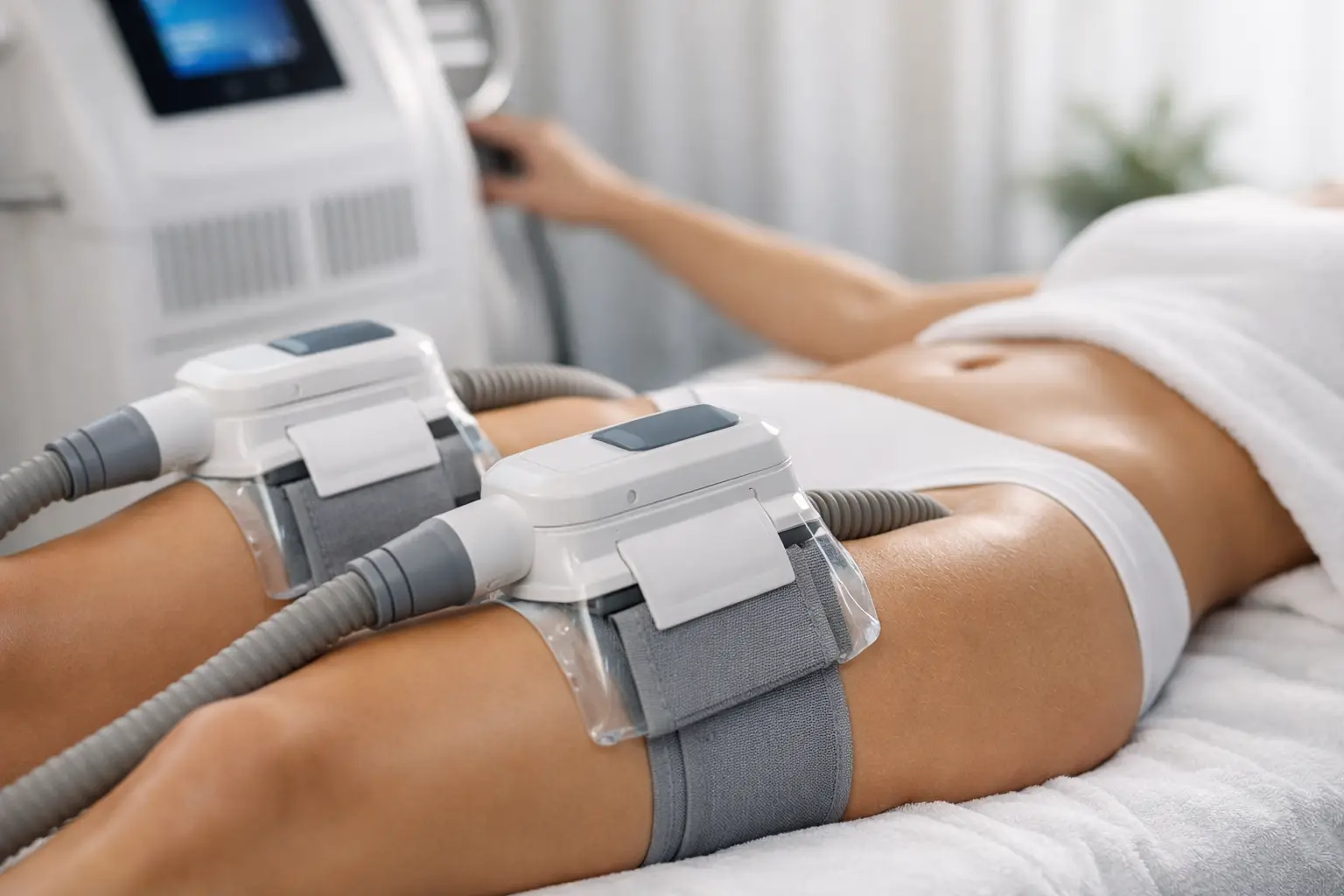
The thighs are one of the most common places people hold onto stubborn fat, even when they exercise consistently and maintain a healthy routine. So, does CoolSculpting work for thighs? For the right candidate, it can create a noticeable reduction in localized thigh fat without surgery, needles, or a lengthy recovery. The key is having realistic goals, enough treatable fat for the applicator to target, and a treatment plan designed around your specific shape.
CoolSculpting is not a weight-loss procedure or a replacement for healthy habits. It is a non-surgical body contouring treatment designed to reduce visible fat bulges that do not respond the way you want them to. For many people, that makes the inner and outer thighs an excellent area to treat.
Does CoolSculpting Work for Thighs and Inner Thighs?
CoolSculpting uses controlled cooling to target fat cells beneath the skin. Fat cells are more sensitive to cold than surrounding tissue. During treatment, the applicator cools the selected area to a temperature that damages a portion of those fat cells while protecting the skin and nearby structures. Your body then gradually processes and clears the treated cells over time.
Once those fat cells are eliminated, they do not regenerate. However, the remaining fat cells can still enlarge with weight gain. That is why the best results tend to last when patients maintain a relatively stable weight.
On the outer thighs, CoolSculpting can help reduce the fullness often called "saddlebags" and create a smoother transition from the hip to the leg. On the inner thighs, it may reduce rubbing, soften a small bulge, and improve the look of the area in fitted clothing, swimwear, or shorts. Results are about refinement, not a dramatic change in clothing size overnight.
Most patients start seeing changes in about three weeks, with more visible improvement developing over one to three months. The body continues processing treated fat cells for several months. Some people are happy after one session, while others benefit from additional treatment cycles to reach their desired level of contouring.
What Kind of Results Can You Expect?
A properly performed CoolSculpting treatment may reduce a measurable layer of fat in the treated area. Clinical expectations are often described as roughly a 20% to 25% reduction in the fat layer per treatment cycle, but individual results vary. Your anatomy, the amount of pinchable fat, applicator placement, and the number of cycles all influence the final result.
The best results look natural. Rather than appearing as though something was suddenly removed, the thigh gradually looks less bulky and more balanced as the body clears damaged fat cells. This gradual timeline is appealing to many busy Long Island patients who want improvement without surgical scars or having to step away from work, family, or social plans for recovery.
Photos are an important part of the process because small contour changes can be difficult to judge day to day. Comparing consistent before-and-after images often provides a clearer picture of progress than the scale. CoolSculpting is designed to change the shape of a specific area, not produce a meaningful change in total body weight.
Who Is a Good Candidate for Thigh CoolSculpting?
Thigh CoolSculpting is usually best for adults who are close to their goal weight but have a defined pocket of stubborn fat on the inner thighs, outer thighs, or both. You should be able to pinch enough tissue for the applicator to safely grasp. Good skin quality also matters because fat reduction does not automatically correct significant loose skin.
If your main concern is skin laxity, cellulite, or a larger amount of overall weight loss, another approach may be more appropriate. Some patients need a combination plan that addresses fat first and skin firmness separately. A professional consultation can determine whether CoolSculpting alone is likely to deliver the improvement you want.
CoolSculpting may not be appropriate for people with certain cold-related medical conditions, such as cryoglobulinemia, cold agglutinin disease, or paroxysmal cold hemoglobinuria. Pregnancy, recent changes in weight, prior procedures, hernias, and medical history should also be discussed during your evaluation. A reputable medical spa will prioritize candidacy and safety over selling a treatment that is not right for you.
What Does a Thigh Treatment Feel Like?
At the start of treatment, the provider marks the area and places the applicator over the targeted fat. You may feel firm suction, pressure, intense cold, tingling, or pulling during the first several minutes. Those sensations commonly fade as the area becomes numb.
Treatment time depends on the applicator and the number of areas being treated. Many patients use the time to read, answer emails, watch a show, or simply relax. There is generally no required downtime, so most people return to normal daily activity after the appointment.
Temporary side effects can include redness, swelling, bruising, numbness, tenderness, tingling, firmness, or sensitivity in the treatment area. These effects usually resolve on their own. Some patients experience soreness similar to a strenuous workout for several days. Your provider should explain what is normal, what to expect at home, and when to call with questions.
A rare but important risk is paradoxical adipose hyperplasia, or PAH. This occurs when treated fat tissue enlarges rather than reduces. It is uncommon, but it is a real risk that should be discussed before treatment. PAH does not typically resolve on its own and may require surgical correction. An honest consultation includes both the benefits and the limitations of any aesthetic procedure.
Why Treatment Planning Makes the Difference
Thighs are not a one-size-fits-all treatment area. Inner thighs can be narrow and sensitive, while outer thighs may require a different applicator shape and placement strategy. Treating only one section without considering the surrounding contour can leave a result that feels incomplete.
A strong plan starts with an in-person assessment of your fat distribution, skin quality, symmetry, lifestyle, and aesthetic goal. Your provider should explain whether you are likely to need one or multiple cycles, which thigh areas should be treated, and how long it may take to see the full outcome. Be cautious of unusually low per-cycle pricing that does not clearly explain how many cycles your personalized plan requires.
At Elite Laser Center, CoolSculpting treatment planning is built around medically supervised care, advanced technology, and a clear discussion of what can realistically be achieved without surgery. The goal is not to promise an impossible transformation. It is to help you make a confident, informed decision about whether non-surgical fat reduction fits your body and your goals.
How to Support Your Results
CoolSculpting does not require a special recovery program, but a few sensible habits can help you feel your best during the process. Stay hydrated, continue normal movement as tolerated, and follow the aftercare instructions provided at your appointment. There is no proven shortcut that forces fat cells to clear faster, so be wary of aggressive massage claims or restrictive detox plans.
Long-term results depend largely on maintaining your weight. A balanced eating pattern, regular activity, adequate sleep, and realistic stress management all support the contour you achieve. If your weight fluctuates significantly, the remaining fat cells in the thighs can enlarge and reduce the visible contrast from treatment.
The most helpful next step is a personalized consultation, not a guess based on a photo or a package price. When you understand what CoolSculpting can improve, what it cannot address, and how many cycles your thighs may need, you can choose treatment with clarity and confidence.