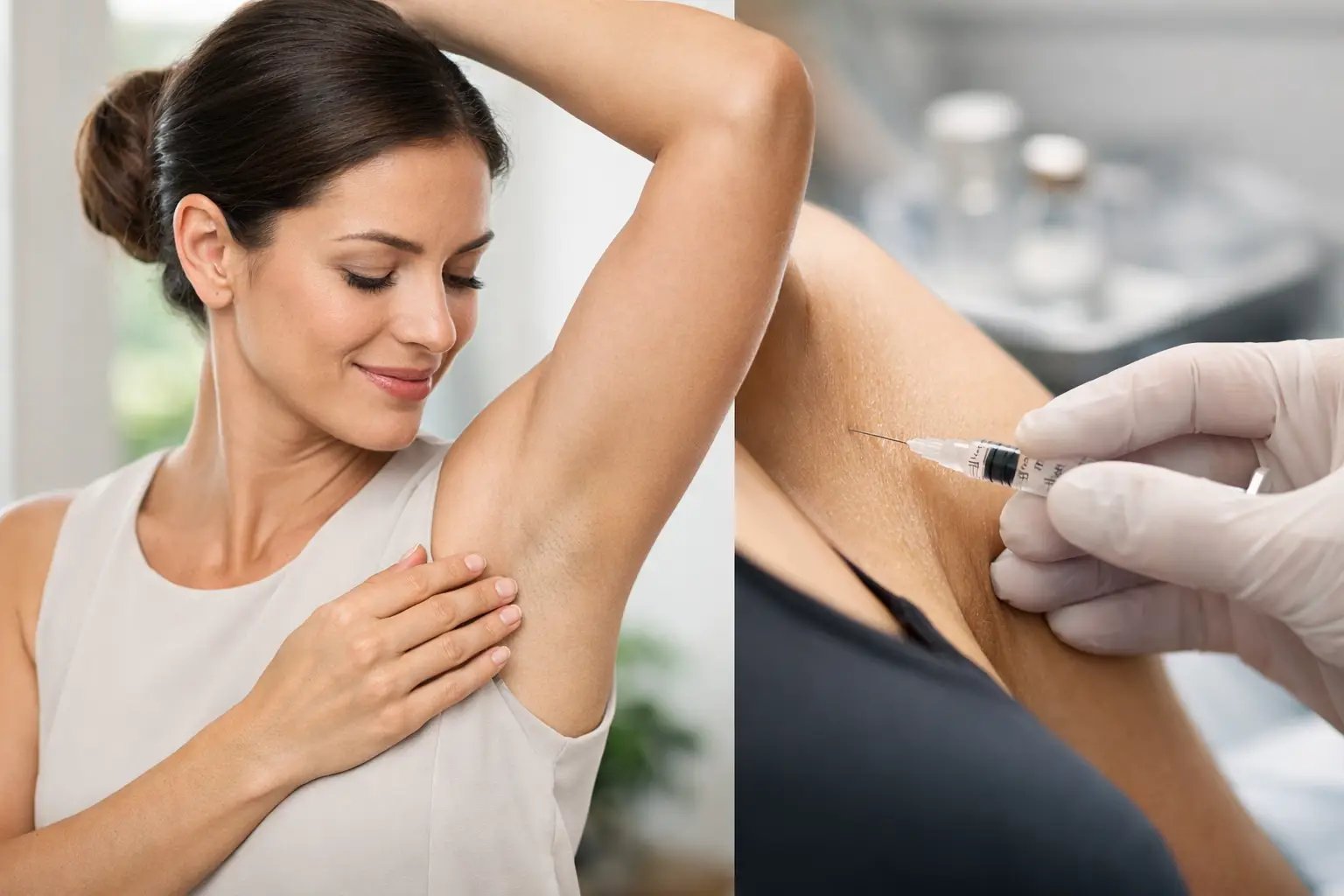
That moment when a light-colored shirt shows sweat before you have even arrived at work can feel far more disruptive than people realize. If you have tried stronger deodorants, changed fabrics, or planned outfits around underarm marks, you may be asking: does Botox help sweating? For many people with excessive underarm sweating, the answer is yes. Botox can significantly reduce sweat production in the treated area and provide months of relief without surgery or daily prescription products.
Does Botox Help Sweating? Yes, in the Right Situation
Botox is best known for softening expression lines, but it also has a well-established medical use for severe underarm sweating, also called primary axillary hyperhidrosis. This is the type of sweating that happens beyond what your body needs for cooling. It may occur even when you are sitting still, in an air-conditioned room, or wearing clothing that should not make you feel warm.
When Botox is injected just beneath the skin in the underarms, it temporarily blocks the nerve signals that activate sweat glands. The glands are still there, but they receive less instruction to produce sweat. The result is a meaningful reduction in underarm moisture for many patients.
This treatment is not simply a cosmetic convenience for people who sweat heavily. Constant sweating can affect professional clothing, social confidence, workouts, special events, and everyday comfort. A treatment plan that reduces visible sweat marks can make getting dressed and going about the day feel much easier.
Who Is a Good Candidate for Botox for Sweating?
Botox is often considered when clinical-strength antiperspirants have not provided enough relief or have caused irritation. It may be a strong option for adults whose underarm sweating is frequent, bothersome, and out of proportion to heat or physical activity.
A consultation is the right place to determine whether your sweating pattern is likely to respond. Primary hyperhidrosis often begins earlier in life, may run in families, and commonly affects both underarms in a similar way. In contrast, new or sudden sweating can sometimes be related to medication, hormonal changes, thyroid concerns, infection, or another medical issue. Those situations deserve appropriate medical evaluation before cosmetic treatment.
Botox can also be used in areas such as the palms, soles of the feet, forehead, and scalp. However, underarm treatment is the most common use for excessive sweating and is generally the most straightforward. Hands and feet may require a different approach because injections can be more uncomfortable and temporary muscle weakness is a consideration when treating the palms.
Pregnant or breastfeeding patients, people with certain neuromuscular conditions, and those with an active skin infection in the treatment area should discuss alternatives with a qualified medical provider. A personalized review of your health history and medications keeps treatment safe and appropriate.
What Happens During the Appointment?
Underarm Botox is an in-office treatment with minimal downtime. Your provider will assess the area and create a precise injection pattern to cover the sweat-producing skin. A series of small injections is placed across each underarm using a fine needle.
Most appointments are relatively quick. The sensation is often described as a series of brief pinches. If you are especially sensitive, numbing options may be discussed before treatment. There is no surgery, no incision, and no recovery period that keeps most patients from returning to their regular day.
You may notice small raised bumps, pinpoint redness, or minor tenderness immediately afterward. These effects usually resolve quickly. Your provider may recommend avoiding strenuous exercise, hot tubs, saunas, or heavy friction in the area for the rest of the day, depending on your individual treatment instructions.
When Will You See Results and How Long Do They Last?
Botox does not stop sweating the minute you leave the office. Many patients begin seeing a reduction within several days, with fuller results developing over one to two weeks. This gradual change is normal as the treatment begins interrupting the nerve signals to the sweat glands.
Results commonly last about four to six months, although some people enjoy relief for longer. Your metabolism, the severity of your sweating, the treated area, and the dose used can all affect longevity. Repeat treatments are needed to maintain the result, but they can be scheduled around your lifestyle, travel, work demands, or event calendar.
Some patients find that consistent treatment helps them feel less dependent on daily antiperspirants. Others continue using antiperspirant as part of a combined approach. There is no one-size-fits-all plan, which is why medically supervised treatment matters.
Does Botox Stop All Sweat?
A successful treatment should reduce excessive sweating in the injected area, but the goal is not necessarily zero moisture at all times. Your body still needs to regulate temperature, and Botox only affects the specific area treated. It does not shut down sweating throughout your body.
A common concern is whether reducing underarm sweating will force the body to sweat excessively somewhere else. This is not typically expected with Botox injections for the underarms. The body has millions of sweat glands, and treatment is localized rather than systemic.
Botox also does not directly treat body odor. Sweat itself is usually odorless, while odor develops when bacteria interact with sweat on the skin. Because treatment can reduce moisture, some patients notice less odor as a secondary benefit, but good hygiene and the right deodorant or antiperspirant may still be helpful.
Safety, Side Effects, and the Value of Medical Oversight
When administered by an experienced, qualified provider, Botox for underarm sweating is considered a safe, non-surgical treatment. Botox is FDA-approved for severe primary axillary hyperhidrosis when topical treatments have not been effective enough.
As with any injectable treatment, side effects are possible. The most common are temporary tenderness, swelling, bruising, or redness at injection sites. Less common risks include headache, flu-like symptoms, or an uneven treatment response. Serious reactions are rare, but should always be discussed before treatment.
Proper technique matters. The injections need to be placed at the correct depth and distributed evenly across the active sweat zone. At Elite Laser Center, treatment plans are approached with the same priorities clients expect from an established medical aesthetics practice: personalized care, professional oversight, comfort, and results that fit real life.
Botox vs. Other Excessive Sweating Treatments
The right choice depends on how much sweating affects you, which area is involved, your medical history, and how much maintenance you are comfortable with. Over-the-counter and prescription antiperspirants are often a first step, but they can irritate sensitive skin and may not control severe sweating.
Oral medications can help some patients, though they may cause side effects such as dry mouth, blurred vision, or constipation. Certain energy-based treatments and surgical options may be considered in select cases, particularly when sweating is severe or persistent. These approaches can involve more cost, downtime, or risk than injectable treatment.
Botox occupies a valuable middle ground. It is non-surgical, localized, effective for many underarm patients, and temporary. That temporary nature is a benefit for people who want a proven option without making a permanent change. The trade-off is that maintenance appointments are necessary to continue the results.
Planning Treatment Around Your Life
If underarm sweating affects your wardrobe choices, confidence at work, or comfort during social events, do not wait until the week of an important occasion to seek treatment. Give Botox up to two weeks to develop fully, and plan ahead if you tend to bruise easily or have a major event scheduled.
Come to your consultation ready to discuss when your sweating began, what you have already tried, any medications you take, and the specific situations that bother you most. A clear conversation helps your provider recommend a treatment plan that is safe, practical, and aligned with your goals.
Excessive sweating is not something you simply have to work around forever. The right evaluation can help you move from hiding underarm marks to choosing clothes, showing up, and feeling comfortable with far less second-guessing.