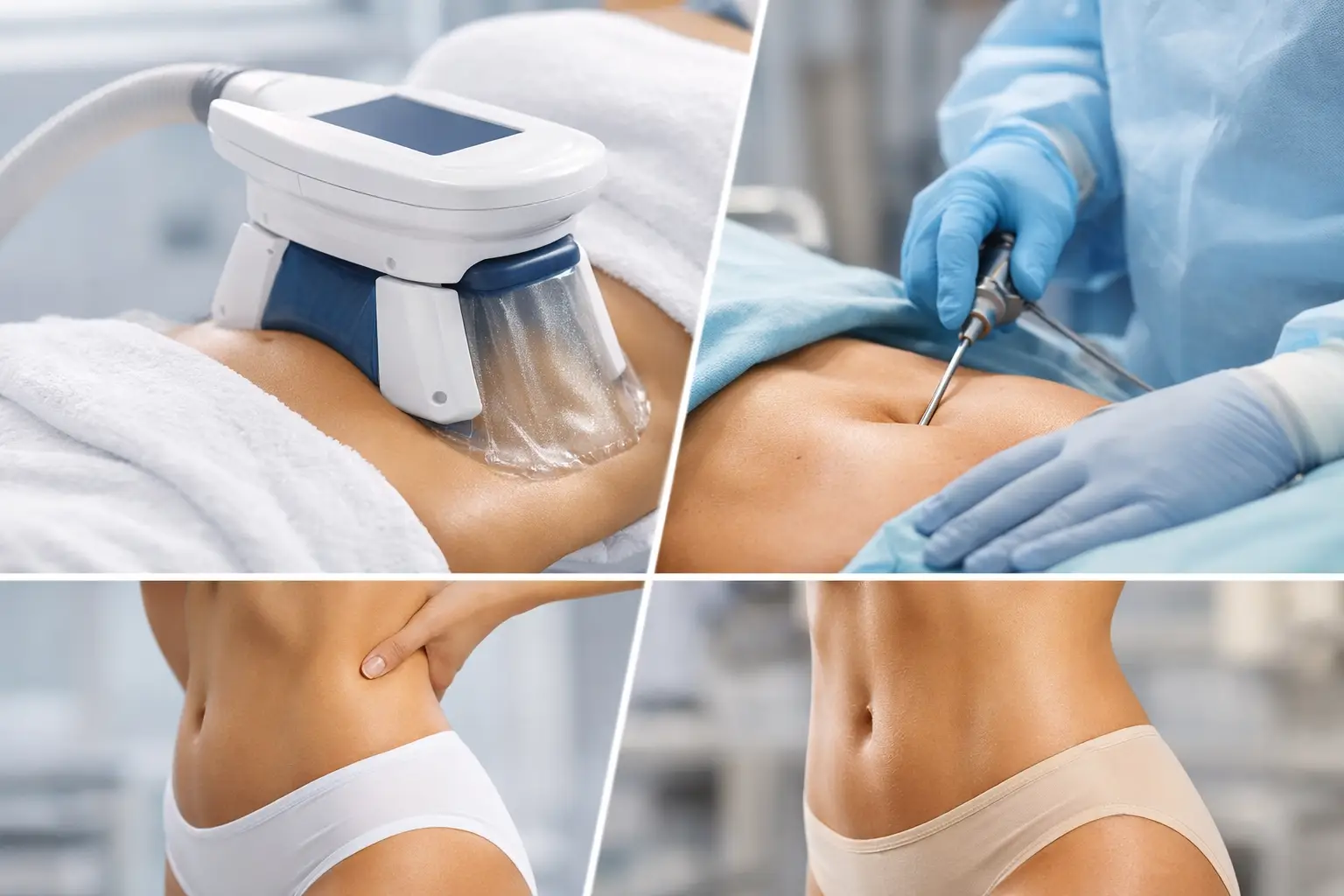
A flatter lower abdomen, smoother flanks, or a more defined jawline can feel frustratingly out of reach when diet and exercise have already done their part. When comparing coolsculpting vs liposuction results, the real question is not which treatment is universally better. It is which approach can safely create the degree of change you want, with a recovery timeline that works for your life.
Both treatments reduce unwanted fat cells in targeted areas. The experience, recovery, speed of visible change, and potential level of correction are very different. A thoughtful consultation should look beyond before-and-after photos and focus on your actual anatomy, skin quality, goals, and comfort with surgery.
CoolSculpting vs Liposuction Results: The Core Difference
CoolSculpting is a non-surgical body contouring treatment that uses controlled cooling to target fat cells beneath the skin. The treated fat cells are gradually processed and eliminated by the body over the weeks following treatment. There are no incisions, anesthesia, or surgical recovery period.
Liposuction is a surgical procedure. A surgeon makes small incisions, inserts a cannula, and manually removes fat from the treatment area. Because fat is physically removed during the procedure, liposuction can create a more substantial change in a single treatment than non-surgical fat freezing typically can.
That difference matters when setting expectations. CoolSculpting can produce a natural-looking reduction in a small, stubborn pocket of pinchable fat. Liposuction is generally the stronger option for someone seeking a more dramatic contour change, larger-volume fat removal, or more extensive sculpting in one area.
Neither treatment is designed for weight loss. They are body-contouring options for people who are near a stable, healthy weight but have specific areas that do not respond the way they want to diet and exercise.
How Noticeable Are CoolSculpting Results?
CoolSculpting results develop gradually. Most clients begin seeing changes within several weeks, with more visible improvement commonly appearing around two to three months after treatment. The body may continue processing treated fat cells for several additional months.
That gradual timeline is a benefit for many people. The change can look understated and natural rather than immediately obvious. It also makes CoolSculpting appealing to busy adults who want to return to work, family responsibilities, workouts, and social plans with little interruption.
A single CoolSculpting session can reduce the fat layer in a treated area, but the exact degree of reduction varies by the area, applicator placement, baseline fat volume, and individual response. Some clients choose multiple treatment cycles to build a more noticeable result. Common treatment areas include the abdomen, love handles, upper arms, thighs, under the chin, bra fat, and back fat.
CoolSculpting is not a skin-tightening procedure. If loose or crepey skin is the primary concern, reducing fat alone may not create the polished look you have in mind. In those cases, skin-tightening treatments or a combined plan may better support your goal.
What CoolSculpting Feels Like
During treatment, the applicator creates suction and cooling in the targeted area. The first few minutes can feel intensely cold, tight, or tingly, followed by numbness. Many clients relax, read, work, or scroll through their phones during the appointment.
Afterward, temporary redness, swelling, bruising, tenderness, numbness, or firmness can occur. These effects generally resolve without keeping clients away from normal daily activities. A qualified provider should also discuss less common risks, including paradoxical adipose hyperplasia, a condition in which treated fat enlarges rather than shrinks and may require surgical correction.
How Noticeable Are Liposuction Results?
Liposuction can deliver a more immediate structural change because fat is removed during the procedure. However, the final result is not visible the next day. Swelling, bruising, fluid retention, and compression garments are common parts of the recovery process. Early results may be visible after swelling starts to improve, while the final contour can take several months to settle.
For patients with a larger fat deposit or a clear desire for more dramatic shaping, liposuction may be the more predictable route. It can also allow a surgeon to sculpt transitions between areas, such as the waist and abdomen, with a degree of control that non-surgical treatment cannot fully duplicate.
Liposuction does come with a different level of commitment. It requires a surgical consultation, anesthesia or sedation depending on the procedure, downtime, incision care, and acceptance of surgical risks. These can include infection, bleeding, contour irregularities, prolonged swelling, changes in sensation, scarring, and complications related to anesthesia.
The best liposuction outcomes depend heavily on surgeon skill, appropriate candidate selection, and following recovery instructions. It is not a shortcut around healthy habits, and weight gain after surgery can change the contour of both treated and untreated areas.
Recovery: Minimal Downtime vs Surgical Downtime
Recovery is often the deciding factor for Long Island clients balancing demanding schedules. CoolSculpting is designed for minimal downtime. Most people return to normal activity immediately, though treated areas may feel sore or numb for a period of time.
Liposuction recovery requires more planning. Many patients need time away from work or regular routines, particularly during the first week. Strenuous exercise is usually restricted initially, and compression garments are often worn to help manage swelling and support healing.
This does not mean one choice is automatically more convenient. If you want a substantial change and would otherwise need several CoolSculpting cycles, one surgical procedure may feel more efficient despite the recovery. If avoiding surgery and maintaining your routine are top priorities, CoolSculpting may be the clearer fit.
Cost Depends on the Size of Your Goal
It is tempting to compare treatment prices without comparing the treatment plan. CoolSculpting pricing is usually based on the number of areas and treatment cycles needed. A small under-chin treatment has a very different cost than a plan addressing the abdomen and flanks.
Liposuction typically has higher upfront costs because it involves a surgeon, operating facility, anesthesia, and post-procedure care. Yet for larger areas or more significant correction, it can sometimes be more cost-effective than completing numerous non-surgical sessions.
The right conversation is not, “Which one is cheaper?” It is, “What result am I trying to achieve, and what treatment plan is realistically required to get there?” A reputable provider will be direct about whether a non-surgical approach can meet your expectations.
Who Is a Better Candidate for Each Option?
CoolSculpting is often best for adults with visible, pinchable pockets of subcutaneous fat and good skin elasticity. They are usually close to their goal weight and want targeted refinement without surgery. It can be especially appealing for someone who wants to treat one or two stubborn areas and can be patient as results appear gradually.
Liposuction may be better for someone with a larger volume of localized fat, a desire for more dramatic contouring, or a preference for a single surgical event rather than multiple non-surgical appointments. Good overall health, stable weight, and realistic expectations are essential.
Neither approach treats visceral fat, the fat located deeper in the abdomen around internal organs. If the abdomen feels firm rather than pinchable, a consultation may reveal that fat reduction treatment will not be the most effective next step. Similarly, significant skin laxity or separated abdominal muscles may require a different medical or surgical solution.
Why a Personalized Assessment Changes the Outcome
The most successful body-contouring plans start with an honest evaluation, not a sales pitch. At Elite Laser Center, a personalized consultation can assess your treatment area from multiple angles, review your goals, and determine whether non-surgical CoolSculpting is likely to deliver a result you will feel good about.
A strong provider will also tell you when liposuction, skin tightening, or no treatment at all is the wiser recommendation. That transparency protects your investment and helps prevent the most common disappointment in aesthetics: choosing a treatment that was never designed to produce the change you expected.
If you want a refined, non-surgical improvement with little interruption to your routine, CoolSculpting may be an excellent option. If your vision calls for more extensive reshaping, a board-certified plastic surgeon can help you explore liposuction. The right choice begins with a clear goal and an assessment that respects it.