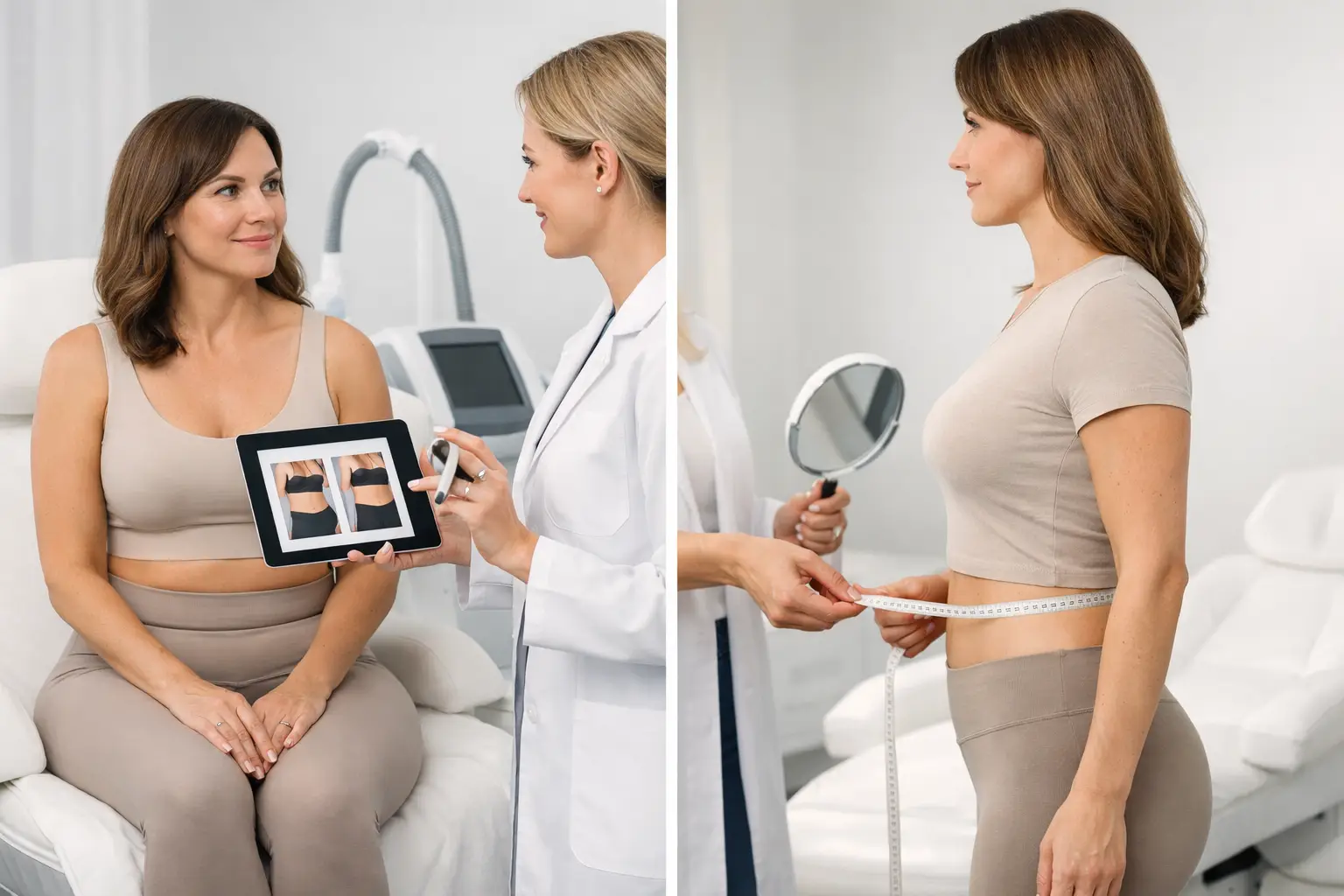
A CoolSculpting abdomen before after comparison should show more than a smaller measurement. The most meaningful results reveal a smoother, more balanced midsection while preserving the person's natural shape. For many adults, the abdomen is where stubborn, pinchable fat remains despite consistent workouts and a sensible diet. CoolSculpting is designed for that specific concern: reducing targeted fat without surgery, incisions, or a lengthy recovery.
The right expectation is refinement, not a dramatic overnight transformation. A qualified consultation, accurate applicator placement, and patience through the body's natural processing period all matter to the final result.
What CoolSculpting Does for Abdominal Fat
CoolSculpting uses controlled cooling, also called cryolipolysis, to target subcutaneous fat cells beneath the skin. These are the soft, pinchable cells that can create fullness in the upper abdomen, lower belly, or sides of the waist. The cooling process damages selected fat cells while protecting the surrounding skin. Over the following weeks, the body gradually clears those damaged cells through its natural processes.
Once fat cells are removed, they do not return. That does not mean a CoolSculpting treatment replaces healthy habits or prevents future weight gain. Remaining fat cells can still enlarge with significant weight changes. The best before-and-after outcomes usually belong to people who are near a stable, comfortable weight and want help with an area that has been resistant to their normal routine.
CoolSculpting is body contouring, not weight-loss surgery. A scale may barely move, yet clothing can fit more comfortably and the abdomen can look noticeably flatter in fitted tops, dresses, swimsuits, and workwear.
CoolSculpting Abdomen Before After: What Changes to Look For
A quality before-and-after assessment begins with consistent photographs. Lighting, posture, clothing, camera angle, and distance should be as similar as possible. A person standing relaxed in a front-facing photo can look very different from someone twisting, flexing, or photographed under harsh overhead lighting. Reputable providers use standardized images because results should be easy to evaluate honestly.
In abdominal results, look for a reduction in the visible bulge rather than an expectation of a perfectly flat stomach. The lower abdomen may sit closer to the body. The upper abdomen can appear less rounded. The transition from the waist to the hips may look cleaner, especially when the abdomen is treated alongside the flanks.
Results vary according to the amount and distribution of fat, skin elasticity, anatomy, lifestyle, and the number of treatment cycles used. Someone with a small, well-defined lower-belly pocket may see a different change from someone with a larger area of fullness across the entire abdomen. Neither result is automatically better. The goal is a plan that fits the person's starting point and desired level of improvement.
Why the waistline can matter as much as the stomach
Treating the abdomen alone is not always the most flattering strategy. For some clients, fullness at the flanks contributes to the appearance of a wider middle. Addressing the abdomen and sides together can create a more proportional contour from the front and profile views.
During a consultation, the provider should assess the entire area rather than simply placing an applicator where a client points. That customized approach helps avoid an uneven result and identifies whether one area needs more attention than another.
When You Will See Results
CoolSculpting changes develop gradually. Some people notice an early difference in about three weeks, but the more visible change typically develops over one to three months. The body needs time to process the treated fat cells, so it is normal for the first few weeks to look much like the "before" photo.
A final evaluation is often most useful around three months after treatment, although timing can differ from person to person. If additional contouring is desired, a provider can discuss whether another treatment cycle is appropriate after the treated area has had time to respond.
This gradual timeline is a benefit for many busy Long Island clients. There is no surgical recovery period and no need to step away from daily responsibilities for weeks. Most people return to normal activity right after their appointment, though temporary tenderness, numbness, redness, swelling, bruising, tingling, or firmness in the treatment area can occur.
How Many Abdomen Treatments Are Needed?
There is no one-size-fits-all number. The abdomen is a broad area, and one session may involve multiple applicator placements or treatment cycles. A person with a modest lower-abdomen pocket may need a different approach than someone who wants to reduce fullness across the upper and lower abdomen.
A strong plan accounts for the amount of pinchable fat, the shape of the area, and the degree of visible change the client wants. Be cautious of any provider who promises the same treatment count or identical percentage reduction for every body. Personalized planning is more credible and more likely to deliver a result that looks balanced.
Cost should also be discussed in terms of the full treatment plan, not just the price of a single cycle. A lower initial price is not necessarily a better value if it does not include enough treatment to address the area properly. Ask what is included, how your provider determines the number of cycles, and when progress will be reviewed.
Who Is a Good Candidate for Abdominal CoolSculpting?
The best candidates generally have visible, pinchable abdominal fat and realistic goals for non-surgical contouring. They are usually already committed to maintaining their weight and want to improve a stubborn area rather than pursue major weight reduction.
CoolSculpting may not be the right answer when the primary issue is loose skin, significant abdominal muscle separation, or substantial internal visceral fat. Visceral fat sits deeper around the organs and cannot be pinched or treated with surface cooling. Similarly, a loose skin concern may call for a skin-tightening treatment or a different approach altogether.
A medical consultation is especially valuable if you have a hernia, prior abdominal surgery, an implanted device, a cold-related medical condition, or any health concern that may affect suitability. The treatment should be performed only after your medical history and treatment area have been properly reviewed.
Safety, Side Effects, and an Honest View of Results
CoolSculpting is an FDA-cleared, non-surgical treatment, but it is still a medical aesthetic procedure that deserves informed decision-making. During treatment, clients typically feel intense cold and suction at first. That sensation usually fades as the area becomes numb. Afterward, temporary side effects can include soreness, cramping, itching, sensitivity, swelling, and altered sensation.
There is also a rare but significant risk called paradoxical adipose hyperplasia, or PAH. With PAH, the treated fat area enlarges and becomes firmer rather than decreasing. It is uncommon, but it should be part of every candid conversation before treatment. Choosing an experienced, medically supervised office helps ensure appropriate screening, accurate treatment planning, and clear guidance if any concern arises.
At Elite Laser Center, abdominal contouring plans are built around a careful evaluation of your body, goals, and lifestyle. The focus is on real, visible improvement with an approach that respects both safety and natural-looking proportions.
Get More From Your Before-and-After Result
CoolSculpting works best as part of a consistent lifestyle, not as a reason to abandon one. Staying hydrated, maintaining regular movement, and keeping weight relatively stable can help you preserve the contour you achieve. You do not need an extreme workout plan or restrictive diet after treatment, but stability matters.
It also helps to measure progress with more than a mirror. Take standardized photos before treatment, track how a favorite pair of jeans fits, and wait for the full result window before judging the outcome. Daily inspection can make a gradual change hard to see. Comparing photos taken several weeks apart is far more revealing.
A well-planned abdomen treatment should leave you looking like yourself, only more comfortable in your silhouette. The most useful next step is a personal consultation where your provider can assess whether the fullness is treatable fat, discuss realistic before-and-after expectations, and build a plan that earns your confidence.