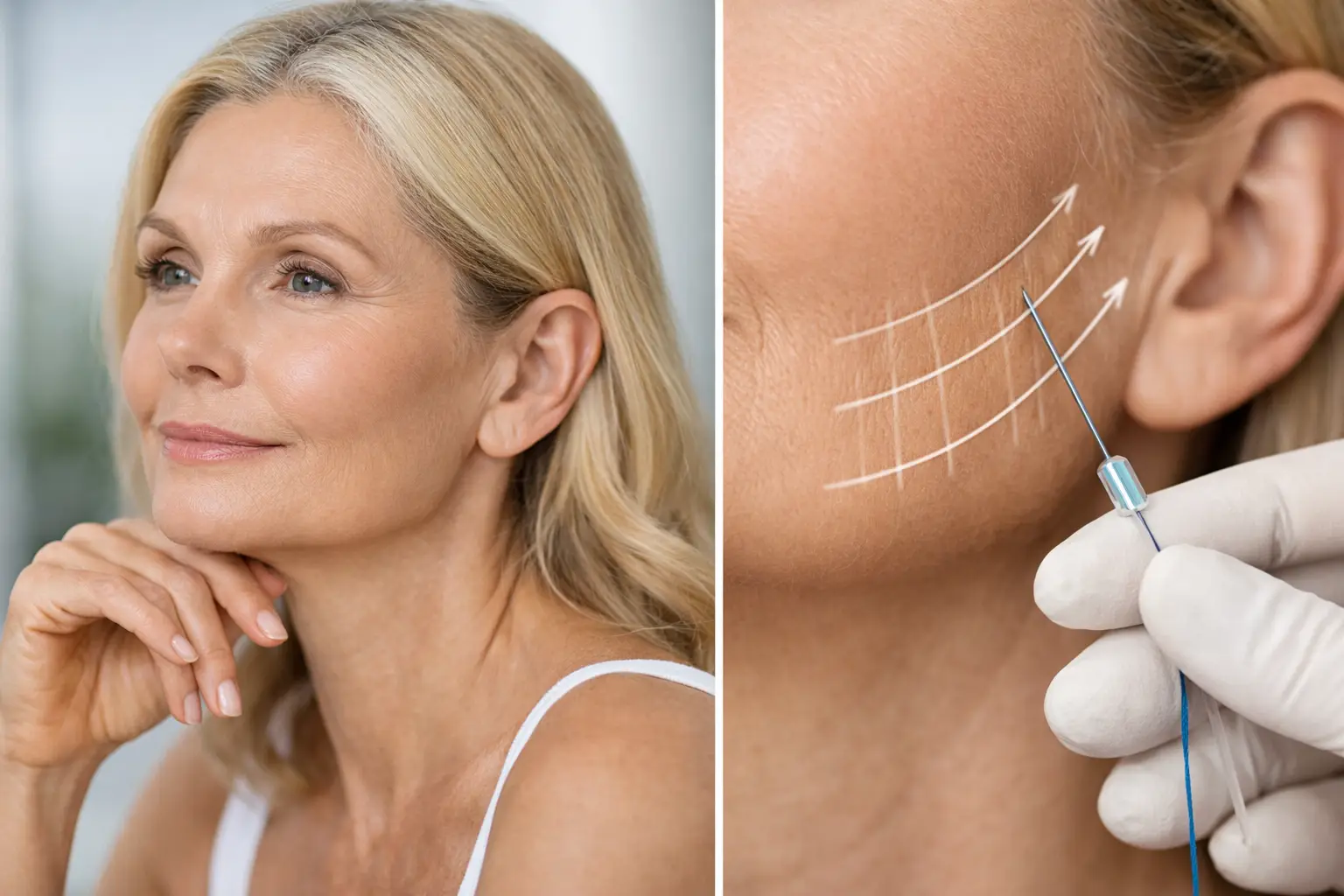
A sagging jawline can make the face look tired even when you feel energized. It is one reason clients often ask, “can threads replace facelift surgery?” The honest answer is that threads can create a noticeable, natural-looking lift for the right person, but they do not duplicate every result a surgical facelift can achieve.
PDO and MINT threads are designed for people who want visible improvement without the recovery, scars, and commitment of surgery. They can be an excellent option when facial laxity is mild to moderate, expectations are realistic, and treatment is performed with a customized plan. The goal is not to make you look different. It is to restore support, contour, and confidence in a way that still looks like you.
Can Threads Replace a Facelift?
Threads may replace a facelift for someone with early signs of facial aging who does not need major skin removal or deep structural correction. They cannot replace a facelift for every concern, especially significant jowling, heavy neck laxity, or substantial excess skin.
A surgical facelift repositions deeper facial tissues and can remove excess skin. It is a more comprehensive procedure with longer-lasting results, but it also requires anesthesia, surgical recovery, and a greater financial and time commitment. A thread lift works differently. Dissolvable sutures are placed beneath the skin to gently reposition tissue and improve the look of the cheeks, jawline, lower face, or brows.
The threads also encourage collagen production as they dissolve. That collagen-building response can help the skin look firmer and more supported over time. Still, collagen stimulation has limits. If the skin has lost significant elasticity, threads alone may not provide the degree of lift you want.
For many Long Island clients, the better question is not whether threads are “better” than a facelift. It is whether threads are the right level of treatment for where their face is today.
What PDO and MINT Threads Can Improve
Thread lifts are most effective when there is enough skin quality and underlying tissue support to respond to repositioning. They are commonly used to improve mild to moderate cheek descent, early jowls, softened jawline definition, marionette-line area laxity, and mild brow drooping.
PDO threads are absorbable sutures that can be used in different ways. Some are placed to create a lifting effect, while smoother threads are often used to support collagen production and improve crepey texture. MINT threads are molded, barbed threads designed to grip tissue for a more defined lifting effect in appropriate candidates.
Treatment plans are rarely one-size-fits-all. A client with mild jowling and good skin elasticity may benefit from lifting threads along the lower face and jawline. Someone whose main concern is fine lines and thinning skin may see more value from collagen-stimulating threads combined with microneedling, skin tightening, or medical-grade skincare.
Threads can provide a refreshed result without the “pulled” appearance many people fear. The best outcome is subtle but meaningful: a cleaner jawline, slightly elevated cheeks, and a face that appears more rested in photos and in person.
When a Surgical Facelift Is the Better Choice
There is no benefit in overselling a non-surgical treatment when surgery is more likely to meet your goals. A facelift may be the better choice if you have pronounced skin laxity, a heavy neck, significant jowls, or want a dramatic and longer-lasting correction.
Threads do not remove loose skin. They also do not recreate the deeper lifting and tissue repositioning possible with surgery. If you can pinch a substantial amount of excess skin around the jawline, lower cheeks, or neck, a thread lift may create only a modest change. In that case, investing in threads when you want a surgical-level transformation can lead to disappointment.
Age alone does not determine candidacy. A person in their 40s with sun damage, weight fluctuations, and reduced skin elasticity may need a different approach than a person in their 60s with strong skin quality and only early facial descent. Your anatomy, skin condition, goals, and comfort with downtime matter far more than a number.
A qualified consultation should include an honest conversation about these limits. The right provider should be comfortable telling you when threads are likely to help and when a referral for surgical evaluation makes more sense.
Results, Downtime, and Longevity Compared
Threads appeal to busy adults because treatment is typically performed in-office with local numbing. Most clients return to normal light activities quickly, although swelling, tenderness, bruising, and temporary tightness can occur. You may need to avoid strenuous exercise, dental work, exaggerated facial movements, and pressure on the treatment area for a period recommended by your provider.
Initial lifting can often be seen right away, but the face needs time to settle. As collagen production develops, the result may continue to improve over the following weeks and months. Results vary by thread type, placement area, skin quality, lifestyle, and natural aging, but many clients enjoy improvement for about one to two years.
A facelift has a longer recovery period and more significant upfront commitment. However, its results typically last longer than a thread lift because it addresses deeper structural changes and excess skin. It is not a permanent pause on aging, but it can provide a more substantial reset.
Threads are best viewed as a strategic, non-surgical option, not a permanent substitute for surgery. Some people use them to delay a facelift. Others choose threads because they prefer a softer improvement and are happy to maintain their results over time.
The Role of Combination Treatment
Facial aging is not caused by laxity alone. Volume loss, sun damage, repetitive movement, thinning skin, and changes in bone structure can all affect how the face ages. Lifting one area without addressing the rest of the picture may not produce the balanced result you want.
For that reason, threads are often paired with other non-surgical treatments. Strategic dermal filler may restore support in areas of volume loss, while wrinkle relaxers can soften expression lines. Skin tightening treatments, microneedling, and targeted skincare can improve texture and collagen quality around the lift.
The order matters. Adding too much filler to a face that truly needs lifting can create a heavy or overfilled look. Placing threads without evaluating volume loss can leave the result less refined than it could be. A personalized plan considers facial proportions rather than simply treating the line or fold that bothers you most.
At Elite Laser Center, treatment planning focuses on realistic goals, medical oversight, and results that fit your features and lifestyle. For some clients, threads are the centerpiece of the plan. For others, they are one part of a carefully staged approach to facial rejuvenation.
Safety Starts With the Provider and the Plan
Thread lifts are minimally invasive, but they are still medical aesthetic procedures. Skill, anatomy knowledge, proper thread selection, sterile technique, and aftercare instructions all matter. Choosing treatment based on the lowest advertised price can be risky when your face is involved.
Potential side effects include swelling, bruising, soreness, temporary dimpling, asymmetry, visible or palpable threads, infection, and thread migration or extrusion. Serious complications are uncommon but possible, which is why a thorough medical history and experienced clinical assessment are essential.
You may not be a candidate for threads if you have active skin infection, certain autoimmune conditions, uncontrolled medical concerns, very thin or fragile skin, or unrealistic expectations. Pregnancy and breastfeeding may also affect treatment timing. Be direct about medications, supplements, previous fillers, prior facial procedures, and any history of scarring or healing issues.
A responsible provider will explain what can be achieved, what recovery looks like, and what to do if you notice unusual pain, increasing redness, drainage, or a thread-related concern after treatment.
How to Decide if Threads Are Right for You
Start with the result you truly want. If your goal is a fresher lower face, a subtle cheek lift, or improved jawline definition with limited downtime, threads may be an excellent fit. If you want to remove substantial loose skin or make a dramatic change to the neck and lower face, a surgical consultation may be the more efficient path.
Bring photos from a few years ago rather than heavily filtered inspiration images. They can help identify what has changed naturally in your own face and guide a result that feels believable. A strong consultation should leave you clear on the expected lift, the likely longevity, the recovery requirements, and whether combination treatment would add value.
The best aesthetic decision is the one that matches your anatomy, your timeline, and your expectations. A thoughtful plan can make a non-surgical refresh feel powerful without asking threads to do a facelift’s job.