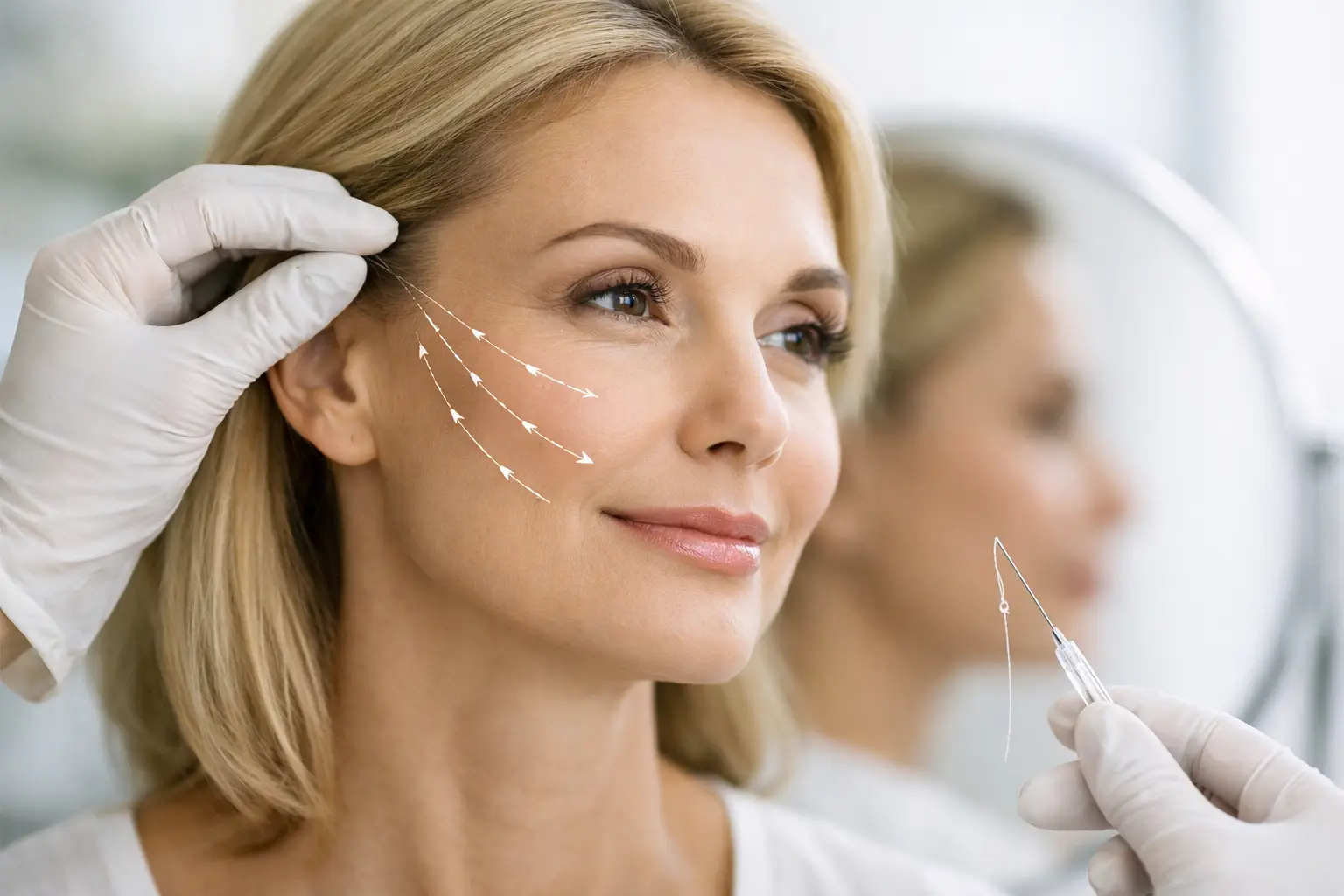
A thread lift should not announce itself when you walk into a room. The goal is a rested, firmer, more supported appearance that still looks like you. So, can thread lifts look natural? Yes, when the treatment is chosen for the right concerns, planned conservatively, and performed by an experienced medical aesthetic provider who understands facial balance.
Thread lifts are not designed to create the dramatic, tightly pulled look some people associate with surgical facelifts. Instead, PDO and MINT threads can provide subtle lifting and skin support in areas affected by mild to moderate laxity. The result is often best described as refreshed rather than transformed.
Can Thread Lifts Look Natural After Treatment?
Natural-looking thread lift results come down to precision. A provider evaluates where the face has lost structural support, how your skin behaves when you smile and speak, and how much lift can be created without placing too much tension on the tissue.
The cheeks, jawline, lower face, brows, and neck are common treatment areas, but not every area needs to be treated. In fact, treating fewer areas with a focused plan often produces the most believable outcome. A natural result respects your existing facial shape instead of trying to force a new one.
The type of thread matters, too. PDO threads are absorbable sutures that can support the skin and encourage collagen production over time. MINT threads are designed with molded barbs that can provide stronger anchoring and lifting support in appropriate candidates. Your provider should recommend the thread type, number of threads, and placement pattern based on your skin quality, facial structure, and goals, not a one-size-fits-all package.
What Makes a Thread Lift Look Overdone?
An overdone result is usually less about thread lifts themselves and more about poor candidate selection, excessive tension, or unrealistic expectations. Threads have limits. They can improve mild sagging, soften early jowling, and restore a subtle sense of lift, but they cannot replace the degree of correction provided by surgery for significant loose skin or heavy tissue descent.
Trying to get surgical-level results from a non-surgical treatment can lead to disappointment or an unnatural appearance. A skilled provider will be honest if another approach, such as skin tightening, injectables, collagen-stimulating treatments, or a surgical consultation, better matches your goals.
Placement is also critical. Pulling tissue too aggressively can create visible puckering, an overly sharp contour, or a temporary sense of tightness that does not suit the face. Conservative placement allows the tissues to settle in a way that looks balanced from the front, side, and while moving.
Your Facial Anatomy Sets the Standard
There is no universal ideal thread lift result. A naturally full face may need a different approach than a narrower face with more visible volume loss. Someone with thicker skin may need more support than someone with thin, delicate skin. Age matters, but skin elasticity, bone structure, weight fluctuations, sun exposure, and collagen levels can matter just as much.
During a proper consultation, your provider should assess your face at rest and in motion. A good plan considers more than the area that bothers you in the mirror. For example, a softening jawline may be connected to reduced cheek support, while loose-looking neck skin may respond better to a combination of treatments than threads alone.
This is why an in-person assessment is so valuable. The right treatment plan is not about selling the most threads. It is about achieving real, visible improvement while protecting the proportions that make your face recognizable.
Expect a Short Healing Period Before the Final Look
Thread lift results are not always camera-ready on day one. Swelling, tenderness, mild bruising, tightness, and small areas of skin dimpling can occur after treatment. These effects are usually temporary, but they are part of the process and should be considered when planning around a wedding, vacation, work event, or photos.
Most clients can return to many normal activities quickly, but they may be advised to avoid strenuous exercise, wide mouth movements, facial massage, dental work, and sleeping on the side for a period recommended by their provider. Following aftercare instructions helps the threads settle properly and reduces the chance of placing unnecessary stress on the treatment area.
The initial lift may be visible right away, although swelling can make it difficult to judge the true outcome at first. As the area settles over the following weeks, the result should become softer and more natural. Collagen stimulation continues gradually, which can support improvements in skin texture and firmness over time.
The Best Results Often Combine Treatments
Threads address tissue support, but aging involves more than laxity. Fine lines, volume loss, crepey texture, pigmentation, and muscle movement can all contribute to an aged or tired appearance. This is why thread lifts are often most effective as part of a personalized aesthetic plan.
For some clients, small amounts of filler may restore lost volume in a way threads cannot. For others, wrinkle relaxers can soften expression lines that remain after lifting. Microneedling, laser-based skin rejuvenation, or skin-tightening treatments may help improve texture and collagen support. The goal is not to do everything at once. It is to choose treatments that solve different concerns without overfilling or overtreating the face.
At Elite Laser Center, thread lift consultations are approached with the same focus on safety, customization, and visible but believable results. A thoughtful plan can include PDO or MINT threads when appropriate, along with complementary treatments that support a smooth, balanced outcome.
Who Is a Good Candidate for a Natural-Looking Thread Lift?
The strongest candidates generally have mild to moderate skin laxity and want a noticeable but subtle improvement without surgery. They understand that a thread lift can refresh the face, but will not produce the same longevity or level of correction as a surgical facelift.
You may be a good candidate if you notice early jowls, mild cheek descent, a less-defined jawline, or skin that appears less firm than it used to. Good skin quality and reasonable expectations help. Clients with significant skin laxity, very thin skin, certain medical conditions, active skin infections, or a history of poor wound healing may need a different treatment approach.
A medical consultation is the right time to discuss medications, allergies, prior cosmetic procedures, and any history of scarring or facial asymmetry. These details affect safety and help your provider create a plan that looks natural rather than generic.
Questions to Ask Before Booking
Before moving forward, ask who will perform your treatment, what type of threads will be used, and why those threads are right for your anatomy. Ask to review realistic before-and-after results from patients with concerns similar to yours. You should also understand the expected downtime, possible side effects, aftercare instructions, and what happens if you are not an ideal candidate.
Be cautious of promises that sound too dramatic. The right provider will explain both the benefits and the trade-offs. Thread lifts can offer meaningful improvement with less downtime than surgery, but results are temporary and vary from person to person. Depending on the thread type, your skin, and your treatment plan, results may last roughly one to two years, with collagen benefits developing as the threads are absorbed.
A natural thread lift is not about changing your face. It is about restoring a little of the support that time, stress, sun exposure, and collagen loss have taken away. If you want to look refreshed while still looking unmistakably like yourself, a personalized consultation is the best place to start.