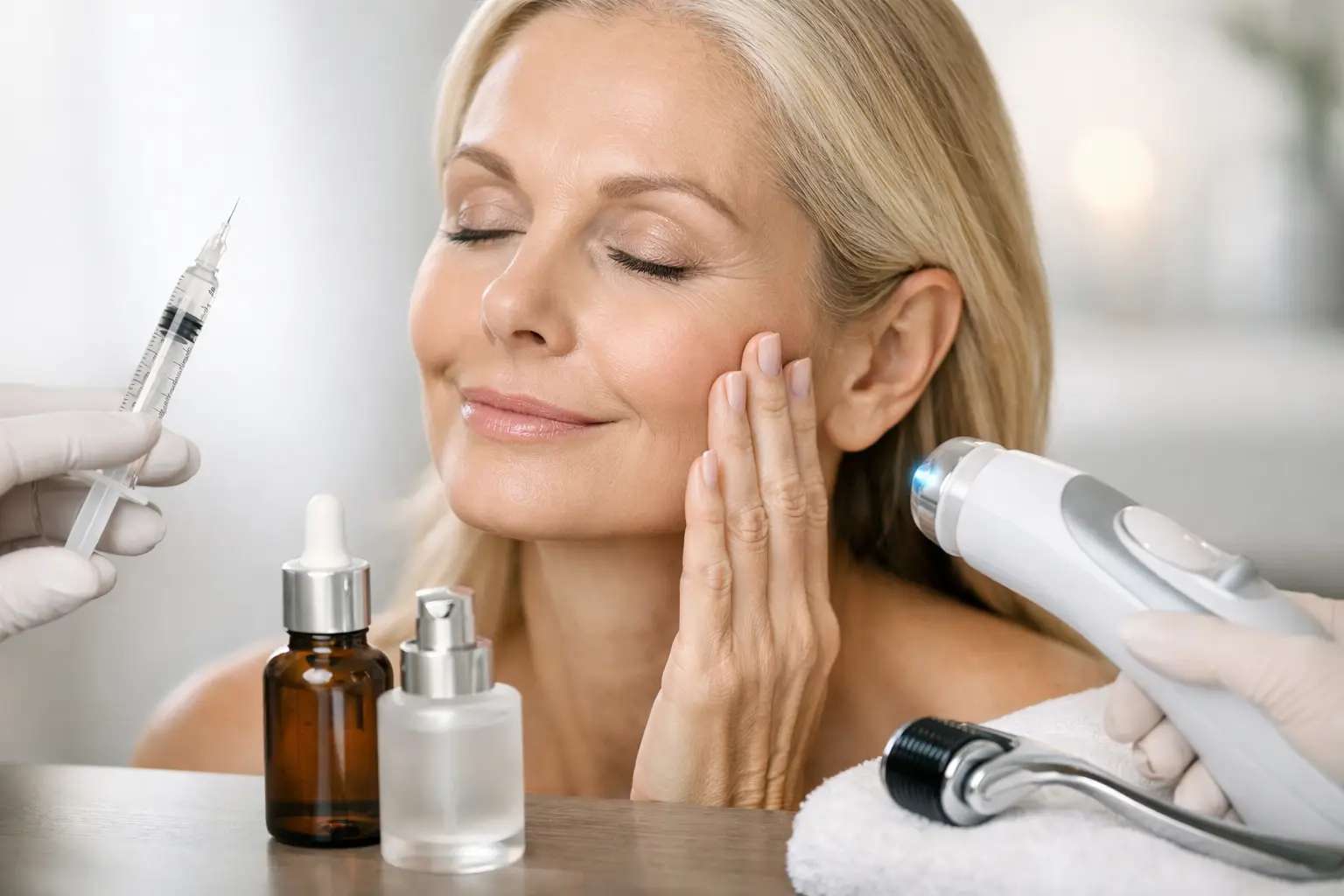
A forehead line that appears when you raise your brows needs a different approach than crepey cheeks, deep smile lines, or skin that no longer feels firm. That is why the best wrinkle treatments without surgery are rarely one-size-fits-all. The right treatment depends on whether wrinkles are caused by muscle movement, collagen loss, sun damage, volume loss, or a combination of all four.
For many Long Island patients, non-surgical treatment offers a practical middle ground: visible improvement without the scars, anesthesia, and extended recovery associated with facial surgery. The goal is not to erase every expression. It is to help your skin look smoother, refreshed, and naturally supported while keeping downtime manageable.
Start With the Type of Wrinkle You Want to Treat
Dynamic wrinkles form through repeated facial movement. Think forehead lines, crow’s feet, and the “11” lines between the eyebrows. These lines may disappear when the face is at rest early on, then become more noticeable over time.
Static wrinkles remain visible even when your face is relaxed. They can develop after years of sun exposure, collagen breakdown, dehydration, and repeated movement. Smile lines, lipstick lines, fine cheek lines, and neck creasing often fall into this category.
Skin laxity is related but slightly different. When the skin and deeper support structures lose firmness, wrinkles can look heavier because there is less underlying lift. A careful assessment is the first step because treating laxity with a wrinkle relaxer alone, for example, will not deliver the result most patients expect.
Best Wrinkle Treatments Without Surgery: Your Options
Wrinkle Relaxers for Expression Lines
Neuromodulator injections, often called wrinkle relaxers, are a leading choice for dynamic wrinkles. They temporarily reduce the muscle activity that creates repetitive creasing. Common treatment areas include forehead lines, frown lines, crow’s feet, bunny lines around the nose, and neck bands.
Results generally begin to appear within several days and continue developing over about two weeks. Most patients enjoy a smoother appearance for roughly three to four months, although metabolism, dosage, and treatment area affect longevity.
The trade-off is straightforward: wrinkle relaxers soften movement-related lines but do not replace lost facial volume or resurface damaged skin. Precision matters. When treatment is customized by an experienced medical provider, the result should look rested rather than frozen.
Dermal Fillers for Volume-Related Creases
As facial volume changes with age, areas that once looked full and supported can begin to fold, hollow, or crease. Hyaluronic acid dermal fillers can restore strategic volume and soften certain static wrinkles, including deeper smile lines, marionette lines, and some lip lines.
A skilled injector does not simply fill every line. In many cases, supporting the cheeks, temples, chin, or jawline can improve balance and reduce the appearance of lower-face folds more naturally than placing product directly into a crease.
Fillers can provide immediate visible improvement, though mild swelling or bruising is possible. Results may last from several months to well over a year depending on the formula, placement, and individual metabolism. Filler is not the best answer for every fine line, especially superficial, etched-in texture on the cheeks or around the mouth. Those concerns may respond better to collagen-stimulating treatments.
Microneedling for Texture and Fine Lines
Microneedling creates controlled microchannels in the skin to support the body’s natural collagen and elastin response. It is especially useful for fine lines, rough texture, enlarged pores, mild acne scarring, and early signs of skin aging.
This treatment does not create the instant volume change of filler, but it can improve skin quality over a series of sessions. Patients often notice a healthier glow first, followed by gradual refinement as collagen remodeling continues over the following weeks.
Professional microneedling is a better investment than aggressive at-home devices, which can irritate the skin or create uneven results when used incorrectly. A medical spa can tailor needle depth, treatment intervals, and post-treatment care to your skin concerns and tolerance for downtime.
Radiofrequency Microneedling for Firmer, Smoother Skin
For patients with fine wrinkles plus mild to moderate skin laxity, radiofrequency microneedling can be a strong option. It combines microneedling with radiofrequency energy delivered below the skin’s surface, encouraging deeper collagen remodeling.
This approach is often considered for loose or crepey skin on the cheeks, jawline, lower face, neck, and around the eyes. It may also help improve acne scars and uneven texture. Results build gradually, and a series is commonly recommended for the most meaningful improvement.
Expect temporary redness and swelling after treatment. The benefit is that radiofrequency microneedling addresses more than surface texture, but it still cannot replicate the dramatic tightening of a surgical facelift for significant sagging. Honest expectations lead to better treatment decisions.
PDO or MINT Threads for a Non-Surgical Lift
Threads can be appropriate when wrinkles are accompanied by visible descent in the cheeks, jawline, brows, or neck. PDO and MINT threads are placed beneath the skin to create support and stimulate collagen over time. Certain thread types are designed for lifting, while others focus more on collagen stimulation.
The best candidates generally have mild to moderate laxity and good overall skin quality. Thread treatment can provide a more defined, refreshed appearance with substantially less downtime than surgery, but results are more subtle and temporary than a facelift. Treatment planning should be conservative and based on facial anatomy, not a trend or a single before-and-after photo.
Chemical Peels and Medical-Grade Skin Care
Not every wrinkle needs an injectable or device-based treatment. Superficial and medium-depth chemical peels can improve dullness, fine lines, uneven tone, and sun-related texture concerns. The right peel depends on your skin type, pigment history, lifestyle, and desired recovery time.
At home, daily broad-spectrum sunscreen is one of the most valuable anti-aging habits available. Retinoids, antioxidants, peptide-based products, and moisturizers can support smoother-looking skin, but they work gradually and require consistency. Skin care is often the maintenance plan that protects the results of in-office treatments.
When a Combination Plan Makes the Biggest Difference
The most natural outcomes often come from addressing wrinkles at more than one level. A patient with forehead lines, sun damage, and early cheek volume loss may benefit from a wrinkle relaxer for expression lines, microneedling for texture, and carefully placed filler for structural support.
Combination treatment does not mean doing everything at once. A responsible provider will prioritize the concern that most affects your appearance, budget, and schedule, then create a plan that builds over time. This approach can also prevent overfilling or overtreating one area in an effort to compensate for untreated skin laxity or poor texture.
How to Choose a Safe Treatment Provider
Non-surgical does not mean risk-free. Injectable treatments, energy-based devices, and threads require training, sound judgment, and an understanding of facial anatomy. Ask who will perform or supervise your treatment, what experience they have with your skin concern, and what happens if you have an unexpected reaction.
A quality consultation should include a review of your medical history, current medications, prior aesthetic treatments, allergies, and goals. Pregnancy, certain skin conditions, active infections, bleeding risks, and some medications may affect treatment eligibility or timing.
Be cautious of bargain pricing that skips the consultation or pressures you into a large amount of product immediately. The best value is not simply the lowest price. It is an individualized plan, appropriate products and technology, clear aftercare instructions, and a provider who will tell you when a treatment is not the right fit.
What Results Can You Realistically Expect?
Non-surgical wrinkle treatments can make you look more rested, smoother, and more confident. They can soften lines, improve skin texture, restore selected areas of volume, and create modest tightening. They cannot stop aging, and no treatment should promise permanent perfection.
For deeper folds, advanced skin laxity, or substantial jowling, surgery may still offer the most dramatic and longest-lasting correction. That does not make non-surgical care a lesser choice. It makes it a different choice - one that is often ideal for people who want meaningful improvement with little disruption to work, family, and daily life.
At Elite Laser Center, a personalized consultation can help match your concerns to treatments that make sense for your face, skin, and timeline. The best next step is not choosing the most popular procedure. It is choosing a medically supervised plan that helps you feel like yourself, only more refreshed.