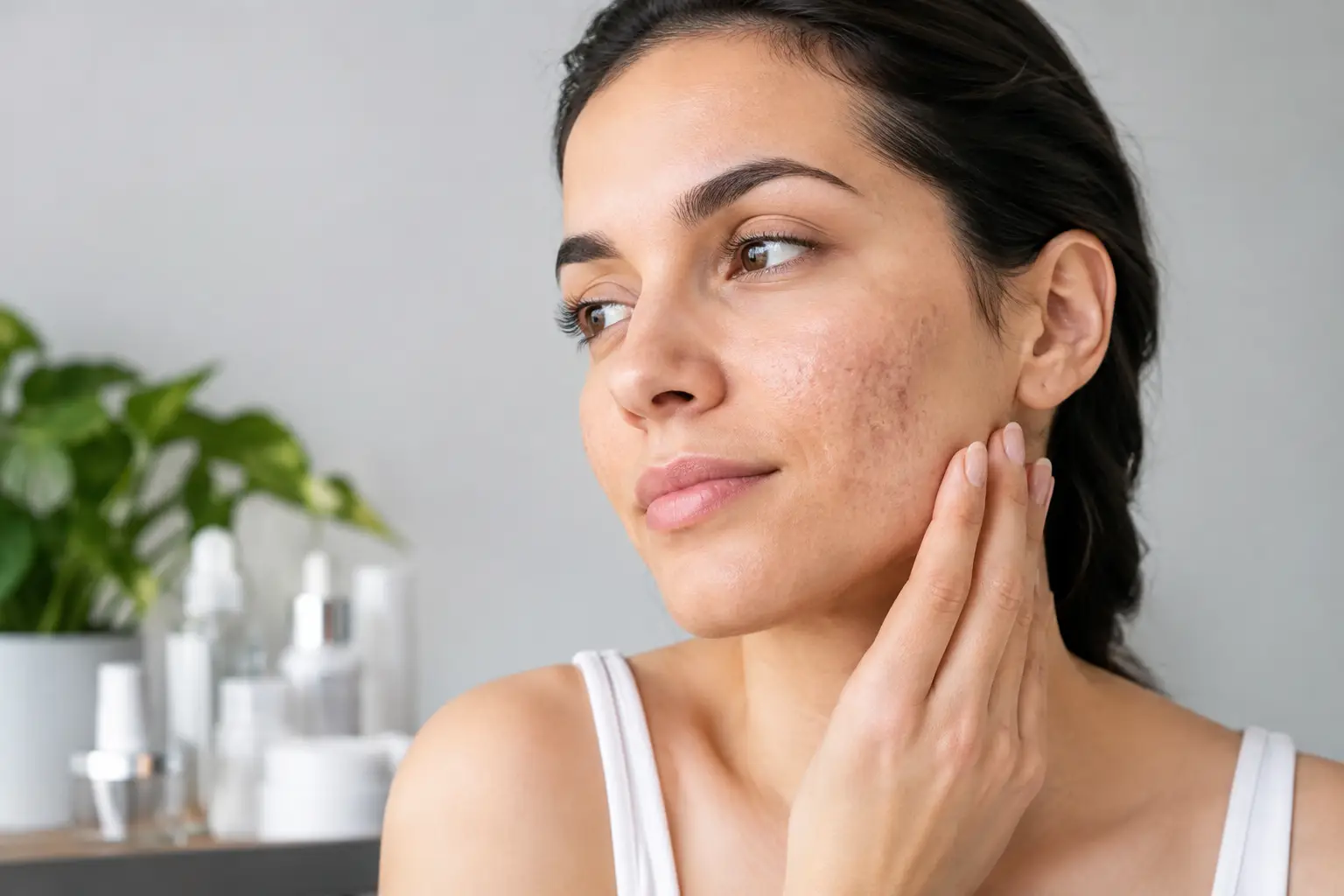
When acne clears, uneven texture and lingering marks can remain. Choosing a treatment starts with understanding what you are seeing: a flat spot of discoloration, a shallow depression, a deep pit, or a raised scar. The best treatments for acne scars depend on the type of scar and your skin's needs. This guide explains where microneedling, RF treatments, and chemical peels may fit—and when a dermatologist's assessment is the better next step. At Elite Laser Center & Med Spa in Stony Brook, NY, a consultation can help you explore our skincare and RF treatment options without committing to a procedure before understanding its benefits, limitations, and recovery.
Acne scars versus post-acne marks
Flat brown, gray, pink, or red marks left after a breakout are often post-inflammatory color changes rather than true scars. They may gradually fade, although this can take months or longer. True scars change the skin's structure. Common patterns include:
- Boxcar scars: Round or oval depressions with distinct edges.
- Rolling scars: Broader depressions that give the skin a wavy appearance.
- Ice pick scars: Narrow, deep pits that often need targeted treatment.
- Raised scars: Hypertrophic scars and keloids that require a different approach from depressed scars.
You can have several scar types and discoloration at the same time. That is why improving skin tone and improving skin texture may require different steps.
Microneedling for selected depressed acne scars
Traditional microneedling uses fine needles to create controlled punctures in the skin. The healing response stimulates collagen production, which may soften the appearance of some depressed scars and uneven texture. It does not release every tethered scar or correct every deep pit. A series may be recommended, and improvement develops gradually rather than immediately after an appointment. Temporary redness, tenderness, and swelling can occur. This is a medical treatment when it penetrates and changes skin tissue; at-home rollers are not a substitute for professional scar treatment.
RF microneedling and fractional RF treatments at Elite
Radiofrequency treatments add controlled thermal energy to encourage skin remodeling. They may improve the appearance of certain acne scars, but the treatment method and settings matter. Elite offers RF microneedling and fractional RF treatments using the Lumenis Legend Pro+ platform. Its VoluDerm technology uses RF-assisted electrodes to create microchannels, while TriFractional provides a more superficial fractional RF approach. These technologies differ from traditional mechanical microneedling and from laser resurfacing. Your provider should explain which technology is proposed, why it suits your concern, and what recovery to expect. Stronger treatment does not automatically mean a better choice for your skin. RF procedures carry risks. The FDA has reported serious complications with certain uses of RF microneedling, including burns, additional scarring, fat loss, nerve damage, and disfigurement. Discuss the benefits and risks with a licensed healthcare provider experienced with the device before treatment. RF microneedling should not be performed at home.
Chemical peels for discoloration and surface concerns
Chemical peels use selected acids to exfoliate the skin. Depending on the peel, they may help with uneven pigmentation, rough surface texture, and some superficial scarring. A superficial peel should not be expected to lift a deep depression or release a tethered rolling scar. Brown marks and persistent redness also need to be assessed separately; they do not necessarily respond to the same treatment. Peel selection should account for your skin tone, sensitivity, medications, and healing history. Recovery and peeling vary with the formulation and treatment strength.
Where facials fit into the plan
Elite's HydraFacial treatments focus on cleansing, exfoliation, and hydration. They can be discussed as part of a skincare plan, but a facial's fresh appearance should not be confused with correction of deep acne scars. Ask whether your main concern calls for ongoing skincare, a scar-focused procedure, or dermatologic treatment before purchasing a series.
When a dermatologist's treatment may be needed
Some scars need a targeted procedure rather than a general skin-renewal treatment. A dermatologist may consider:
- Subcision to release fibrous bands beneath selected tethered scars.
- Targeted techniques such as TCA CROSS or punch procedures for selected deep scars.
- Laser resurfacing to address suitable scar patterns.
- Fillers to add volume beneath certain depressed scars.
- Scar-specific medical treatments for hypertrophic scars or keloids.
These are educational examples, not a list of services offered at Elite. They require individual medical assessment. Elite's laser hair removal treatments should also not be confused with acne-scar laser resurfacing.
Questions to ask before choosing treatment
Bring your priorities to the consultation: the texture that bothers you, your available recovery time, and your budget. Useful questions include:
- Are these scars, discoloration, or both?
- Which concerns can this treatment realistically improve?
- Who performs the procedure, and what device or product is used?
- What are the risks for my skin tone and medical history?
- How many appointments might be needed, and what is the estimated total cost?
- Would a dermatologist's assessment be appropriate first?
Tell your provider about current acne, medications, previous procedures, cold sores, and any history of abnormal scarring. Microneedling and other procedures are not suitable for everyone.
Recovery and results: what to expect
Collagen remodeling takes time. Early swelling can temporarily change how a scar looks, so the immediate appearance is not the final result. Your provider should set a review schedule appropriate to the procedure. Follow individualized aftercare instructions. These commonly include gentle cleansing, avoiding picking, and waiting to restart makeup, exfoliants, or retinoids until cleared. Use broad-spectrum SPF 30 or higher as directed, and protect healing skin from sun exposure. If you still have inflammatory breakouts, address them before beginning scar-focused procedures. Preventing new scars is part of protecting progress.
Frequently asked questions
Can acne scars disappear completely?
Treatment can make scars less noticeable, but complete removal should not be promised. Results depend on the scar pattern and individual response.
Is RF microneedling always better than regular microneedling?
No. RF adds thermal energy and a different risk profile. The appropriate choice depends on your skin, scars, device, and treatment settings.
Can darker skin tones be treated?
Options exist, but suitability must be assessed individually. Discuss the risk of darkening or lightening of the skin and the provider's experience treating your skin tone.
How much does acne scar treatment cost at Elite?
Pricing depends on the treatment area, technology, and number of sessions recommended. Call 631-675-2500 for current pricing and ask for the estimated cost of the proposed plan.
Explore your options in Stony Brook
Elite Laser Center & Med Spa is located at 2308 Nesconset Highway, Route 347, Stony Brook, NY 11790, serving clients throughout Suffolk County and Long Island.
If acne marks or uneven texture are bothering you, request a consultation or call 631-675-2500 (line 6316752500). We can discuss Elite's available treatments, their limitations, and whether your concern would be better assessed by a dermatologist. Medical sources and further reading
- American Academy of Dermatology: Acne scars—signs and symptoms
- American Academy of Dermatology: Acne scar consultation and treatment
- American Academy of Dermatology: Microneedling
- American Academy of Dermatology: Acne scar aftercare
- FDA: Microneedling devices
- FDA: RF microneedling safety communication
- DermNet: Acne scarringthe mirror.