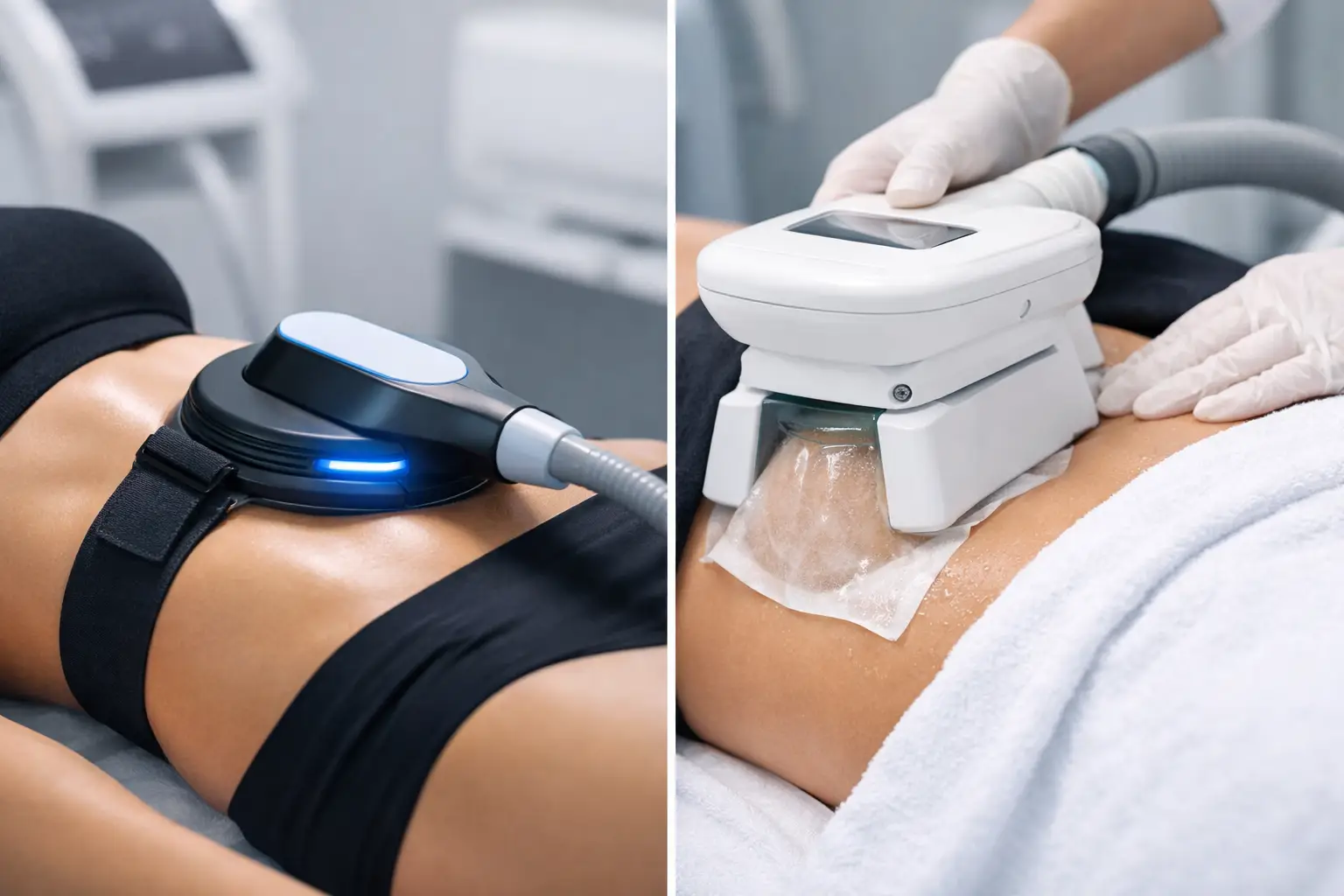
If you are comparing the cooltone vs coolsculpting difference, you are probably asking a very practical question: do you want to reduce fat, or do you want to strengthen and define muscle? Those are not the same goal, and these treatments are not interchangeable. They can both improve body shape without surgery, but they work in completely different ways.
That distinction matters because many people come in thinking they need “body contouring” when what they really want is a flatter abdomen, better muscle tone, or help with stubborn pockets of fat that do not respond to the gym. The best treatment depends on what is actually causing the concern.
CoolTone vs CoolSculpting difference: what each treatment does
CoolSculpting is a fat-reduction treatment. It uses controlled cooling to target and freeze fat cells in specific areas. Over time, the body processes and eliminates those treated fat cells. The goal is to reduce localized bulges, not tighten skin and not build muscle.
CoolTone is a muscle-toning treatment. It uses magnetic muscle stimulation to trigger powerful involuntary muscle contractions. These contractions are much stronger and more concentrated than what most people achieve during a typical workout. The goal is to improve muscle tone, firmness, and definition.
So if you want the shortest answer to the CoolTone vs CoolSculpting difference, it is this: CoolSculpting treats fat, and CoolTone treats muscle.
That sounds simple, but real bodies are rarely that simple. Many people have both issues at once. A patient may have a layer of stubborn abdominal fat hiding muscle tone underneath. Another may be fairly lean but feel that their core, buttocks, or thighs look soft or underdefined. This is where a personalized assessment becomes more valuable than picking a treatment name online.
How CoolSculpting works
CoolSculpting is based on cryolipolysis, a process that exposes fat cells to controlled cold. Fat cells are more vulnerable to cold than surrounding tissue, so the treatment can target unwanted fat while leaving the skin and nearby structures intact. After treatment, the body gradually clears out the affected fat cells over the following weeks and months.
This is why CoolSculpting is often used on areas like the abdomen, flanks, thighs, under the chin, upper arms, back, and bra fat. It is designed for stubborn, pinchable fat that remains despite a healthy lifestyle. It is not a weight-loss treatment, and it is not meant for obesity.
The best candidates are already close to their goal weight but have specific areas that do not respond the way they want. If your main frustration is a bulge in clothing or a pocket of fat that throws off your shape, CoolSculpting may be the stronger fit.
Results take patience. You do not leave the office looking smaller that day. The body needs time to process the treated fat cells, so changes appear gradually.
How CoolTone works
CoolTone takes a different path. Instead of targeting fat cells, it targets muscle with magnetic muscle stimulation. The treatment causes intense muscle contractions in areas such as the abdomen, buttocks, and thighs. These contractions help strengthen, firm, and define the underlying muscles.
For the right candidate, CoolTone can make an area look tighter and more athletic. It is especially appealing to people who already exercise but want more visible definition, or to those who feel they have lost muscle tone over time.
CoolTone is not a substitute for fitness, and it does not melt away fat. If there is a thicker layer of fat covering the area, muscle improvement may not be very visible from the outside. That is one of the biggest reasons people get confused about expectations. A treatment can work exactly as intended, but if the concern was really excess fat, the mirror may not reflect the change they hoped to see.
Which one gives better body contouring results?
There is no universal winner because the better treatment depends on the problem being treated.
CoolSculpting usually makes more sense when the shape issue is caused by unwanted fat. If your waistband digs into love handles, your lower abdomen bulges despite working out, or you have fullness under the chin that you cannot tone away, muscle stimulation will not fix that. Fat reduction is the more direct answer.
CoolTone usually makes more sense when the issue is lack of definition or firmness. If you are relatively lean but want a tighter-looking core, more sculpted buttocks, or improved muscle tone in the thighs, CoolTone may be the more relevant option.
Some patients benefit from both. This is often the best answer for the abdomen, where fat and muscle tone both influence appearance. Reducing fat can help slim the area, while improving muscle tone can make it look firmer and more defined. Used thoughtfully, the treatments can complement each other rather than compete.
CoolTone vs CoolSculpting difference in feel, downtime, and recovery
Patients also want to know what the experience is actually like.
During CoolSculpting, you can expect strong cooling, suction in many treatment areas, and temporary numbness. Afterward, the area may feel tender, swollen, firm, itchy, or numb for a period of time. Most people return to normal activity quickly, but some experience soreness or sensitivity for days or longer depending on the area treated.
During CoolTone, the treatment feels like repeated, intense muscle contractions. It is a strange sensation the first time, but generally well tolerated. After the session, the area can feel similar to a hard workout. There is typically little to no downtime, and patients often go right back to their day.
If your schedule is packed, both can fit into a busy lifestyle, but the recovery experience is different. CoolSculpting is more likely to involve localized after-effects because it is triggering a fat reduction process. CoolTone feels more like post-exercise fatigue.
Who is a good candidate for each?
CoolSculpting is usually best for adults who are near a stable weight and want to reduce discrete areas of stubborn fat. It works best when there is enough fat to treat, but not so much that surgical options would be more appropriate.
CoolTone is usually best for adults who want to improve muscle tone and definition and who have realistic expectations about what muscle stimulation can and cannot do. It is often a strong fit for people who already live fairly healthy lifestyles and want a more sculpted look.
There are also people who may not be ideal candidates for one or both treatments due to medical history, anatomy, implanted devices, pregnancy, or other factors. This is why a proper consultation matters. Safe, effective body contouring starts with matching the technology to the patient, not forcing the patient into the technology.
Cost and value: what people often overlook
When comparing treatment options, price matters, but value matters more.
CoolSculpting pricing is usually tied to the number of areas treated and how many cycles are needed. CoolTone is often recommended as a series of sessions for best results. So the lower-priced option on paper is not always the one that best solves the concern.
The bigger mistake is choosing based on a promotion alone. If you pay less for the wrong treatment, you have not saved money. You have delayed getting the result you actually wanted. In a medically supervised setting, the goal should be a treatment plan that fits your body, timeline, and expectations.
How to choose between CoolTone and CoolSculpting
Start by asking one honest question: when you look at the area that bothers you, do you feel you are seeing excess fat, weak muscle tone, or both?
If the area is soft, pinchable, and resistant to diet and exercise, CoolSculpting is often the more logical place to start. If the area is already fairly lean but lacks firmness or definition, CoolTone may be more useful. If you can identify both issues, combining or sequencing treatments may produce the best cosmetic result.
This is where experience makes a difference. In a practice that regularly evaluates non-surgical body contouring patients, the consultation is not just about eligibility. It is about accuracy. At Elite Laser Center, that means looking at your shape, your goals, your timeline, and whether fat reduction, muscle toning, or a combination is the smarter plan.
The right answer is not always the trendiest treatment. It is the one that matches what your body needs.
A good body contouring decision should leave you feeling clear, not confused. If you are choosing between these treatments, focus less on the brand names and more on the outcome you want to see in the mirror. That is usually where the right answer becomes obvious.