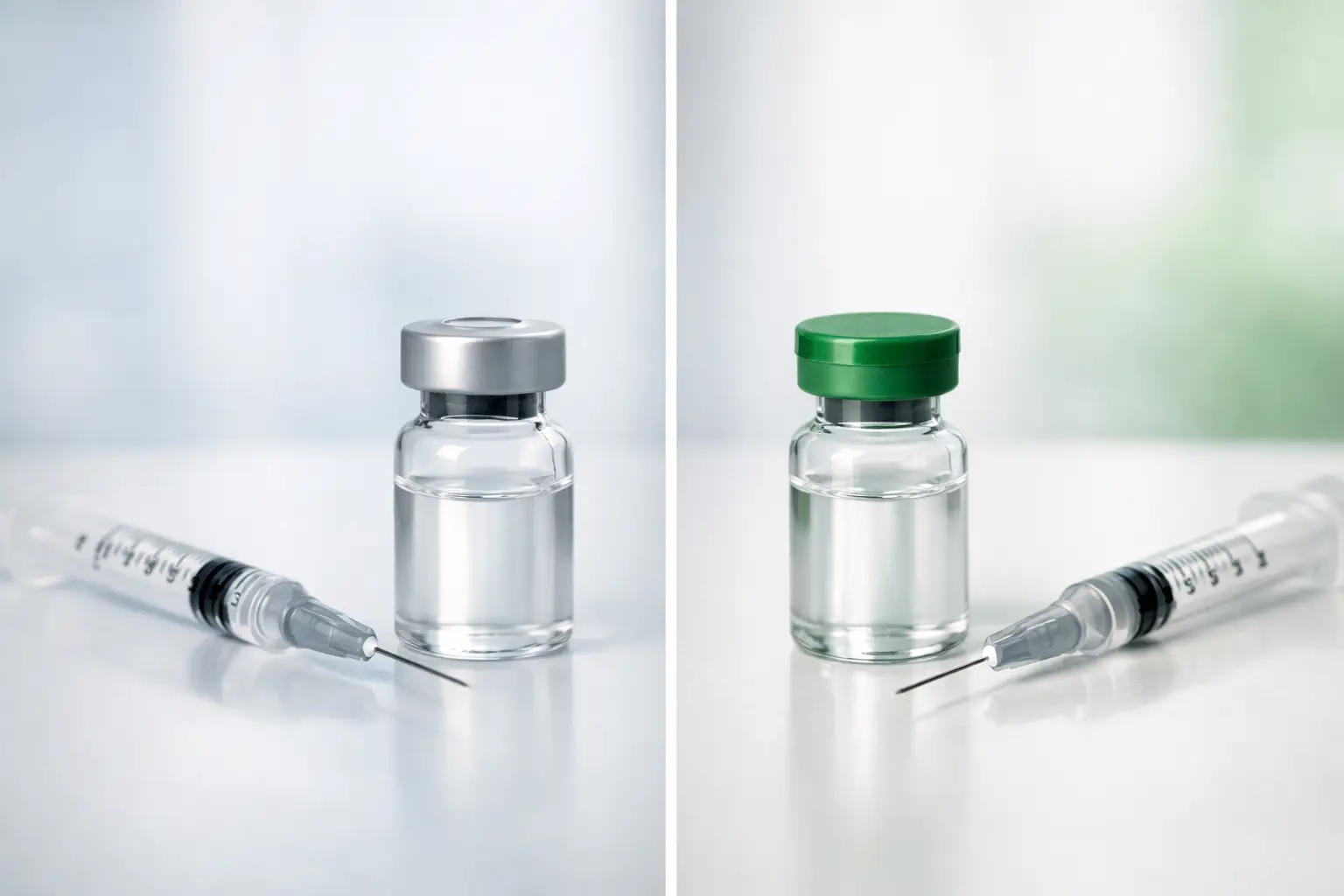
A softened frown line, smoother forehead, or refreshed eye area can make a meaningful difference without changing what makes your face yours. When clients ask about the botox vs dysport difference, they are usually asking a more personal question: which treatment will give me natural-looking results that fit my facial movement, schedule, and goals?
Both are popular prescription injectables used to temporarily improve the look of dynamic wrinkles - the lines created by repeated facial expressions. Botox Cosmetic and Dysport can both deliver excellent results in skilled hands. The better choice is rarely about which name is more familiar. It is about the product, the treatment area, your muscle strength, and an experienced injector’s plan for your face.
Botox vs Dysport Difference: The Basics
Botox Cosmetic and Dysport are both neuromodulators made from botulinum toxin type A. When injected precisely into selected facial muscles, they temporarily reduce the muscle activity that contributes to expression lines. This allows the overlying skin to appear smoother while preserving a natural range of expression when treatment is properly customized.
They are commonly used for forehead lines, the vertical “11” lines between the brows, and crow’s feet. Depending on the individual assessment and the injector’s medical judgment, neuromodulators may also be used in other areas, such as around the nose, chin, jawline, or neck.
The key distinction is that Botox and Dysport are different formulations. They are not measured unit-for-unit, and their dosing cannot be compared by price alone. A Dysport unit is not the same as a Botox unit. That is why a lower per-unit number does not automatically mean one treatment is less expensive or less effective.
How Botox and Dysport May Feel Different
For many clients, the visible result from either product is very similar: smoother, more rested-looking skin that still looks like them. Yet there are practical differences that can influence a treatment recommendation.
Onset of Results
Dysport is often known for showing initial results relatively quickly, with some clients noticing a change within two to three days. Botox Cosmetic may begin to show in several days, with results continuing to develop over roughly one to two weeks. Individual response varies, so neither timeline should be treated as a guarantee.
If you have an upcoming wedding, photos, vacation, or professional event, timing matters more than brand loyalty. A qualified injector can help you schedule treatment with enough room for your results to settle naturally and for a follow-up assessment if needed.
Spread and Precision
Dysport may diffuse a little more broadly from the injection point than Botox. In some cases, that characteristic can be helpful for a larger area, such as a strong forehead or frown-line complex. In other situations, a more localized approach may be preferred, particularly when treating close to muscles where precision is essential.
This does not make Dysport “better for large areas” or Botox “better for small areas” in every case. Injection technique, dilution, dose, placement, anatomy, and muscle movement all affect the final result. Product selection should follow the facial assessment, not a one-size-fits-all rule.
Duration
Both Botox Cosmetic and Dysport commonly last about three to four months, although some people enjoy results longer and others notice movement returning sooner. Metabolism, exercise habits, muscle strength, treatment history, and dose can all play a role.
A client receiving treatment for the first time may have a different experience than someone who has kept a consistent maintenance schedule for years. Regular appointments can help your provider learn how your muscles respond and refine your treatment plan over time.
Which Areas Can Be Treated?
For FDA-approved cosmetic indications, Botox Cosmetic and Dysport are used to improve the appearance of certain facial lines. Botox Cosmetic has FDA-approved cosmetic indications including moderate to severe forehead lines, glabellar lines, and crow’s feet in adults. Dysport is FDA-approved for temporary improvement in the appearance of moderate to severe glabellar lines in adults, and its approved uses may vary by product labeling.
Providers may recommend neuromodulators for additional aesthetic concerns based on clinical judgment. These uses are often described as off-label, which means the medication is being used in an area or manner not specifically listed in its FDA-approved labeling. Off-label treatment is common in aesthetic medicine, but it should always be discussed openly during a medical consultation.
The safest approach is not to request a certain number of units in a certain spot based on a social media video. Facial anatomy is individual. The same amount of product can look subtle on one person and overly strong on another.
Cost: Why Unit Price Is Not the Full Story
Comparing Botox and Dysport by the unit can be misleading because the products use different dosing scales. What matters is the total treatment plan: how much product is appropriate for your muscle activity, which areas are being treated, and the expertise behind the injections.
A bargain treatment can become expensive if it produces uneven results, leaves you with an overly frozen expression, or requires frequent corrections. Conversely, more product is not automatically better. The goal is an appropriate dose placed accurately, creating visible improvement without sacrificing facial balance.
At a medically supervised aesthetic practice, a consultation should include a review of your concerns, facial movement, treatment history, and budget. You should know what is being recommended and why before treatment begins.
Safety Matters More Than the Brand Name
Botox Cosmetic and Dysport are prescription medications. They should be administered by a qualified, properly trained medical professional who understands facial anatomy and evaluates whether you are a suitable candidate.
Common temporary effects can include mild redness, swelling, tenderness, bruising, or a headache. Less common but more significant complications can occur, including unwanted weakness in nearby muscles, eyelid or brow drooping, asymmetry, or allergic reactions. Following aftercare instructions and choosing an experienced injector helps reduce avoidable risk, but no injectable treatment is risk-free.
Be candid during your consultation. Tell your provider about medications, supplements, allergies, prior facial procedures, neurologic conditions, pregnancy or breastfeeding status, and any previous reaction to injectable treatments. This information supports safer decisions and better results.
How to Choose Between Botox and Dysport
The best answer may be Botox, Dysport, or whichever option your injector believes best matches your goals that day. If you have responded well to one product in the past, there may be a good reason to continue with it. If your results have felt too slow, too short-lived, too limited, or inconsistent, it may be worth discussing whether a different formulation or technique could be a better fit.
During a consultation, focus on the questions that actually affect your outcome: How much movement do you want to keep? Are your lines visible only with expression or present at rest? Is a special event coming up? Have you had treatments that looked too heavy or did not last as expected?
At Elite Laser Center, treatment planning is built around your facial anatomy and desired level of correction, not a generic injection map. Whether Botox Cosmetic or Dysport is recommended, the priority is a safe, refined result that helps you look rested, confident, and recognizably yourself.
A thoughtful consultation is the best place to start. Bring your goals, your timeline, and any questions you have. The right injectable plan should feel clear, personalized, and designed for the way you want to look when you walk back into your everyday life.